[00:00:00] Elise Awwad: We've not had a North Star goal in quite some time
[00:00:02] Elise Awwad: and I think we need one.
[00:00:03] Elise Awwad: And so I put one on paper, and it was to, uh, educate 100,000 learners by 2030. It's not just about scaling to [00:00:10] 100,000 learners, it's about making sure that we're doing that with outcomes in mind, learner outcomes in mind.
[00:00:15] Elise Awwad: We realize that there is a place for human interaction. [00:00:20] Mm-hmm. And our learners need that. They need that care and support. We put a lot of time and energy in building out this digital care engine, and it's helped [00:00:30] us drive student outcomes. If a learner needs support when an advisor is not online, we will be there proactively versus [00:00:40] reactively to support them.
[00:00:41] Elise Awwad: Things get in the way, and when frustration rises- Mm-hmm ... that's more of a reason for a student to give up.
[00:00:47] Elise Awwad: And so we want to eliminate friction. [00:00:50]
[00:00:50] Ruben Harris: Happy Friday. My name's Rubēn Harris. I'm here with my co-founder and co-host, Timur Meyster, and this is The New Normal. The New Normal is a show where we go inside of organizations that [00:01:00] are actually using AI in production at scale in a way that's making a meaningful impact in their organizations.
[00:01:06] Ruben Harris: This is not a show about hype. It's a show where we interview leaders [00:01:10] who have made decisions to reimagine their organizations with AI at its core. Today, we're in Naperville. Feels good to be back in the chi, [00:01:20] and we're on DeVry's campus, and we're excited to introduce our guest. Timur, can you please introduce the guest?
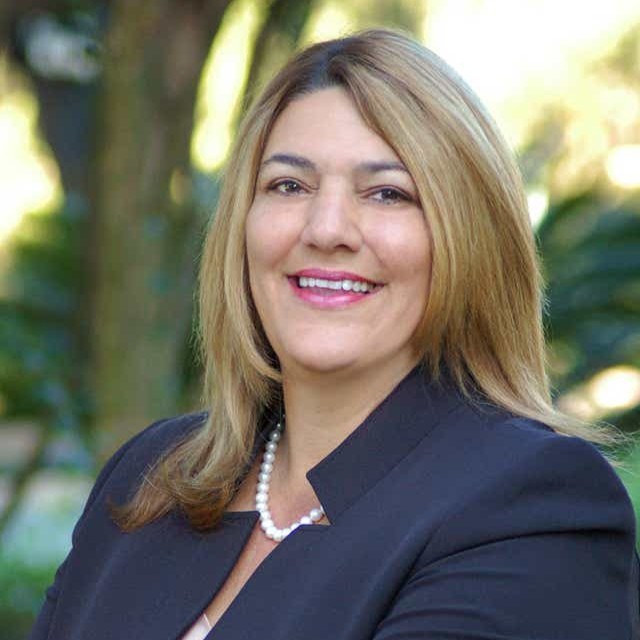
[00:01:26] Timur Meyster: Thank you, Rubēn. Uh, our guest today, uh, is [00:01:30] Elise Awwad, who leads DeVry University as the president and the, and CEO, um, serving over 32,000 students getting degrees in fields like [00:01:40] business, technology, and healthcare. Um, what's interesting about Elise is, uh, she started as an admissions advisor at DeVry in [00:01:50] 2004, then she became the chief operating officer, and now she leads the institution as the first female president and CEO.
[00:01:58] Timur Meyster: Um, and sh- no [00:02:00] one knows students and what students need better than her. So Elise, welcome to The New Normal.
[00:02:04] Elise Awwad: Thank you both for having me. I'm very excited to be here, and thank you for the very kind introduction.
[00:02:09] Ruben Harris: We're [00:02:10] very excited to have you here as well. Um, so why don't we start off by you explaining a little bit more about DeVry, its history, its current scale?
[00:02:18] Elise Awwad: So DeVry's been around since [00:02:20] 1931. In fact, this is a very special year for our university. We are celebrating our 95th year anniversary this year. Wow. Um, DeVry, uh, a- as Timur said, [00:02:30] um, uh, has business, healthcare, and technology, uh, verticals, and that's undergraduate all the way through graduate programming.
[00:02:38] Elise Awwad: Um, we've, [00:02:40] uh, served, uh, several learners throughout our time at DeVry. We like to say that we are technology-driven, technology-focused. That goes back to our founding in [00:02:50] 1931. Um, tech is at the core and center of all of the programs, regardless of what vertical or, um, you know, whether a student's studying in business and healthcare, [00:03:00] you've got tech-centered education.
[00:03:02] Elise Awwad: Um, our mission is to close society's opportunity gap and address emerging talent needs. Um, now more than ever, I think that's [00:03:10] an urgent calling for, uh, us as an institution and for higher ed in general.
[00:03:15] Ruben Harris: Awesome. Well, it-- to me, it feels very good to be in Chicago. I used to live [00:03:20] here. Uh, when I lived here, I actually lived across from the Merchandise Mart.
[00:03:24] Ruben Harris: There was- Yeah ... something called 1871. The current CEO, uh, Betsy Ziegler, [00:03:30] is one of our investors at OutRival, and I believe she sits on your board. What's the relationship between Betsy Ziegler and DeVry?
[00:03:37] Elise Awwad: Betsy is fantastic. In fact, let me [00:03:40] be the first to say we are so blessed and lucky to have Betsy as a trustee.
[00:03:44] Elise Awwad: Um, and I'll speak personally, I'm lucky to have her as a friend. Uh, yeah, so they're not at the Merchandise Mart [00:03:50] anymore. They've since moved. Um, but 1871 has been, um, a core part of the Chicagoland, um, uh, bu- you know, development of [00:04:00] entrepreneurs across the city and even nationally. Um, Betsy sits on the board, and, you know, one of the things that, uh, I think, uh, she does to bring value to DeVry is [00:04:10] she's constantly, uh, challenging us to catalyze new ventures, and at the same time be very, very clear about what [00:04:20] problems we're trying to solve.
[00:04:21] Elise Awwad: Mm-hmm. In fact, if you, uh, if you ask anyone who knows Betsy, one of her favorite lines when you're talking about your product or your, um, new [00:04:30] ideas- Mm-hmm ... really articulate what problem you're trying to solve.
[00:04:33] Ruben Harris: Yeah. Yeah.
[00:04:33] Elise Awwad: Help me understand that. And so she does a really nice job of helping us think through innovation and how to [00:04:40] scale, um, innovative solutions.
[00:04:42] Ruben Harris: Yeah. No, Betsy's amazing. Uh, you talked about Chicago's technology, but you also touched a little bit on the business community here. Yeah. Now, and I [00:04:50] will tie it back to DeVry in a second, but tell us a little bit about... You, you mentioned you're tied to Economic Club. Like, what is Economic- Yeah ... Club? Why is that important, your affiliation with them?
[00:04:58] Elise Awwad: I'm very active in the [00:05:00] city of Chicago, um, for a couple of reasons, and I'll start with one that relates back to DeVry. Uh, we have deep roots in Chicago. We were founded in [00:05:10] 1931 here in- Mm-hmm ... this city, and so we are well-known, and we need to be active, and we need to be on the map. And we need to be a part of, um, you know, the, the workforce [00:05:20] development within the city.
[00:05:21] Elise Awwad: Um, uh, I took that very seriously when I became the president and CEO in 2023, and I said, "How do I get more connected? How do I become more active in the community?" [00:05:30] Um, both from a civic engagement perspective and a workforce perspective. Um, and so I did some research. I networked, as any, uh, you know, president and [00:05:40] CEO has to do, right?
[00:05:41] Elise Awwad: And, um, joined, uh, an organization who, uh, our board chair introduced me to called International Women's Forum of Chicago. Made some [00:05:50] very good friends there who are also very connected in the city of Chicago, and they had recommended, um, as did our former CEO, Tom Monahan, who's also on our board, good friend of mine, [00:06:00] um, that I, uh, get plugged into the Economic Club of Chicago, and so I did.
[00:06:04] Elise Awwad: And so the Economic Club of Chicago brings together business and civic leaders across the city, [00:06:10] um, to solve some of the most challenging problems our city faces, um, holistically, but also network and get to know one another and learn from one another. Um, it's been a really nice community [00:06:20] to be a part of, and, um, yeah, so.
[00:06:22] Ruben Harris: Awesome.
[00:06:22] Elise Awwad: Doing great things in Chicago. Welcome home, by the way.
[00:06:25] Ruben Harris: Feels good, feels good. And so speaking of problems and, and solutions, [00:06:30] DeVry has been serving students for a long time. You're currently serving the 30,000-ish students right now, and you wanna go to a certain target- Yeah ... by 2030. Can you talk about where you wanna go from a [00:06:40] scale perspective?
[00:06:40] Ruben Harris: And, and then we'll get into how you're gonna do that later.
[00:06:44] Elise Awwad: So education, um, uh, has been something that is near and dear to my heart. Um, I [00:06:50] consider myself a lifelong learner. I've been with DeVry for 22 years. Um, I don't take lightly the assignment I was given in 2023, which is to, uh, lead this institution that- Mm-hmm
[00:06:59] Elise Awwad: I've been a part of for, [00:07:00] uh, two decades, started when I was 18 years old, by the way. Awesome. Um, and I, uh, and, and so I said, "Okay, what, what's the next, um, you [00:07:10] know, w- what's our journey over the next- Mm-hmm ... five years?" And, um, you know, I started to think about the, um, the how versus the what. How are [00:07:20] we going to get to- Mm-hmm
[00:07:21] Elise Awwad: greater scale? And that's not just to grow for growth's sake. It's to support more learners and do the things that we've done for many, many years, right? Powering the economy, [00:07:30] um, uh, being the producer of 20, you know, technology-driven 21st century talent. Um, and so, uh, you know, I, I said, "We've not had a North Star [00:07:40] goal in quite some time."
[00:07:41] Ruben Harris: Mm-hmm.
[00:07:41] Elise Awwad: And I think we need one.
[00:07:43] Ruben Harris: Yeah.
[00:07:43] Elise Awwad: And so I put one on paper, and it was to, uh, educate 100,000 learners by 2030. As you said, we're at [00:07:50] 32,000- Yeah ... just north of 32,000. Um, and we graduate about- 10 to 13,000 a year. Awesome. And so I wanna be able to say, you know, education, it looks different [00:08:00] for everyone.
[00:08:00] Ruben Harris: Yeah.
[00:08:01] Elise Awwad: Um, and I wanna be able to say we've gotten to 100,000 learners, and that's not just a traditional learner. Traditional learner is someone going to school for a certificate, an associate's, a bachelor's [00:08:10] degree- Mm-hmm ... a master's degree. Um, we're upskilling and reskilling learners all the time. Our alumni are coming back to us.
[00:08:16] Elise Awwad: You know, we've created platforms- Okay ... which I'll talk about later, [00:08:20] that allow for, um, learners to come back, consume one or two courses. Right now we're heavily focused on AI, and I know we're gonna talk about that today. Mm-hmm. Um, and so [00:08:30] 100,000 learners isn't just your traditional degree-seeking learner.
[00:08:33] Elise Awwad: Um, one thing that I'll say is, um, foundational to success here, which is it's not just [00:08:40] about scaling to 100,000 learners, it's about making sure that we're doing that with outcomes in mind, learner outcomes in mind. And, um, so that's, you know, we, uh, want a [00:08:50] 90% persistence rate or maintain a 90% persistence rate and get to a 75% plus graduation rate at the same time.
[00:08:56] Elise Awwad: And our learners, um, you know, face a number [00:09:00] of challenges, and I think American higher education is seeing this. Affordability is a challenge for so many So we have a lot of corporate partnerships [00:09:10] that offer tuition reimbursement.
[00:09:11] Ruben Harris: Awesome.
[00:09:12] Ruben Harris: Mm-hmm. That's super cool.
[00:09:13] Timur Meyster: Yeah. And w- I, I know DeVry, unlike many other institutions whose tuition is going up, um, [00:09:20] you guys made a decision to not raise, uh, tuition rates for the students.
[00:09:25] Timur Meyster: Can you talk about that? And, uh, how do you achieve that while [00:09:30] also growing- ... uh, to 100,000 students?
[00:09:32] Elise Awwad: It's not easy. I will tell you that, but I would love to talk about that because that's something that we're very proud of. Yeah. And, um, in fact, uh, [00:09:40] we mention it in our, our annual impact report every year.
[00:09:43] Elise Awwad: Uh, so we've not raised tuition in the last six years. Now mind you, backdrop here, the [00:09:50] cost of educating learners, the cost of serving learners, it's going up.
[00:09:54] Ruben Harris: Mm-hmm.
[00:09:54] Elise Awwad: So at the same time, I'm also proud of the fact that while we haven't raised [00:10:00] tuition, we've also increased scholarships and grants.
[00:10:02] Ruben Harris: Awesome.
[00:10:02] Elise Awwad: You know, roughly $90 million a year awarded.
[00:10:05] Ruben Harris: Wow.
[00:10:06] Elise Awwad: And so that, you know, you, you have to think about how you [00:10:10] can continue to do that as an institution, and you have to find ways to achieve- Mm-hmm ... what we call digital and operational excellence while reinvesting in the learner, in [00:10:20] the experience. You know, right now, I think, uh, you know, for us, top of mind, transforming the learner experience, not every learner is going to [00:10:30] be sitting in front of a computer consuming their education.
[00:10:32] Elise Awwad: Mm-hmm. We wanna be mobile-friendly. We want, you know, so... And some still want to come into our buildings and [00:10:40] learn in a classroom, and so we offer different options- Mm-hmm ... for, for students, but that costs money. Yeah. And so, you know, technology has been our friend. Thankfully, we are a [00:10:50] tech-driven in- institution, and we are not shy or scared about piloting and innovating and trying new things to support our learner [00:11:00] population.
[00:11:00] Elise Awwad: One thing that I will say, though, is we do it without losing sight of the fact that our learners need care and support. And so- Mm-hmm. [00:11:10]
[00:11:10] Ruben Harris: Before talking about the humans, let's talk about the care and support. So you have a lot of people that care and support students here. How many employees are at DeVry, and how many of them are the, [00:11:20] on the phones helping students?
[00:11:22] Elise Awwad: So we have, um, just over 1,300 employees at DeVry, and that's not counting our adjunct [00:11:30] faculty, so full-time employees.
[00:11:31] Timur Meyster: Mm-hmm. Mm-hmm.
[00:11:31] Elise Awwad: And 50% of them are the ones that are student-facing.
[00:11:35] Timur Meyster: Awesome.
[00:11:37] Elise Awwad: Minus the academic side, so not the [00:11:40] instructors. So think service, support, um, from admissions to students- Mm-hmm
[00:11:47] Elise Awwad: central to, um, financial [00:11:50] aid, so about 50%.
[00:11:52] Ruben Harris: Got it. So, I mean, let's call it 13, 1500 people serving these students right now.
[00:11:57] Elise Awwad: Mm-hmm.
[00:11:58] Ruben Harris: At the current scale in the 30,000 [00:12:00] range, you have to use technology. So talk about like what, how you're using technology today to serve students. Don't even talk about AI yet, so- Okay
[00:12:07] Ruben Harris: how are you using technology to serve students today? [00:12:10]
[00:12:10] Elise Awwad: So I'm gonna take you back to a few years ago because, and then build on that- Okay ... to where we're at today, and I will not talk about AI yet. I'll wait for that. Yeah. Um, but [00:12:20] we stood up what we call the, our digital care engine.
[00:12:22] Timur Meyster: Mm-hmm.
[00:12:23] Elise Awwad: We realized that there is a place for human interaction.
[00:12:28] Timur Meyster: Mm-hmm.
[00:12:28] Elise Awwad: And our learners need that. [00:12:30]
[00:12:30] Timur Meyster: Mm-hmm.
[00:12:30] Elise Awwad: They need that care and support. Um, so we put a lot of time and energy in building out this digital care engine, and it's helped [00:12:40] us drive student outcomes. Mm-hmm. So when I say digital, digital care engine, you know, an example is, um, if a learner needs support when [00:12:50] an advisor- Right
[00:12:50] Elise Awwad: is not online, we'll have automated support right there for them.
[00:12:55] Timur Meyster: Mm-hmm.
[00:12:55] Elise Awwad: Um, so that they never have to wait to get what they need. If a learner is churning in a [00:13:00] class, we will be there proactively- Mm-hmm ... versus reactively to support them because, you know, things get in the way, and when [00:13:10] frustration- Mm-hmm
[00:13:10] Elise Awwad: rises-
[00:13:11] Timur Meyster: Mm-hmm ...
[00:13:12] Elise Awwad: that's more of a reason for a student to give up.
[00:13:15] Timur Meyster: Mm-hmm.
[00:13:15] Elise Awwad: And so we want to eliminate friction and reduce friction. Uh, and so we [00:13:20] built out this digital care engine. It's driven a lot of our, um, student success outcomes. Our graduation rates have gone up, um, and it's all built on, uh, [00:13:30] technology-
[00:13:30] Ruben Harris: Mm-hmm
[00:13:30] Elise Awwad: some AI, and a lot of predictive analytics.
[00:13:34] Ruben Harris: Awesome. Awesome. And so what are the challenges that you're [00:13:40] currently facing as the world evolves from a technology perspective, and what are you putting in place From an AI perspective to fix that. [00:13:50]
[00:13:50] Elise Awwad: So I think one of the challenges is you have to get comfortable failing forward-
[00:13:57] Ruben Harris: Mm-hmm
[00:13:58] Elise Awwad: because not everything's going to [00:14:00] work, but you have to try new things.
[00:14:02] Ruben Harris: Yeah.
[00:14:03] Elise Awwad: For us to continue to remain affordable-
[00:14:06] Ruben Harris: Mm-hmm ...
[00:14:06] Elise Awwad: to continue to hold tuition flat, and to scale to [00:14:10] 100,000 learners, we're going to have to rely on technology. Mm-hmm. And our entire team understands the importance of that. Yeah.
[00:14:16] Elise Awwad: And, you know, so it's not just an [00:14:20] IT-driven task. Mm-hmm. It's not just an IT-driven objective. The entire organization wants to find ways to move faster, to support learners [00:14:30] better, and I think one of the challenges is finding the right technology so that you don't, um, inadvertently have unintended consequences- [00:14:40] Mm-hmm
[00:14:40] Elise Awwad: which could lead to learner support, um, not being present and then, you know, outcomes suffering. So we're very careful about, [00:14:50] um, making sure that we are not shying away from technology, but at the same time piloting, testing, learning, failing forward. You know, we talk about AB [00:15:00] testing. Mm-hmm. We do a lot of that, and then scaling where it works.
[00:15:04] Ruben Harris: Yep.
[00:15:05] Elise Awwad: We also like to find partners.
[00:15:07] Ruben Harris: Mm-hmm.
[00:15:08] Elise Awwad: Partners who wanna be [00:15:10] nimble, who wanna design, co-design alongside us, because we do serve a unique learner population.
[00:15:15] Ruben Harris: Mm-hmm.
[00:15:16] Elise Awwad: And, um, not every solution- Mm-hmm ... fits that learner [00:15:20] population, and so we need highly customizable solutions, and partners who are willing to customize alongside us.
[00:15:27] Timur Meyster: Yeah. Yeah. C- can you give, uh, our [00:15:30] listeners a few examples? I think, uh, we're still in the early inning, right, of leaders, uh, figuring out. Some are kinda forming committees, some are doing pilots, some are just waiting on the [00:15:40] sidelines. Can you share, uh, some of the examples of what has DeVry been doing? I know you guys are running a lot of experiments, but-
[00:15:46] Timur Meyster: maybe you can share with our listeners a few that either worked [00:15:50] well or didn't, or you're still waiting on the results.
[00:15:53] Elise Awwad: I think that's a good question, um, to, uh, illustrate the contrast between, you know, something that [00:16:00] was easy to scale and it was a no-brainer and it proved, uh, to be successful, something that hasn't.
[00:16:06] Elise Awwad: Um, I'll give you an academic-
[00:16:08] Timur Meyster: Mm-hmm ...
[00:16:08] Elise Awwad: example, and then I'll give you a career [00:16:10] services example. So it'll be four total examples. Academics, um, we had, uh, a generative solution in the classroom that we thought-- and it was more, you know- Mm-hmm ... around adaptive [00:16:20] learning to really help students retain information.
[00:16:22] Elise Awwad: Um, we had very specific learner outcomes we wanted to see on the, on the back end of that. Um, and while that solution in the [00:16:30] classroom, um, did increase learner satisfaction in the experience, we did not see the outcomes follow.
[00:16:37] Timur Meyster: Mm.
[00:16:37] Elise Awwad: It was immaterial.
[00:16:38] Timur Meyster: Mm-hmm. Mm-hmm.
[00:16:38] Elise Awwad: And [00:16:40] so we said, "Okay, not time to scale.
[00:16:42] Elise Awwad: Let's continue to refine, tweak, and maybe find other solutions to support learners in retaining information." Um, on the, on [00:16:50] the flip side, we instituted a virtual assistant as a pilot for instructors and learners in the classroom with a partner. So it was not an in-house- Mm-hmm ... homegrown [00:17:00] solution. We wanted to do this quickly.
[00:17:01] Elise Awwad: Um, and we implemented this with a certain set of courses and started to see very positive results, scaled it to [00:17:10] 100% of courses.
[00:17:11] Timur Meyster: Mm-hmm.
[00:17:11] Elise Awwad: So that's an example of it working. And some numbers behind that. Mm-hmm. Uh, 90% of routine [00:17:20] questions were answered by the virtual assistant. Mm-hmm. Think about that. Yeah.
[00:17:23] Elise Awwad: An instructor us- used to have to field those questions- Mm-hmm ... in office hours or offline.
[00:17:28] Timur Meyster: Mm-hmm.
[00:17:28] Elise Awwad: Now they don't have to.
[00:17:29] Timur Meyster: [00:17:30] Yeah.
[00:17:30] Elise Awwad: So what are they focused on? They're focused on value-added activities with their students.
[00:17:37] Ruben Harris: Got it.
[00:17:38] Ruben Harris: Something you said that was very interesting [00:17:40] is it improved the learner experience, but it didn't get the outcome that you wanted
[00:17:47] Elise Awwad: Yep.
[00:17:47] Ruben Harris: Can you talk about that? Because a lot of people set up [00:17:50] these pilots or co-design examples that actually do good for the student, but it doesn't necessarily help their objectives or your objectives. [00:18:00]
[00:18:00] Elise Awwad: So learner experience is obviously really important, and when I-- So when we asked learners about the, the use of the technology in the classroom, [00:18:10] um, high satisfaction rates.
[00:18:12] Elise Awwad: They liked it. Um, but we wanted it to increase, um, course success rates [00:18:20] and, um, increase obviously, you know- Mm ... more As, more Bs in the class, et cetera. Um, and we didn't see that. And being a responsible CEO, [00:18:30] you know, when you implement technology, it's not free. It costs money, and so you have to be able to prove that there's an outcome on the back end, um, that's, you know, [00:18:40] driving, um, value.
[00:18:41] Elise Awwad: And, uh, while it supported the experience, we didn't see the learner outcomes, and so we decided we need to just [00:18:50] scale back a little bit and rethink this.
[00:18:52] Timur Meyster: Yeah.
[00:18:52] Elise Awwad: How do we delight the student in the classroom, drive that experience up while, you know, it's a cake and eat it too [00:19:00] moment-
[00:19:00] Ruben Harris: Mm-hmm ...
[00:19:00] Elise Awwad: getting the outcomes that we expect?
[00:19:02] Ruben Harris: Yeah.
[00:19:02] Elise Awwad: And there are solutions out there that can do that.
[00:19:04] Ruben Harris: Yeah.
[00:19:05] Ruben Harris: Yeah.
[00:19:05] Ruben Harris: What's the difference between a pilot or a partner that's running [00:19:10] a pilot and a co-design partner, and which one's more, more important to you as you're thinking about trying things?
[00:19:17] Elise Awwad: So we pilot a [00:19:20] lot with out-of-the-box solutions that, you know, vendors and partners, um, present to us.
[00:19:27] Elise Awwad: Uh, we do oftentimes, I will [00:19:30] say probably 99% of the time, get some flexibility from the partners that we're talking to about customizing here and there.
[00:19:37] Ruben Harris: Mm-hmm.
[00:19:38] Elise Awwad: Okay? And I think that's important. [00:19:40]
[00:19:40] Ruben Harris: Mm-hmm.
[00:19:40] Elise Awwad: We'll go pilot and we'll see if it proves success.
[00:19:43] Ruben Harris: Mm-hmm.
[00:19:44] Elise Awwad: But if it does not, and that partner isn't, um, able [00:19:50] to, uh, make the amendments necessary to drive the outcome, then we're moving from pilot back to, you know, [00:20:00] hunting and scouting for a new partner.
[00:20:02] Timur Meyster: Yeah.
[00:20:02] Elise Awwad: And that takes time and energy. And so we like to find partners who are willing to co-design alongside us. Mm-hmm. [00:20:10] Yeah. Um, and we find them. They're out there.
[00:20:11] Ruben Harris: Mm-hmm.
[00:20:12] Elise Awwad: You all are one of them.
[00:20:13] Ruben Harris: Yeah, yeah.
[00:20:14] Elise Awwad: You know? And you co-design so that you're not starting over after months of piloting. [00:20:20]
[00:20:20] Ruben Harris: Yeah.
[00:20:20] Timur Meyster: Yeah. Can you, can you talk about, um, how you formed your team?
[00:20:24] Timur Meyster: I know for a lot of leaders, they might, uh, agree with everything you said, and they s- they might think, uh, [00:20:30] "Yes, we wanna run more experiments. We want to partner," but, um, you guys have done something special in terms of, like, defining how the team executes and runs them. Can you share, [00:20:40] uh, kinda what steps did you take to, like, make sure that the right people and the right- Mm-hmm
[00:20:44] Timur Meyster: um, kinda stakeholders were at the table kinda measuring and thinking about kinda driving [00:20:50] ROI and actually knowing what the metrics are?
[00:20:52] Elise Awwad: So, uh, I, I say this all the time, we are a very outcomes-obsessed culture. I think any higher ed institution should be, 'cause at [00:21:00] the end of the day, outcomes are what matters most.
[00:21:02] Elise Awwad: Um, and everyone owns outcomes, whether you work in that department that drives it or not. Mm-hmm. A learner outcome is owned by everyone in the university, [00:21:10] and that is a cultural norm for DeVry. Um, and so when we're talking about technology and solutions for students, I want everyone [00:21:20] in the institution, in the university to come forward with ideas.
[00:21:24] Elise Awwad: So we have an innovation council-
[00:21:27] Ruben Harris: Mm-hmm ...
[00:21:27] Elise Awwad: that allows people from the front [00:21:30] lines, middle management, to present to the executive committee ideas they have to make the experience better. And most of [00:21:40] our great ideas are coming from folks that are- Mm-hmm ... closest to the student, thinking about how to make the experience better.
[00:21:49] Elise Awwad: [00:21:50] Um, so oftentimes people, you know, look to IT and they say, "Okay, I need X, Y, and Z, go find it." IT at DeVry is [00:22:00] saying, "Come along with me and let's find it together."
[00:22:02] Timur Meyster: Mm-hmm.
[00:22:03] Elise Awwad: "And let's build it together." And IT at DeVry gets so close to the student experience, they know exactly what problem they're trying to [00:22:10] solve.
[00:22:10] Elise Awwad: We have biweekly meetings that we host with directors and above across the organization talking about the end-to-end [00:22:20] student experience and where we're at, I mean, we're on a eight-week term, so where we're at with students, where there's friction, and everyone is jumping in on that call live [00:22:30] to figure out how to go and take the baton and find a solution to a problem.
[00:22:34] Elise Awwad: So innovation at DeVry is across the board through the innovation council. Now, one thing that I talked [00:22:40] about- Mm-hmm ... in a, um, uh, meeting that I was at in downtown Chicago- Mm-hmm ... um, and I was speaking on a panel, um, was [00:22:50] a Shark Tank concept that we have.
[00:22:51] Ruben Harris: Okay. I like that. Talk to us about that. Hmm.
[00:22:54] Elise Awwad: Yeah, I figured you would as entrepreneurs.
[00:22:56] Elise Awwad: We pitched
[00:22:56] Ruben Harris: this, we
[00:22:56] Elise Awwad: pitched a lot. So, um, this was [00:23:00] something that, um, our chief experience officer, Rich Korczak, um, had come up with and his team, and, uh, as part of innovation at DeVry [00:23:10] and it being part of our DNA and part of our culture- Mm-hmm ... um, we host Shark Tank competitions where- People come with ideas and, [00:23:20] you know, just like on the show- Mm-hmm
[00:23:21] Elise Awwad: you know, there's a panel of folks that ask a lot of questions about those ideas, and then some ideas move forward- Mm-hmm ... for piloting, and [00:23:30] many of those ideas move forward to scale and support the overall experience and the business process at the end of the day. Um, we have business process experts that help lead [00:23:40] this, this, uh, this activity, and I think it's a good way to say, "Hey, we want your ideas, and we wanna hear where the, what, w- [00:23:50] where there's friction and where there- Mm-hmm
[00:23:51] Elise Awwad: are problems in the student journey," because I was an advisor, as you said, and so I know- Yeah ... in advising students [00:24:00] that every learner has a different story and a different need, but at the end of the day, they all want su- a super easy experience because they don't want [00:24:10] more barriers even... You know, there were a lot of barriers to even get to the point where they're talking to us.
[00:24:14] Timur Meyster: Yeah.
[00:24:14] Elise Awwad: They don't want more barriers to get to the point- Mm-hmm ... that, you know, "Oh, I'm now at the start line," or, "Oh, [00:24:20] I'm, I wanna get to the finish line," right- Mm-hmm ... "of an education." So we spend a lot of time, you know- Nurturing this culture- Yeah ... of innovation in the [00:24:30] organization.
[00:24:30] Ruben Harris: I love that Shark Tank concept.
[00:24:31] Ruben Harris: So is it, is it an open application kind of like Y Combinator and everybody can apply and then when you get selected, you just, now you could work [00:24:40] with DeVry, or how fast does it go from you've been picked to trying something?
[00:24:46] Elise Awwad: With an out- outside, um- Yeah ... so, uh, [00:24:50] we do, um, like to hear about all the solutions out there.
[00:24:54] Elise Awwad: It's why we, we, we are on the conference circuit, right? Yeah. We're going to ASU+GSV, we're going to- Yeah ... Knowledge Leaders. We're, we're talking [00:25:00] to, um, different, uh, ed tech providers because we wanna keep hearing about the new innovative tools and how people are thinking about and solving problems. [00:25:10] I love, I love those conversations- Mm-hmm
[00:25:14] Elise Awwad: because it often starts with, and the two of you are an example of this, someone that had an idea, there was a problem [00:25:20] they needed to solve, and they took the risk and they said, "You know what?" Mm-hmm. "Let's go and let's do it together." And, you know, there's not, no one, no one more passionate about their product than the founders that, that [00:25:30] drove the product, right?
[00:25:30] Elise Awwad: Sure. Or the solution or the platform. And so, um, we talk to everyone. Uh, anyone that has a solution that's worth listening to that fits our learners, we talk to them, um, in [00:25:40] this sort of discovery phase of our journey. Um, and then we pick providers and, you know, folks that- Yeah ... that, that, that will allow us to pilot [00:25:50] alongside them, you know, start small, prove it out, and then be good partners to help us scale.
[00:25:55] Elise Awwad: We talk a lot about affordability, and our CIO says this all the time, [00:26:00] you know, we want, um, partners who understand that we've not raised tuition in six years.
[00:26:07] Timur Meyster: Mm-hmm.
[00:26:07] Elise Awwad: We're continuing to look at affordability. We're trying [00:26:10] to drive more scholarships and grants into the system so that learners do not have to pay for their education out of pocket, because many, it's out of reach for them, and then affordability and [00:26:20] accessibility go out the window.
[00:26:21] Elise Awwad: We want, um, partners who understand that and know that we're trying to break that cost compromise at DeVry.
[00:26:28] Ruben Harris: Yeah. Can you give an [00:26:30] example of a pilot from a technology perspective that started small, that rolled out into a multi-year engagement for, to serve [00:26:40] students in some kind of way?
[00:26:42] Elise Awwad: I've got a couple of examples.
[00:26:43] Elise Awwad: Um, I, I didn't get to talk about the career services example, so I'll talk about it now. Um, this is one where we, uh, you [00:26:50] know, we had a, a, a start and then a pause and then a rethink, go find the right partner, um, experience. So [00:27:00] about four years ago, we found a partner who- Mm-hmm ... would allow us to... And we have a, a career services team, but [00:27:10] we also want to get to 100,000 learners.
[00:27:13] Elise Awwad: We're at 33,000 now. We don't have 33,000 career services advisors, right? I don't know anybody that does. So you [00:27:20] have to find ways to serve all of those learners, and at the same time, be efficient. Mm-hmm. So we, um, you know, found a vendor that, uh, allowed us [00:27:30] to, uh, automate resume writing, support with, uh- Mm-hmm
[00:27:33] Elise Awwad: interview preparation through AI.
[00:27:36] Timur Meyster: Mm-hmm.
[00:27:37] Elise Awwad: And we thought, "Okay, this is [00:27:40] gonna reduce calls to career services advisors. Career services advisors can then just do job matching and final mile prep."
[00:27:46] Ruben Harris: Mm-hmm.
[00:27:48] Elise Awwad: Calls went up. [00:27:50]
[00:27:50] Ruben Harris: Awesome.
[00:27:51] Elise Awwad: Calls went up. Uh, instead of down, they went up, and we had to, you know, take a step back and say, "Okay, this didn't provide the level of [00:28:00] efficiency we were looking for.
[00:28:01] Elise Awwad: Where did it go wrong?" Um, just recently we found a, um, partner, startup organization. [00:28:10] We were one of their bigger clients, first big clients, and we chose them because they said, "We will co-design with you." Mm-hmm. "Let's build this together."
[00:28:19] Timur Meyster: Mm-hmm. [00:28:20]
[00:28:20] Elise Awwad: And it's going exceptionally well. Got it. So initially- I don't wanna name who they are, but- Yeah, it's all good
[00:28:24] Elise Awwad: yeah. But, but I will say, you know, now we're starting to see, um, through our higher DeVry [00:28:30] system, more usage and adoption of- Mm-hmm ... those automated experiences.
[00:28:35] Ruben Harris: Initially it wasn't working, now it, now it's working
[00:28:37] Elise Awwad: now. Now, exactly. So four years ago [00:28:40] we did something, we tested the waters. It didn't work. It actually increased call volume versus reduced it.
[00:28:46] Ruben Harris: Mm-hmm. Mm-hmm.
[00:28:46] Elise Awwad: And now we found a good partner. [00:28:50] By the way, met them at ASU+GSV.
[00:28:53] Ruben Harris: Oh, yeah?
[00:28:53] Elise Awwad: Yeah.
[00:28:53] Ruben Harris: Very cool. Very cool.
[00:28:54] Timur Meyster: Yeah.
[00:28:55] Elise Awwad: I think that's where we met you, too, isn't it?
[00:28:56] Ruben Harris: Yeah. Yeah. For sure.
[00:28:58] Timur Meyster: Yeah.
[00:28:58] Ruben Harris: I think one of, one of [00:29:00] the things I think is interesting is you took the baton and you're a leader, right? You're the CEO.
[00:29:05] Ruben Harris: You started on the phone, so clearly you care about the organization. Higher ed has something [00:29:10] called shared governance, right?
[00:29:11] Elise Awwad: Yeah.
[00:29:12] Ruben Harris: And- I think about, I'll just talk to the table 'cause I, I think about this a lot, where there's, like, type one decisions, [00:29:20] there's type two decisions. Type two decisions are reversible.
[00:29:22] Ruben Harris: Anybody can make them. They don't need CEO approval. And then, like, type one decisions, people gotta go through the CEO to get things done. Is there any [00:29:30] room for your team to make decisions without leadership involvement at the top? Or does everything require to it to go to you- ... [00:29:40] and to a board and a bunch of other things?
[00:29:41] Elise Awwad: Oh, goodness. If it was the latter, I wouldn't have time to be here right now. Mm-hmm. Um, we absolutely want... Uh, one of the things that I always say, and I [00:29:50] have, um... I'm, I'm a big Chicago sports fan. Cubs. My dog's name is Wrigley. Awesome. Um, I have a Cubs, a couple Cubs bobbleheads- Mm-hmm ... um, uh, [00:30:00] in my background, uh, at my home office.
[00:30:02] Elise Awwad: Mm-hmm. And when people ask me, "How do you think about talent at DeVry?" I say, "I never wanna hire a bobblehead." And I bring [00:30:10] the bobblehead out and I sh- True ... um, I want people to challenge our thinking. Mm-hmm. Um, even mine. Uh, and, you know, it's, it's one of those be careful what you wish for, right? Mm-hmm. I have a team that [00:30:20] does this all the time.
[00:30:21] Elise Awwad: Um, but, uh, I, I say that because, um, I want really smart people to make smart decisions, and I wanna be able to trust them to make those decisions. [00:30:30] Uh, we move fast at DeVry.
[00:30:31] Timur Meyster: Mm-hmm.
[00:30:32] Elise Awwad: Um, we are not the norm. Mm-hmm. We move fast, we try, we fail forward. Mm-hmm. Um, but there is [00:30:40] a level of caution when it comes to will this impact the learner.
[00:30:44] Elise Awwad: That learner-
[00:30:45] Timur Meyster: Mm-hmm ...
[00:30:45] Elise Awwad: they're at the center of every single one of our decisions.
[00:30:47] Timur Meyster: Mm-hmm.
[00:30:48] Elise Awwad: And so we are very [00:30:50] careful not to impact their journey in a way that then impacts outcomes because they're starting their education, and they've got [00:31:00] skin in the game at that point.
[00:31:01] Ruben Harris: Mm-hmm.
[00:31:02] Elise Awwad: Whether it be finances, time, you know, both are important.
[00:31:06] Elise Awwad: Um, and we have to provide a return on investment in both of those [00:31:10] categories- Mm-hmm ... time and financial. And so if it's going to impact o- outcomes, of course, we're gonna have to have a conversation about it at the executive committee level, but nine times out of [00:31:20] 10, you know, Rubēn, it's, um... The team's already thinking about the outcomes.
[00:31:25] Elise Awwad: Yeah. It's in the DNA. We are outcomes obsessed, so they're thinking, "Okay, I wanna [00:31:30] try something. I wanna disrupt." And I need to think about, is this gonna drive value for the organization? Is it gonna drive value for the students? And there's a very thorough [00:31:40] process to where it doesn't need more vetting or, you know, an act of Congress to get it done.
[00:31:46] Elise Awwad: Now, from a shared governance perspective and, you know, [00:31:50] policy perspective, new programs have to be approved by the board. Um, and there are things that need-- you know, require board approval. It's all standard. Um, but we have a great board at [00:32:00] DeVry. Uh, I, I say this to anybody that'll listen. We are very lucky to have the board that we have.
[00:32:05] Elise Awwad: Um, they ask us the right questions and [00:32:10] they, um, push us to innovate and to disrupt and to move fast.
[00:32:14] Ruben Harris: And speaking of what DeVry's doing that is not the norm, that is going to be the new [00:32:20] normal and your push to innovate, what-- You talked about personalization, right?
[00:32:26] Elise Awwad: Mm-hmm.
[00:32:27] Ruben Harris: And a lot of people in higher ed are not [00:32:30] using AI agents yet.
[00:32:32] Ruben Harris: What do-- how would you define what an AI agent is and how you want to introduce them into your organization to serve [00:32:40] students and your employees?
[00:32:42] Elise Awwad: We've already introduced AI agents to our students and employees. Um, an AI agent is very different from what you would describe as a [00:32:50] chatbot or copilot. Um, an agent is, uh, more proactive.
[00:32:55] Elise Awwad: It's, um, obviously powered by a human, but it's, uh, [00:33:00] it's, it's there to help you augment, um, some of the, the, the human support that would've been necessary in a pre, uh, AI agent [00:33:10] environment. Um, an example of that, you know, we do a lot of outbound calling at DeVry. Mm-hmm. Um, you know, our prospective learners provide us their emails or their phone numbers [00:33:20] or just like any- anywhere.
[00:33:21] Elise Awwad: Um, and that takes a lot of energy, a lot of energy. I was on the phones, I remember s- lot of smiling and dialing- Mm-hmm ... and voicemails. Yeah. Um, [00:33:30] and it's, uh, you know, it's nice to have solutions like a g- you know, many s- agentic AI solutions that allow us to augment that [00:33:40] routine task. Um, and you know, this technology is getting so smart to where you don't even know whether you're talking to a human or an agent.
[00:33:48] Ruben Harris: That's right.
[00:33:49] Elise Awwad: I mean, it's, [00:33:50] it's, uh, our, our chief enrollment and student support officer was testing a solution- Mm-hmm ... um, before we piloted the solution, and his wife in the background was like, "Who are you just talking to?" Yeah. [00:34:00] And he goes, "Oh, that was the agent that we're, we're, we're, we're like-" His agent.
[00:34:04] Elise Awwad: Yeah. Um, she had a name. Um, but, uh, so it's, [00:34:10] it's very different. It's more personalized. It's, you know-
[00:34:13] Timur Meyster: Yeah ...
[00:34:13] Elise Awwad: very different than a chatbot that's answering routine, routine questions and very, um, [00:34:20] task-oriented or, you know, a copilot assistant that's working alongside you.
[00:34:25] Ruben Harris: Yeah.
[00:34:25] Timur Meyster: Yeah. We, um, like r- Rubēn and I, we've done thousands of calls ourselves, uh-
[00:34:29] Timur Meyster: [00:34:30] before even using, uh, agents. Um, and, um, there is something about, um, kinda the current, uh, state, and to your point, a lot of schools do do [00:34:40] outbound with call centers, with advisors, and at some point it becomes, uh, transactional in nature since- Mm-hmm ... usually there is one admissions advisor and then [00:34:50] 500 applicants, or 1,000- Thousands
[00:34:52] Timur Meyster: applicants. Yeah. Like, and it's al- almost impossible for a single human to have, um, like genuine, real, meaningful relationships. [00:35:00] Um, kind of vision casting into the future, so you mentioned you wanna get to 100,000 students. If you had a magic wand and you, and I know you're familiar with the student experience [00:35:10] better than- Yeah
[00:35:10] Timur Meyster: most, uh, higher ed leaders- ... what would you... Can you describe, um, what would be that ideal experience from a student's perspective in terms of approaching their learning [00:35:20] journey?
[00:35:21] Elise Awwad: Great question, and, um, I'll, I'll say yes, when we get to 100,000 learners, when we, not if we, when we-
[00:35:27] Ruben Harris: Manifest it. It's happening.
[00:35:29] Elise Awwad: [00:35:30] Um, I want every single one of those learners to feel like they have a personal- One-to-one interaction- Mm-hmm ... when they want it, when they need it.
[00:35:39] Ruben Harris: Love it. [00:35:40]
[00:35:40] Elise Awwad: Doesn't matter whether it's midnight, whether- Mm-hmm ... it's 2:00 in the morning, whether it's 7:00 at night. I mean, our learners, that's... Quite honestly, you could look at, you know, the [00:35:50] analytics and the data in our LMS.
[00:35:51] Elise Awwad: Those are the times they're online.
[00:35:53] Timur Meyster: Yep.
[00:35:54] Elise Awwad: Yep. And so- Yeah ... but you can't, I mean, yes, you can, you know, outsource, um, uh, [00:36:00] the human interaction to, to, to folks in different time zones and, but that's still not scalable and it's not gonna be highly person- Mm-hmm ... personalized. And [00:36:10] so my magic wand is- Yeah ... I want every single one of those learners, or even today our learners, to feel like they have the personal [00:36:20] interaction that they desire without needing that human interaction.
[00:36:24] Elise Awwad: Mm-hmm. That is where the world's going, and I'll tell you, technology isn't quite where it needs to be yet, but it's [00:36:30] moving fast and it's getting smarter and it's getting better, and so we've gotta lean into that.
[00:36:34] Ruben Harris: Yeah.
[00:36:35] Ruben Harris: I love the passion and fire- ... that showed up when you started talking about [00:36:40] that. To Timur's point, we've been on the phones and we've talked to several, like over 300 school leaders, and a lot of them don't have an outbound motion, and even if they do, it's not [00:36:50] as sophisticated as you all.
[00:36:51] Ruben Harris: Since you've been on the phone, can you give people a window into why things like speed to lead are important and- Yeah ... who your demographic is and what are the needs that they [00:37:00] have beyond just moving through stages of an enrollment funnel?
[00:37:05] Elise Awwad: I'm gonna do a little storytelling before I answer that question.
[00:37:07] Elise Awwad: Let's do that. So, um, we are, uh, what, what's the date today? So [00:37:10] we're a few days out from saying one month ago we held our commencement ceremony- Mm-hmm ... here in Chicago. Um, one of the things that I do at commencement, and this is a [00:37:20] tradition, former president did it as well, is we ask students in the audience to stand up if one of the descriptors that I mention applies to them.
[00:37:29] Elise Awwad: And [00:37:30] we start with, worked a full-time job while went, going to school.
[00:37:36] Ruben Harris: Good question.
[00:37:36] Elise Awwad: Caretaker for a, um, uh, [00:37:40] a child or a parent. Went to school with... I mean, I could just go on and on. Yeah. Mm-hmm. You know, all the competing priorities. By the end of [00:37:50] all of those descriptors, every single person- Wow ... is nearly standing up in that room if they're able.
[00:37:54] Timur Meyster: Mm-hmm.
[00:37:55] Elise Awwad: And I say that because that's who we serve. We don't have a typical learner. Yeah. Yes, [00:38:00] demographic-wise, age-wise we do. Mm-hmm. But they all have different obligations- Mm-hmm ... different life experiences. Some of them are working two jobs. Some of them- Mm-hmm ... you know, are, are looking for that next [00:38:10] career, right?
[00:38:10] Elise Awwad: They're-- Some of them are advancing their careers. They're coming in, they, they wanna stay where they're at. They're getting educated because they want to get a promotion. Um, and so, you know, I [00:38:20] do have a unique lens when it comes to all those experiences. Uh, on the phones, I remember my first graduate. We can go to my office.
[00:38:27] Elise Awwad: The, the, the picture of my first graduate [00:38:30] stays with me everywhere I go. Um, and it's a reminder that, you know, life circumstances will always get in the way if you let them. [00:38:40] And so the advisor's job, and why agentic AI is so important to get right- Mm-hmm ... is that you've gotta be there when they're talking themselves out [00:38:50] of doing the very thing that they know they need to do.
[00:38:53] Ruben Harris: In the most respectful way possible, can you share what frus- frustrates you the most [00:39:00] about higher ed, right? You go to a lot of these conferences, you hear all these things, but you wanna... What is something that you wish that you could change that frustrates you the most, that gets everybody to [00:39:10] this future that you're talking about?
[00:39:10] Ruben Harris: That's what I meant to say.
[00:39:15] Elise Awwad: Yes. Um It is still, you know, [00:39:20] we're accredited by the Higher Learning Commission. Um, programs have to go through Illinois Board of Higher Education. Um, we see how quickly technology moves. We know how fast [00:39:30] we need to innovate, roll out new programs, and there's a process, and I- it's so frustrating to know that it could take months or up to a year to get a program [00:39:40] approved.
[00:39:40] Timur Meyster: Mm-hmm. Mm-hmm.
[00:39:41] Elise Awwad: So we have to find ways around that. Mm-hmm. Um, we are, uh, always looking at [00:39:50] what we call program enhancements. Mm-hmm. We run program implementations six times a year.
[00:39:56] Ruben Harris: Wow.
[00:39:58] Elise Awwad: It's a lot.
[00:39:58] Ruben Harris: Mm-hmm.
[00:39:58] Elise Awwad: Every session- Mm-hmm ... we're [00:40:00] looking at a program implementation, and guess what? It's not just a new program, it's enhancements to programs.
[00:40:05] Elise Awwad: If technology changes, we're opening up the patient, which is the curriculum- Yeah ... and [00:40:10] we are changing what we need to change to keep up. Mm-hmm.
[00:40:13] Timur Meyster: Yeah.
[00:40:14] Elise Awwad: Um, by the way, also informed by industry experts, but most institutions have national [00:40:20] advisory councils where you have, you know, folks in the workforce helping inform- Mm-hmm
[00:40:24] Elise Awwad: your curriculum. We go beyond that and we say, "Okay, thank you for that information. Let's go validate it through data. [00:40:30] Oh, and by the way, now let's go make changes." As a tech-driven institution, we have to, we have to live by, um, our heritage and our history- Mm-hmm ... right? We've gotta [00:40:40] be leading edge in our curriculum, and that's not just about what we're teaching, it's how we're teaching, too.
[00:40:45] Elise Awwad: Our technology has to be up to date.
[00:40:46] Timur Meyster: Yeah. And, uh, earlier you, uh, made [00:40:50] a lot of points around outcomes- ... and you just mentioned, uh, kind of the workforce, um, kinda having input into what you guys teach. Can you share, um, I guess [00:41:00] two questions. One, um, uh, what are the most, uh, in-demand roles, uh, that you're seeing right now?
[00:41:07] Timur Meyster: And I know you, you mentioned earlier that [00:41:10] business, healthcare, um, technology- Mm-hmm ... are the top three. What types of jobs are your graduates actually getting, you know, and, uh, [00:41:20] what are the employers looking for in this job market?
[00:41:23] Elise Awwad: Employers, so what employers are looking for are absolutely the technical skills.
[00:41:27] Elise Awwad: Mm-hmm. But I think more and more what we're hearing [00:41:30] is, and, and I'm starting to read, I actually just read an article today, technology roles, job descriptions- Mm-hmm ... for technology roles all have AI as a, [00:41:40] a standard expectation, AI literacy, um, AI experience. And so we're starting to see- Mm-hmm ... you know, that show up for our tech grads, which is why I'm [00:41:50] so glad we were ahead of the curve on this.
[00:41:52] Elise Awwad: Um, but critical thinking, communication, these are things that I really... Like, if you ask me what keeps me up at night, [00:42:00] it's not paying enough attention to that, and only paying attention to the technical fluency that employers are looking for. Mm-hmm. In demand, one of our top programs right now is [00:42:10] cybersecurity- Yeah
[00:42:11] Elise Awwad: because as AI scales-
[00:42:13] Ruben Harris: Super important ...
[00:42:14] Elise Awwad: so important. I mean, you can ask even, you know, uh, through our- Um, journey of looking at [00:42:20] technology solutions, we have a cybersecurity check before we even pilot
[00:42:23] Ruben Harris: I mean, there were some hacks in higher ed recently
[00:42:25] Elise Awwad: Canvas. Yeah. Yeah We won't go there. That was- Yeah ... that was a nightmare.
[00:42:28] Elise Awwad: But, um, [00:42:30] it's so important, and I think it's just, it's, it's more and more prevalent, unfortunately, right? Bad actors. Mm-hmm. Um, and so we are getting tapped for, um, [00:42:40] cybersecurity professionals, and it is one of our top programs right now. Mm-hmm. And we have some really great outcomes to share on that front.
[00:42:47] Elise Awwad: We do a, um, national cyber league [00:42:50] competition. Mm-hmm. DeVry has ranked, um, in the top 15, if not top 10, if not top five- Nice ... over the last several years. Our students are coming out with [00:43:00] the knowledge and the experience and the hands-on skills to be what we call cyber defenders.
[00:43:06] Ruben Harris: I like that. Kind of like the Justice League of tech.
[00:43:08] Elise Awwad: Yes. Yeah.
[00:43:08] Ruben Harris: I mean of, of higher [00:43:10] ed or, or of Chicago.
[00:43:11] Elise Awwad: Yeah. There you go.
[00:43:12] Ruben Harris: Like DC- Yeah ... or Gotham City.
[00:43:14] Elise Awwad: Yeah. So, and, and technology is embedded in our business programs- Mm-hmm ... our healthcare programs. [00:43:20] We have a lot of learners that come to us, um, uh, into, and come into our healthcare stack. Mm-hmm. Uh, and you're starting to see, you know, there's, I don't think any [00:43:30] industry that's immune to AI, um, maybe, uh, right now, you know, vocational training, um, trades, uh- Plumbing
[00:43:39] Elise Awwad: you're starting to see [00:43:40] AI coming into nursing. But even in trades, like there's still, you know, some AI showing up, and so we've gotta lean into that. Uh, there was a press release [00:43:50] that we shared in February of 2026, which is that we are committing to, and we are the first ones to come out and say this, 100% of our courses, [00:44:00] not programs, think about this, courses, hundreds of courses are going to ta- Mm-hmm
[00:44:06] Elise Awwad: teach AI literacy and AI fluency. Love it. We want, it's [00:44:10] like prac- Mm ... you know, practice, right? We talked about running earlier. Are we
[00:44:12] Ruben Harris: talking about games or are we talking
[00:44:13] Elise Awwad: about
[00:44:13] Ruben Harris: practice?
[00:44:14] Elise Awwad: Yeah. Yes. Right. I know. So, so here's the thing. We have to continue to [00:44:20] build this skill.
[00:44:20] Timur Meyster: Yeah.
[00:44:21] Elise Awwad: Because it's not just about AI fluency and technical skills, it's about that plus critical thinking, communication, the real durable skills [00:44:30] that make you human-
[00:44:31] Ruben Harris: Yeah
[00:44:32] Elise Awwad: that an employer is going to want alongside those technical skills.
[00:44:35] Ruben Harris: Yeah.
[00:44:35] Timur Meyster: Yeah.
[00:44:36] Ruben Harris: Well, I'm back to this vision, this magic wand that you waved [00:44:40] about where you want DeVry to go. Obviously, currently today, you all have one of the best human speed to lead serving students, [00:44:50] human teams ever, right? With that said, assuming that everybody has this agentic capability to reach students and serve [00:45:00] students, what makes people pick DeVry in that world?
[00:45:05] Elise Awwad: It's like Rubēn was with me after commencement when I was speaking to our graduates- ... in the [00:45:10] lobby of the Rosemont Theater. Mm-hmm. Um, every commencement I walk off that stage and I go into the lobby and I ask our graduates, "Why DeVry?" Two [00:45:20] words. Two words. Why DeVry? Why did you pick us? We get transfer students.
[00:45:25] Timur Meyster: Mm-hmm.
[00:45:25] Elise Awwad: We get students that are consuming, you know, higher education for the first time. We get high [00:45:30] school students with our dual enrollment program. Um- Most of the time I hear because of the care and support [00:45:40] Because you were there when I needed you, and you were there when I didn't even know I needed you.
[00:45:43] Ruben Harris: Mm-hmm.
[00:45:44] Elise Awwad: And that's the power of AI technology plus human.
[00:45:49] Ruben Harris: Love it. [00:45:50] Yeah.
[00:45:50] Elise Awwad: But we have to know when a learner needs us and when they don't.
[00:45:53] Ruben Harris: Yeah.
[00:45:54] Elise Awwad: You know? And y- as an advisor myself, if I were to go back in time, this was 2004, [00:46:00] 2000... 2004 to 2006, um, you know, working directly with learners, I was the only one responsible for making sure that they got everything they [00:46:10] needed.
[00:46:10] Elise Awwad: I couldn't imagine without technology doing that for the amount of learners we hold, we, we have today. We have to use technology to make sure that we [00:46:20] are catching them even when they don't know that they need help and support. Again, it's back to the proactive versus reactive. So now, I could show you my favorite chart [00:46:30] in our board deck, and even in any of our decks, our town halls, et cetera, our persistence has increased year after year after [00:46:40] year for quite some time as we put this sort of dual model in place, technology plus human.
[00:46:47] Timur Meyster: Mm-hmm.
[00:46:48] Elise Awwad: Because we can't possibly, as [00:46:50] a human, be everywhere at all times. And now we're at, not audited yet, so I apologize to our CFO, but it will be fine, um, [00:47:00] 89%-plus persistence rate. Awesome. Wow. This is a historical best for the university- Huge ... especially for the learner that we serve, where there's a lot of barriers [00:47:10] and obstacles that get in the way.
[00:47:12] Elise Awwad: They are not allowing that to stop them from persisting course to course. And the reason that metric is so important is because it is the, [00:47:20] um, uh, indicator, leading indicator to graduation rates.
[00:47:24] Timur Meyster: Mm-hmm.
[00:47:25] Elise Awwad: If a learner persists course to course in their first year at a high rate, they are more [00:47:30] likely to succeed and graduate.
[00:47:32] Timur Meyster: Yeah.
[00:47:32] Elise Awwad: So back to the outcomes-obsessed culture. Yeah. We watch everything. Yeah. I mean, if you don't measure it, you can't manage it.
[00:47:39] Timur Meyster: [00:47:40] Yeah. Man, so- And no, a- and I feel the, I, I feel that the outcomes, it's part of the DNA that you bring to the, this organization. Uh, I think a lot of [00:47:50] institutions, um, they, their perspective is that students are just here to learn.
[00:47:54] Timur Meyster: But clearly when, um, a working adult or when someone is trying to learn, they're [00:48:00] looking for skills, they're looking for jobs. Um, I wanted to unpack, um, your journey 'cause you also started, um, you s- you said 18, uh, when you [00:48:10] were 18- Yeah. ... at DeVry. Um, how did you rise? Uh, very few people will go from being an advisor to being this chief operating officer and then the president [00:48:20] CEO.
[00:48:20] Timur Meyster: Kind of what drove you, and what did that career kinda growth look like for you?
[00:48:25] Elise Awwad: So by the way, I was older than 18, but we'll go with 18. Um, it's my, it's [00:48:30] my running joke. Um, first of all, I, I realize my journey's very unique and not everyone has the opportunity to do that. within the same organization over two decades.[00:48:40]
[00:48:40] Elise Awwad: Um, I attribute it to two things. I'm a very direct and honest person. Little bit of it is right place at the right time, so we'll- Mm ... chalk that up to luck. [00:48:50] And the other is blooming where I'm planted. That's my mantra. That has been my career mantra since I started, you know- Mm-hmm ... working after college.
[00:48:59] Elise Awwad: Bloom where you're [00:49:00] planted. Oftentimes, people are chasing the next role, the next title. I never did that. I always just wanted to be the best, you know, employee [00:49:10] possible in the role that I was in. Um, but I will tell you it's easier to do that when you're passionate about what you do.
[00:49:16] Timur Meyster: Mm-hmm.
[00:49:17] Elise Awwad: And I was passionate about education from the start.[00:49:20]
[00:49:20] Elise Awwad: Uh, and I can, you know, just start with the fact that I, you know, didn't know that I would be in academia for this long back in 2004 when I started. [00:49:30] Yeah. Um, but I knew that I had a passion for education, and I thought that it would be a cool job to advise students, so, um, started at DeVry. I was one of the first 30 [00:49:40] admissions advisors.
[00:49:40] Elise Awwad: Okay. Talk about... 30, um- I like that ... enrolling online students.
[00:49:45] Ruben Harris: It's like a startup.
[00:49:46] Elise Awwad: Yeah. It was a st- Literally, online was new. It was a [00:49:50] startup, one of the first, one of the first 30. Um, and, uh, you know, this is when people were like, "Online, is that real? Is that legitimate? Is it..." And we were [00:50:00] primarily an on-ground institution, and over time, um, you know, blooming where I was planted, I had opportunities.
[00:50:08] Elise Awwad: Now online was growing. Again, back to [00:50:10] right place at the right time. Had opportunities to grow in my career, got to a director level within the online division, um, and then even executive director, taking on whole locations, multiple [00:50:20] locations. Um, again, blooming where I'm planted, being passionate about the learner, never losing sight that, you know, of the fact that the learner is the why behind the work that we do.
[00:50:29] Elise Awwad: [00:50:30] Uh, and it was in 2016, uh, I was at a training and, um, I [00:50:40] had attended a lot of home office meetings. Uh, and, um, so I, I had the visibility- Mm-hmm ... and the interaction with senior leadership, and, uh, [00:50:50] I was, uh, asked by the president of DeVry at the time, after the training, "Hey, I'd love to chat with you. Do you have time to go to lunch?"[00:51:00]
[00:51:00] Elise Awwad: And so I said sure. But I, then I went back to, to, to my online leaders, you know, as part of Ed-Tel, uh, shared operations, and [00:51:10] I said, "Do you know what this is about?"
[00:51:12] Timur Meyster: Am I in trouble?
[00:51:12] Elise Awwad: Yeah, it was, it was, it was, uh, yeah, it wasn't until I sat down at that lunch that I figured out what it was about. It was, "We think [00:51:20] you're ready for the next role.
[00:51:20] Elise Awwad: We want you to take on all of online and all of on-site, and help us get more and more people to realize that this is the way of the future. We've [00:51:30] gotta get people comfortable with enrolling students online, um, and, you know, we want our campuses- Mm ... um, to be comfortable with that," right? Just as a campus colleague, it's an [00:51:40] archaic thing, right?
[00:51:41] Elise Awwad: But, um, people thought if I didn't get them into my building, our building wouldn't be around.
[00:51:47] Timur Meyster: Yeah.
[00:51:47] Elise Awwad: Which means, you know, it's a, the, um, [00:51:50] fear that, uh, I would not be needed.
[00:51:52] Timur Meyster: Mm-hmm.
[00:51:53] Elise Awwad: And so, you know, change management, leadership, transformational leadership, like, all things that I've practiced over the years. [00:52:00] I got in front of everyone and, um, got people comfortable with this pivot, right?
[00:52:05] Elise Awwad: Mm-hmm. This pivot that was happening in higher education. We needed to move, you [00:52:10] know, skate to where the puck is going, not to where it's at. Um, at that point, we were skating to where it was at, you know? At 2016, right, more and more people were, were, were, um, uh, introducing [00:52:20] online education. And, you know, ended up then taking on all of student services, and then taking on all of B2B, and then being asked to be the COO [00:52:30] and, you know.
[00:52:31] Elise Awwad: Again, it all goes back to blooming where I was planted. Um, and in 2022, our CEO, uh- Mm ... president CEO at the time, [00:52:40] who now sits on our board, leads Heidrick & Struggles, amazing human- Oh, yeah ... Tom Monahan, um, was-
[00:52:45] Ruben Harris: That's the staffing firm, right?
[00:52:46] Elise Awwad: Yes, yes. Mm. Executive search, um, and a bunch [00:52:50] of other services.
[00:52:50] Elise Awwad: Mm-hmm. Um, sat me down and said, "I think you're ready to be a CEO."
[00:52:53] Ruben Harris: That's awesome.
[00:52:54] Elise Awwad: And I looked at him, I said: "Oh, like in like three years?" He's like: "No, like in like six months." [00:53:00] And I was, um, uh, I, I learned a lot from him. I was much more confident going into the role after [00:53:10] working for a leader like that, um, than I would've been if I didn't have a chance to work for him.
[00:53:15] Elise Awwad: Mm-hmm. Um, and you know, I asked him, I said, "You know, I know a lot about DeVry." I'm like, [00:53:20] I, yeah, "Is that why I'm getting this role?" He's like: "No. No. Because you're a good leader."
[00:53:25] Ruben Harris: Yeah.
[00:53:26] Elise Awwad: "And that's what it takes."
[00:53:27] Ruben Harris: Yeah.
[00:53:28] Elise Awwad: "And you aren't afraid to [00:53:30] call things out, to try new things, to get people comfortable-" Mm-hmm.
[00:53:34] Elise Awwad: with change. You've been doing it your entire career."
[00:53:36] Ruben Harris: I love the not afraid point, 'cause a lot of people, [00:53:40] um, that are-
[00:53:40] Elise Awwad: Especially in higher ed.
[00:53:41] Ruben Harris: Yeah. You gotta have courage, right?
[00:53:43] Elise Awwad: Yeah.
[00:53:43] Ruben Harris: Um, but I, I have a few more questions about your early career, but you touched on offline versus online, [00:53:50] and you said to where it is now, and yes, a lot of schools have gone online, but I would argue a lot of schools are still kind of resistant to online education.
[00:53:57] Ruben Harris: Mm-hmm. There's a whole separation, [00:54:00] and it reminds me of like how people feel about AI agents versus humans and like- Yeah. Mm-hmm ... can you actually serve students in a-- Can you get the same type of learning offline versus online? Do you think that online [00:54:10] education or hybrid education is inevitable for all schools?
[00:54:14] Ruben Harris: Uh, obviously like they have different goals if they wanna go big or small, but do you think that that is inevitable for all [00:54:20] schools similar to like what you talked about with agents?
[00:54:24] Elise Awwad: It depends on whether the school wants to serve a diverse learner population.
[00:54:29] Ruben Harris: Yeah.
[00:54:29] Elise Awwad: [00:54:30] Simply put. Um, if you do, and the answer to that is yes, and what I mean by diverse isn't, you know, in demographics that [00:54:40] are, you know, you know, race, ethnicity, gender, et cetera.
[00:54:44] Elise Awwad: Age.
[00:54:45] Ruben Harris: Yeah.
[00:54:47] Elise Awwad: If you wanna serve a working adult, [00:54:50] you have to be flexible.
[00:54:51] Ruben Harris: Mm-hmm.
[00:54:51] Elise Awwad: And so yeah, it's inevitable.
[00:54:52] Ruben Harris: Yep. Love it.
[00:54:54] Timur Meyster: Yeah.
[00:54:54] Ruben Harris: Now, the other question that I had, I'm glad you said that 'cause it's important to say it. I like to [00:55:00] talk about things that people aren't talking about. You have a career that goes before DeVry.
[00:55:06] Ruben Harris: Mm-hmm. You worked in hospitality.
[00:55:08] Elise Awwad: Mm-hmm.
[00:55:09] Ruben Harris: Can you talk about [00:55:10] that and how that's helped you provide the care and support as a leader?
[00:55:14] Elise Awwad: So I worked at a law firm, I worked in hospitality. Um, good memory, Rubēn. [00:55:20] Uh, I grew up in, um, uh, a family of entrepreneurs. My father was a restaurant owner. Um, [00:55:30] and, uh, before I went to college, I thought I was just taking over the family business.
[00:55:34] Elise Awwad: And then I said, "You know what? I don't know that I wanna do that. I wanna do something on my own, but I don't think it's that." [00:55:40] Um, and so, you know, I went to school and of course the compromise was, "Okay, go to school, but go for business and, uh, study small business management and entrepreneurship." "Fine, Dad, I will do [00:55:50] that."
[00:55:50] Elise Awwad: And so I did. Um, and I came out of, uh, uh, my education, my undergraduate education, um, really understanding what it takes to run a [00:56:00] strong- Mm-hmm ... successful business. I even, speaking of Shark, Shark Tank, you know, drew up a whole business model. Uh, it was, uh, it was funny because at the time [00:56:10] I thought it was a great idea.
[00:56:10] Elise Awwad: Now I look back, I'm like, "Who would ever go there," right? Mm-hmm. And it was called Bar of Soap. It was a laundromat bar because in college you're going to the laundromat and you're bored. You're sitting there, you're doing homework, you're... [00:56:20] Um, but anyways, it, it, it taught me a lesson, right? You have to be- if you want to run a business, you have to think like a general manager.
[00:56:28] Elise Awwad: Um, and that [00:56:30] shaped where I'm at today. But I will tell you, um, the hospitality point, one of my favorite books is called "Unreasonable Hospitality." Yeah, great book. It's a great book. [00:56:40] Um, and it's, uh, you, you know, it's something that you can, uh, learn from regardless of your industry. You don't have to be in the restaurant or hospitality- Mm-hmm
[00:56:48] Elise Awwad: business because it's about [00:56:50] delighting the customer and making sure that the experiences that you provide to customers are standout.
[00:56:56] Timur Meyster: Mm-hmm. Mm-hmm.
[00:56:57] Elise Awwad: Think about as consumers, everything that we, [00:57:00] you know, if we choose to pay a premium for something, what is it for really? It's kind of for the experience at the end of the day,
[00:57:09] Ruben Harris: you know?
[00:57:09] Ruben Harris: Exactly. That's [00:57:10] exactly what it is.
[00:57:10] Elise Awwad: Yeah,
[00:57:10] Ruben Harris: the experience. You go to a high-end restaurant, it's- Yeah ... the service. Yeah. The food is the food. It's ki- a steak is a steak, right? Yep.
[00:57:16] Timur Meyster: One of the- I'll share like a little, um, like a little [00:57:20] strategy that, uh, we recommend our customers across industries, uh, to do with the, with their agents.
[00:57:25] Timur Meyster: So almost every, um- institution or a [00:57:30] company, in their CRM, at some point they collect someone's birthday, right? How many companies actually will reach out to you, whether you're a school or whether you're, uh, an [00:57:40] insurance company, and just say, like, "Happy birthday" over SMS- Right ... right? Right. And they have that information, right?
[00:57:45] Timur Meyster: And w- what do you, in terms of delight, like, what does that do in terms of building that [00:57:50] trust and a relationship? I think n- now it's actually possible, 'cause I think a lot of companies are afraid, like, what if someone responds? What the, what happens then, right? And they're [00:58:00] not equipped to have the people, like, speaking to them.
[00:58:02] Timur Meyster: But AI- Yeah ... can speak to them 24/7, so.
[00:58:05] Elise Awwad: Yeah.
[00:58:05] Ruben Harris: You could even provide personalized little gifts for them, 'cause like you go to- Yeah ... a restaurant and sometimes they [00:58:10] give you a surprise treat that you thought that they, y- you're like, "I didn't order that," and they kind of like- Yeah ... threw it in- Yeah ... to delight you and surprise you.
[00:58:17] Ruben Harris: Yeah. So, so a lot of really cool things once you have the [00:58:20] capability.
[00:58:20] Elise Awwad: It's all, uh, I mean, the future is, uh, going to demand that we, um, if you're selling anything, it, that we [00:58:30] are customizing it- Mm-hmm ... personalizing it. Mm-hmm. People want those moments of delight. Um, I'll tell you, I, speaking of birthdays, um, celebrated a [00:58:40] friend's birthday last weekend.
[00:58:41] Elise Awwad: I called the restaurant and I said, "Hey, can you like personalize something on the table, whether it's- Mm-hmm ... menu happy birthday- Yeah ... so and so or, you know, a [00:58:50] custom... Like, everybody brings out the ice cream with the candle. Mm-hmm. I, I'm not looking for that. Give me something that will surprise my friend.
[00:58:56] Elise Awwad: And- ... I've never done that before.
[00:58:59] Ruben Harris: I mean, the [00:59:00] be- the be- the best gifts- Yeah.
[00:59:01] Timur Meyster: What did they end up doing?
[00:59:02] Ruben Harris: Yeah.
[00:59:02] Elise Awwad: Well, they ended up coming out with dessert and- Everywhere we went, "Oh, happy birthday to," my friend's name. Oh, wonderful. She won't wanna be [00:59:10] named, but, um, "Happy birthday, you know, so and so. Happy... Uh, whose birthday is it?"
[00:59:14] Elise Awwad: I mean, the whole restaurant knew- I love it ... it was her birthday, you know? Um, they didn't customize or- Yeah ... print a menu with her [00:59:20] name on it, although I've been, um, at restaurants that have done that. Um, but they, they made this person feel very special.
[00:59:26] Ruben Harris: Yeah. I love that, man. I think a lot of times the expensive [00:59:30] gift is not as impactful as the thoughtful gift.
[00:59:33] Elise Awwad: Exactly. Right. Exactly.
[00:59:34] Ruben Harris: Cool.
[00:59:35] Timur Meyster: Yeah. So what we, we... At this point in the episode, we do the rapid fire. [00:59:40] So we'll ask you a bunch of questions. You can provide short answers or even one-word answers and, um, we're gonna unpack different, um, different sides of you. So Rubēn- Okay ... do, do you wanna take it [00:59:50] away?
[00:59:50] Ruben Harris: Yeah.
[00:59:50] Ruben Harris: So we, over dinner or lunch, we had a conversation about running, and you're a runner. Yes. How'd you get into running? I think I, I really like your story about running because [01:00:00] it says a lot about who you are.
[01:00:02] Elise Awwad: So I got into... I was doing, I was a short distance runner. Um, got into running because it was a good way to clear my head and think.[01:00:10]
[01:00:10] Elise Awwad: Um, and in 2017 on a work trip visiting campuses in California, I shattered my ankle. Slipped and [01:00:20] fell, it was raining out, freak accident. Um, and, uh, that was in 2017.
[01:00:25] Ruben Harris: Not broke, shattered.
[01:00:26] Elise Awwad: Shattered. Both sides. Um, [01:00:30] tibia and fibula. And I needed reconstructive surgery on that ankle. So I, in my left ankle I have 10 screws and a plate.
[01:00:37] Ruben Harris: Wow.
[01:00:37] Elise Awwad: And it, I'll tell you, [01:00:40] this does say a lot about my personality because, um, found a great orthopedic surgeon through a friend who was a chiropractor. Um, and, uh, the orthopedic surgeon [01:00:50] was amazing. I mean- surgery was done in a week after the swelling went down. Um, but also said, "You know, I really don't think you should run anymore.
[01:00:59] Elise Awwad: [01:01:00] Um, take up cycling, take up swimming." Uh, and I love running. It is such a- I- I mean, you don't need anything. Although there's, you know, I need my Garmin, [01:01:10] I need my shoes and- I put my music on. Yeah, you put your music on- ... your podcasts. Um, but it's a good way to be outdoors and not need equipment and just, just go, just go and think.
[01:01:19] Elise Awwad: [01:01:20] And so I said, "Tell me I can't do something and I'll prove you wrong." And so I said, "I'm gonna find the best PT to rehab my ankle." Ended up finding a [01:01:30] triathlete who ran Boston several times, including during the, the, uh, terrible bombing. Uh, and she got me ready to run my first 10K six months [01:01:40] later. Wow. And then I said, "I wanna be a distance runner."
[01:01:44] Elise Awwad: So I signed up for my first marathon, Chicago Marathon in 2019. Wow. And have, uh, run three [01:01:50] Chicago Marathons since- Wow ... running my fourth in October. Uh, and with 10 screws and a plate in my ankle. Um, and so, uh, yeah, I'm a very determined, uh, [01:02:00] you know, persistent individual.
[01:02:02] Ruben Harris: I didn't know it was three.
[01:02:02] Elise Awwad: Anybody that knows me.
[01:02:03] Ruben Harris: That's awesome.
[01:02:03] Elise Awwad: Yeah. Soon to be four, hopefully, you know.
[01:02:05] Ruben Harris: No, it's gonna happen.
[01:02:07] Elise Awwad: We'll see. I'm in week five of training. There's 13 more to go, [01:02:10] Rubēn. Yeah. Awesome.
[01:02:10] Timur Meyster: Yeah. So, so switching to another question. So earlier we talked about speed to lead.
[01:02:16] Elise Awwad: Mm-hmm.
[01:02:16] Timur Meyster: Um, when Rubēn and I either work with customers or [01:02:20] prospective customers, um, there's, it's almost like a taboo in terms of will people answer their phone, especially maybe the younger kinda, the younger adult.
[01:02:29] Timur Meyster: So, [01:02:30] uh, given the conversations on speed to lead, um, does it actually work when you guys do it?
[01:02:38] Elise Awwad: It does, but you have to do it in an, [01:02:40] you have to take an omni-channel approach. Mm-hmm. You just have to because there are people that just don't wanna answer the phone. I'm one of them, and I'm not- Yeah. All of us
[01:02:47] Elise Awwad: you know, I, I'm a geriatric millennial. Yeah. I don't know if you consider [01:02:50] that younger generation or not, but I, nobody after a long workday wants to pick this up and have a conversation. And so, but there are some people that do want that. You have to [01:03:00] have an approach that allows for people to engage, um, in different ways, uh, whether it be text message, email, um, you know, [01:03:10] voice-to-voice.
[01:03:10] Elise Awwad: Mm-hmm. And so we lean into that, and we allow for that. Mm-hmm. Our systems allow for that. But AI is gonna help tremendously, tremendously. Yeah. Um, it's going to help [01:03:20] have conver- I mean, a chat conversation still, or, or a text conversation still requires a human on the other end.
[01:03:26] Timur Meyster: No.
[01:03:26] Elise Awwad: And I do get frustrated still with some of the, [01:03:30] the solutions out there that offer chat, but I use it because I know I'm gonna get someone and I might get an answer, maybe not 100% of the time, but there are times where I do.
[01:03:39] Elise Awwad: And [01:03:40] when that technology gets better, it's just gonna be so much easier- Yeah ... for people to get things done-
[01:03:45] Ruben Harris: Yeah ...
[01:03:46] Elise Awwad: and work with, you know, providers or, um, uh, [01:03:50] organizations.
[01:03:51] Timur Meyster: Yeah. Absolutely. No, and w- and we ask this question, too, 'cause, um, you kinda have to do it the right way. Like, if you call someone while they're still...
[01:03:58] Timur Meyster: If they just filled out a lead [01:04:00] form saying, "I wanna learn about this nursing degree," and they get a call within a minute, they're likely to pick up, right? If- Yeah ... if they get it, uh, three days later, they [01:04:10] might be at work doing other things, so they're more likely to ignore, like-
[01:04:13] Elise Awwad: Or someone else called them.
[01:04:14] Timur Meyster: Yeah. Or, or they filled out- Or they forgot about the show ... multiple forms, right? Yeah. And then someone else is calling them. So it's a [01:04:20] very, like, intricate problem, and- Mm-hmm ... um, then, uh, also making sure that it says the school's name, not just, uh, spam or- Yeah ... you know, the [01:04:30] caller ID is very important, too, so.
[01:04:31] Ruben Harris: Mm-hmm. Or if you're like me and you, like, ignore all calls that come in that you don't know, if it doesn't show up with the branding, you get a text-
[01:04:37] Elise Awwad: Yep ...
[01:04:38] Ruben Harris: saying, "Hey, I saw you [01:04:40] just filled out this form. This is-" I don't know, James, the AI admissions rep representing Timur, now I'll be like, "Oh, okay. I did fill out this [01:04:50] form.
[01:04:50] Ruben Harris: Okay, I'll, I'll call. You wanna talk now? Wanna talk later? You can schedule it." So that, that type of stuff matters. You dropped some knowledge about books already, like the hospitality book.
[01:04:59] Elise Awwad: Yeah.
[01:04:59] Ruben Harris: [01:05:00] Um, what's another impactful book that, uh, that you wanna talk about? Uh, and I think you have one on your lap. I do.
[01:05:07] Ruben Harris: Why don't
[01:05:07] Elise Awwad: you share it? Because I, you know, I, I, [01:05:10] I always, even if I don't get asked this question, someone will say, "What do you wish we asked you?" And I always say what I'm reading, 'cause I share, I read a lot. Uh-huh. Um, and I listen a lot. [01:05:20] Audible, you know, is my friend on runs sometimes.
[01:05:22] Ruben Harris: Yeah, Kindle's my best friend.
[01:05:23] Elise Awwad: Yeah. Um, this book, uh, The Innovator's Guide to Growth: Putting Disruptive Innovation to Work, um, a [01:05:30] forward by Clayton Christensen, who I love. Um, this book was given to me by, uh, our board chair, Dr. Dana Born. Um, one of the authors of the book actually [01:05:40] personalized it for me as well. Um, but I highly recommend this book.
[01:05:44] Elise Awwad: I just finished it and, um, it, you know, it does sort of [01:05:50] challenge your thinking, right, around taking risks- Mm-hmm ... and leaning into disruption. And one of the things that I know we need to do at DeVry, and we're working on, is, you know, [01:06:00] you have to build an organization that's focused on disruption and innovation-
[01:06:05] Ruben Harris: Mm-hmm
[01:06:05] Elise Awwad: versus having the entire organization focus on it.
[01:06:09] Ruben Harris: Yep [01:06:10]
[01:06:10] Elise Awwad: And so we're working on that.
[01:06:11] Ruben Harris: I mean, Clay, for the people that don't know, Clay Chri- Clay Christensen, he ta- he wrote a book called "The Innovator's Dilemma."
[01:06:17] Elise Awwad: Yep, I have
[01:06:18] Ruben Harris: that
[01:06:18] Elise Awwad: too. Right? Yeah.
[01:06:18] Ruben Harris: Um, Timur, you [01:06:20] talk a lot about adoption curves and things like that.
[01:06:21] Ruben Harris: Can you highlight, like talk about that so people have a little bit of context- Yeah ... of why innovation and growth is important?
[01:06:27] Timur Meyster: Well, I, I think, uh, I'll use higher ed as an [01:06:30] example. I think, uh, with every new technology, um, even go- building online programs and courses, at some point, right, it was perceived as risky, [01:06:40] right?
[01:06:40] Timur Meyster: And the- Mm-hmm ... the schools that leaned in, and there is that adoption curve where you have the innovators. Usually it's, it's a, it's a distribution curve, but there's the [01:06:50] innovators, there's the early adopters, then you have the early majority, late majority, and the laggards. And, um, usually the, the innovators, [01:07:00] they get to seize and build out a competitive moat over everyone else.
[01:07:05] Timur Meyster: Mm-hmm. And I think the way this applies, especially now, and you've been through the change of going [01:07:10] from primarily, like in person- Yeah ... to online, like now is the opportunity to lean into what is that next, uh, platform change. And I think schools [01:07:20] like DeVry, y- you guys are in this kinda early innovator, early, early adopter land, and that's where kinda the magic happens.
[01:07:29] Timur Meyster: Mm-hmm. And [01:07:30] the institutions that find themselves i- on this side of the kinda the, uh, the divide, they will, uh, figure out, run experiments. They will [01:07:40] figure out how to use this new technology. The laggards, in some ways they, you mentioned risk, they might perceive that as risky to be the first [01:07:50] mover, but they're ac- actually taking a bigger risk by just waiting for someone else to figure out before them, 'cause by the time they get to it, it's gonna be too late.
[01:07:58] Timur Meyster: But, um- Yeah ... that's [01:08:00] kind of, Rubēn and I talk about it a lot, and that's one of the reasons why we started The New Normal, 'cause we wanna bring this, um, we wanna b- bring the stories, right, of what are other [01:08:10] early adopters, innovators, what are they doing in terms of deploying AI and production, and then kinda following their journeys and their advice to other leaders in the [01:08:20] industry.
[01:08:20] Ruben Harris: The last question that I have, and I want you to flex right now, right? So you said, "Not if, when." Right? When you get to 100,000 students, what else are you gonna do [01:08:30] by 2030 that, uh, nobody else can do that, that only DeVry can do and, and that, that's through your leadership?
[01:08:38] Elise Awwad: So, um, w- [01:08:40] I really, if I can wave a magic wand and do something differently for our learners, it'd be providing [01:08:50] one-to-one industry mentors for every single one of them.
[01:08:53] Ruben Harris: Like that.
[01:08:54] Elise Awwad: For every single one of them. And that is why staying connected to the community here in Chicago, and even nationally, [01:09:00] even globally, um, uh, the workforce community is so important. Mm-hmm. Uh, staying connected to our alumni is so important. The people that have [01:09:10] now entered the workforce-
[01:09:12] Ruben Harris: That's a good one
[01:09:12] Elise Awwad: you know, have been promoted multiple times, are in C-suite roles. I wanna be able to provide [01:09:20] an true mentorship and a network of professionals because I think that's so important in [01:09:30] today's day and age when it comes to opening doors.
[01:09:32] Ruben Harris: It doesn't exist right now.
[01:09:33] Elise Awwad: It doesn't exist right now. And there are pockets of mentorship programs and connections and [01:09:40] communities- Mm-hmm
[01:09:40] Elise Awwad: um, which we have as well. Mm-hmm. But where can you say every single student at our scale has a one-to-one industry mentor?
[01:09:48] Ruben Harris: I mean, that's, that's ... [01:09:50] When Timur and I talk about the vision that ties to what you said, imagine if every single student that is interested in DeVry has not just a human, but an agent [01:10:00] that also helps them 24 hours a day.
[01:10:01] Elise Awwad: Yep.
[01:10:02] Ruben Harris: They can be with them all the way through enrollment, help them proactively before even, let's say grades are dropping or they need help or a [01:10:10] retention flag shows up. They stay through graduation, but then also when they leave- Uh-huh ... they still have access to that agent to connect them to the right human at the right time that's always at [01:10:20] DeVry, that's gonna be always there tapped in, and you know where they go, where they work, and how they serve each other.
[01:10:25] Ruben Harris: I, I think that's where all brands are gonna go in general. Uh-huh. Not- outside of higher ed, right? [01:10:30] Yeah. It's, it's not just ... There's no business that exists that has that type of relationship with its prospects and customers, and I think that that's [01:10:40] where we're gonna go.
[01:10:41] Elise Awwad: And, and that is the power of technology.
[01:10:43] Elise Awwad: The relationship with that organization, that university has to be lifelong. We talk [01:10:50] about lifelong learning, we should talk about lifelong relationships.
[01:10:53] Ruben Harris: Lifelong relationships. Yeah. I do have one more question, sorry. Yes.
[01:10:55] Timur Meyster: I, I have one, one, I have one as well. Yeah, go ahead. You go first.
[01:10:58] Ruben Harris: Go ahead first.
[01:10:58] Timur Meyster: Yeah.
[01:10:59] Timur Meyster: Uh, so I haven't asked [01:11:00] this question to any of our guests yet, and I don't know if you've ever been asked this question, but I'm gonna try it anyways. So I could tell that, uh, you have tremendous drive, and my question [01:11:10] is grounded, do you think that drive comes from the fear of losing or playing to win? Mm.
[01:11:18] Elise Awwad: 100% playing to [01:11:20] win. I don't worry about losing because if I, if I focus too much on losing or failing-
[01:11:27] Timur Meyster: Mm-hmm ...
[01:11:28] Elise Awwad: I start, I, I'll start to [01:11:30] make decisions that probably aren't right.
[01:11:32] Timur Meyster: Mm-hmm.
[01:11:32] Elise Awwad: I focus on winning. Um, I'm competitive. I played soccer, by the way, World Cup. Ama- I love this time of year, right? [01:11:40] Every, every four.
[01:11:40] Elise Awwad: Um- I'm, I'm competitive in nature, but it's a more about winning than, you know, you're gonna lose to learn, right? Yeah. I mean, even the [01:11:50] greatest athletes have lost.
[01:11:52] Ruben Harris: Lose more than they win.
[01:11:52] Elise Awwad: They lose more than they win, but they learn. And I'm not worried about losing, but I do like to win, and [01:12:00] I like to have a team of people that have a winning mentality.
[01:12:03] Ruben Harris: Yeah. Re- related to that, Mike and Tommy actually have produced a podcast for, uh, one of our buddies, Nabs. He has a [01:12:10] podcast called Winning with Nabs. His dad, Saif, actually connected us. His podcast has a quote that says, "Winners lose more than losers do." And so that's [01:12:20] consistent with what you just said.
[01:12:20] Elise Awwad: Uh-huh.
[01:12:21] Ruben Harris: And my last question to you is, do you think higher ed is a business?
[01:12:27] Elise Awwad: I think if [01:12:30] higher ed operated as a business more, we would be more innovative as a sector. Um, I think we're in the business of educating [01:12:40] learners, empowering the workforce. I'll turn it around and say, yeah, we're in the business of educating learners, empowering the workforce, and we need to be [01:12:50] real about that.
[01:12:50] Elise Awwad: That is job number one, educate learners, but then produce the talent needed for the workforce. So, um, I, you know, [01:13:00] I think every organization has a, you know, that has a mindset of end to end, you know, what do we do to make sure our [01:13:10] university or our business is successful is the same. I mean, it's the same mindset you see in higher ed, right?
[01:13:15] Elise Awwad: Mm-hmm. Can't be divorced from the fact that you still have to operate, um, with... I [01:13:20] mean, we, we serve a two-sided marketplace. We are serving businesses. Talent that we're producing is for employers.
[01:13:28] Ruben Harris: Mm-hmm.
[01:13:28] Elise Awwad: So we have to think like them. [01:13:30]
[01:13:30] Ruben Harris: Well, shout out to Lisa Bing, a real one. Thank you, Jamie, for always putting in a good word.
[01:13:35] Ruben Harris: Jamie, for real, shout out to Jamie-
[01:13:36] Elise Awwad: Thank
[01:13:37] Ruben Harris: you, Jamie ... for talking about Lisa for, for everything. Um, Timur, [01:13:40] thank you for h- co-hosting, and this is "The New Normal." We out.
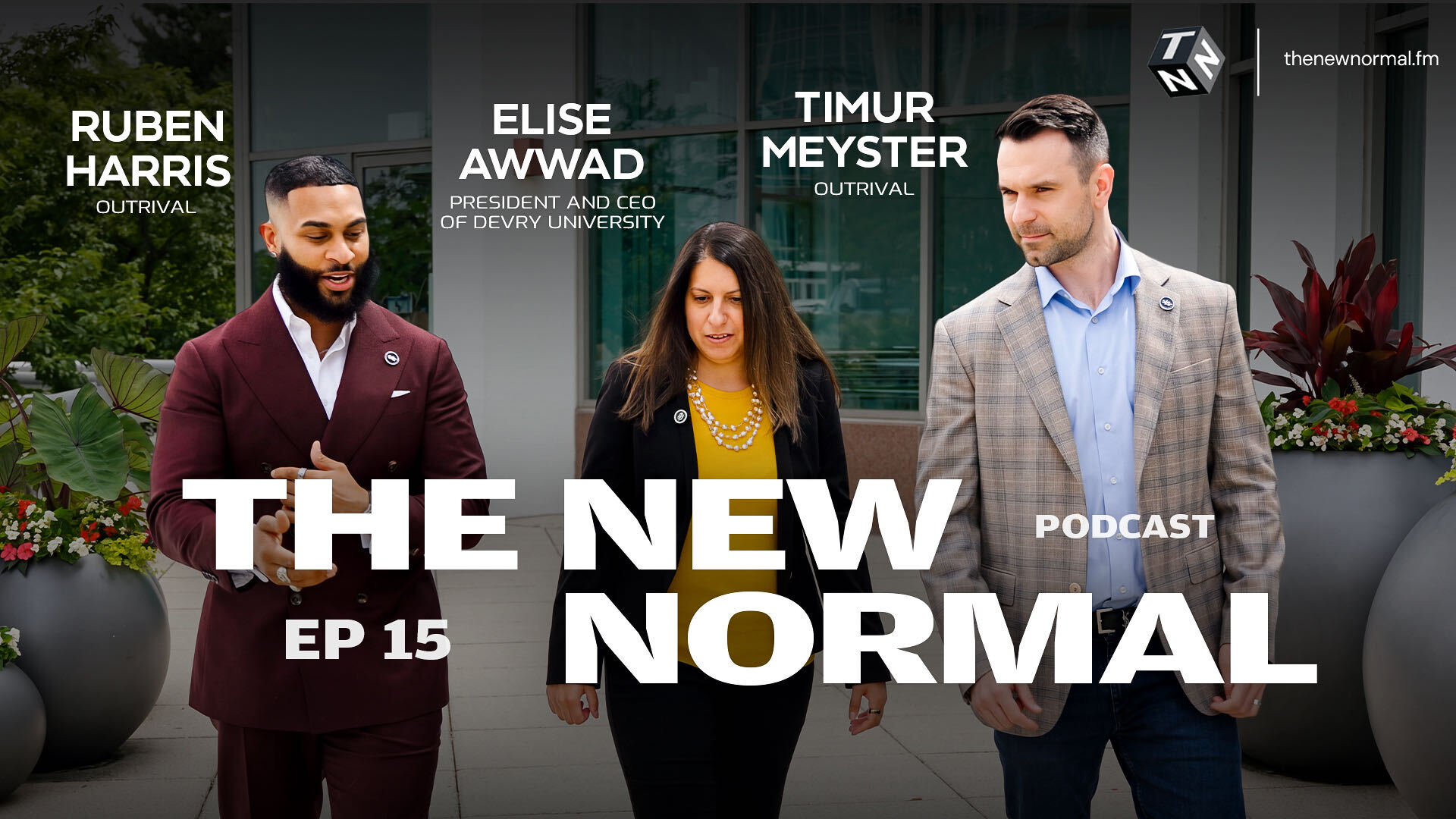






Elise Awwad is President and CEO of DeVry University. When she took the role in 2023 she became the first woman to lead the university in its history. She joined DeVry in 2004 as an admissions advisor and spent the next two decades moving through leadership roles in admissions, enrollment management, student support and career services, serving as Chief Operating Officer before becoming CEO. Under her leadership DeVry has frozen tuition for multiple years, expanded scholarships and grants, and committed to building AI literacy and skills into every course it offers.
A longtime advocate for women in leadership, Elise founded EDGE, DeVry's first women's business resource group, and launched the Women+Tech Scholars program. She is a founding member of Chief, a board director of the International Women's Forum Chicago, and a two-time Titan 100 Chicago honoree. She holds a bachelor's degree in small business management from Southern Illinois University, an MBA from DeVry's Keller Graduate School of Management, an Executive MBA from the University of Notre Dame, and a graduate certificate in public policy from the University of Virginia's Frank Batten School of Leadership and Public Policy.
Elise Awwad joined DeVry University as an admissions advisor in 2004 and became its first female President and CEO in 2023. Now in its 95th year, DeVry serves just over 32,000 learners in business, healthcare and technology programs, with technology at the center of all of them. She walks through the digital care engine DeVry built over several years from predictive analytics, automation and AI: support that answers when no advisor is online, and proactive outreach that reaches a learner who is struggling in a class before frustration turns into withdrawal. Persistence is now at a historical best of 89% plus, and the North Star is 100,000 learners by 2030 with 90% persistence and 75% plus graduation.
She is candid about what did not work. An adaptive learning tool raised satisfaction but not course success, so it never scaled. A career services AI meant to cut advisor calls drove calls up instead, until DeVry paused it and rebuilt with a startup that co-designs alongside its team. We also get into the innovation council and Shark Tank competitions that bring front-line ideas to the executive committee, why an AI agent is different from a chatbot or a copilot, why speed to lead only works with an omnichannel approach, DeVry's commitment to teach AI literacy in every course, and why she never wants to hire a bobblehead.