[00:00:00] Raghu Krishnaiah: Everyone is gonna use AI in the, in the workplace.
[00:00:02] Timur Meyster: Mm-hmm.
[00:00:02] Raghu Krishnaiah: It's a given. We wanna make sure that they understand- Mm-hmm ... what it can do for them, and that they also understand how to use it. Today's [00:00:10] the, the, uh, workplace, and within the future, is gonna be you're learning while you work. You're building capabilities- Mm-hmm
[00:00:16] Raghu Krishnaiah: while you're doing something. I think in many ways, all what I see is that we're gonna have [00:00:20] a, a very, uh, rapid expansion of new, new things being tested, which leads into the old, you know, self-fulfilling cycle of we can now advance more [00:00:30] quickly- Mm-hmm ... our, our capabilities, and help individuals more quickly in that, and help employers more quickly, help to solve the problems they're trying to solve for in the workplace.
[00:00:37] Raghu Krishnaiah: There's a lot of talk about the cost of education, [00:00:40] and the fact that it's continuing to- Mm ... to go up and up, right? There's a, you know, there's a race to $100,000 a year I keep, keep reading about, which is crazy for one year of going to college.
[00:00:49] Timur Meyster: Yeah.
[00:00:49] Raghu Krishnaiah: That [00:00:50] doesn't help anyone. The speed at which it'll get integrated into organizations-
[00:00:54] Ruben Harris: Mm-hmm
[00:00:54] Raghu Krishnaiah: will be at a pace at which we, we should be able to adapt to-
[00:00:58] Ruben Harris: Mm-hmm ...
[00:00:59] Raghu Krishnaiah: uh, if we a- [00:01:00] accept that, and, and, you know, be aware of that, and just build for it.
[00:01:03] Raghu Krishnaiah: Happy
[00:01:04] Ruben Harris: Happy Tuesday. My name's Ruben Harris. I'm here with my co-founder and co-host, Timur Meyster, and this is The New [00:01:10] Normal. The New Normal is a show where we go inside of organizations that are actually using AI in production at scale in a way that's making a [00:01:20] meaningful impact in their organizations.
[00:01:22] Ruben Harris: This is not a show about hype. It's a show where we interview leaders that have made decisions to reimagine their organizations with [00:01:30] AI at its core. It's Tuesday morning. We're in Phoenix, Arizona, on the top floor of the campus for University of Phoenix, and I'm [00:01:40] really excited to introduce our guest.
[00:01:42] Ruben Harris: Timur, can you please introduce the guest?
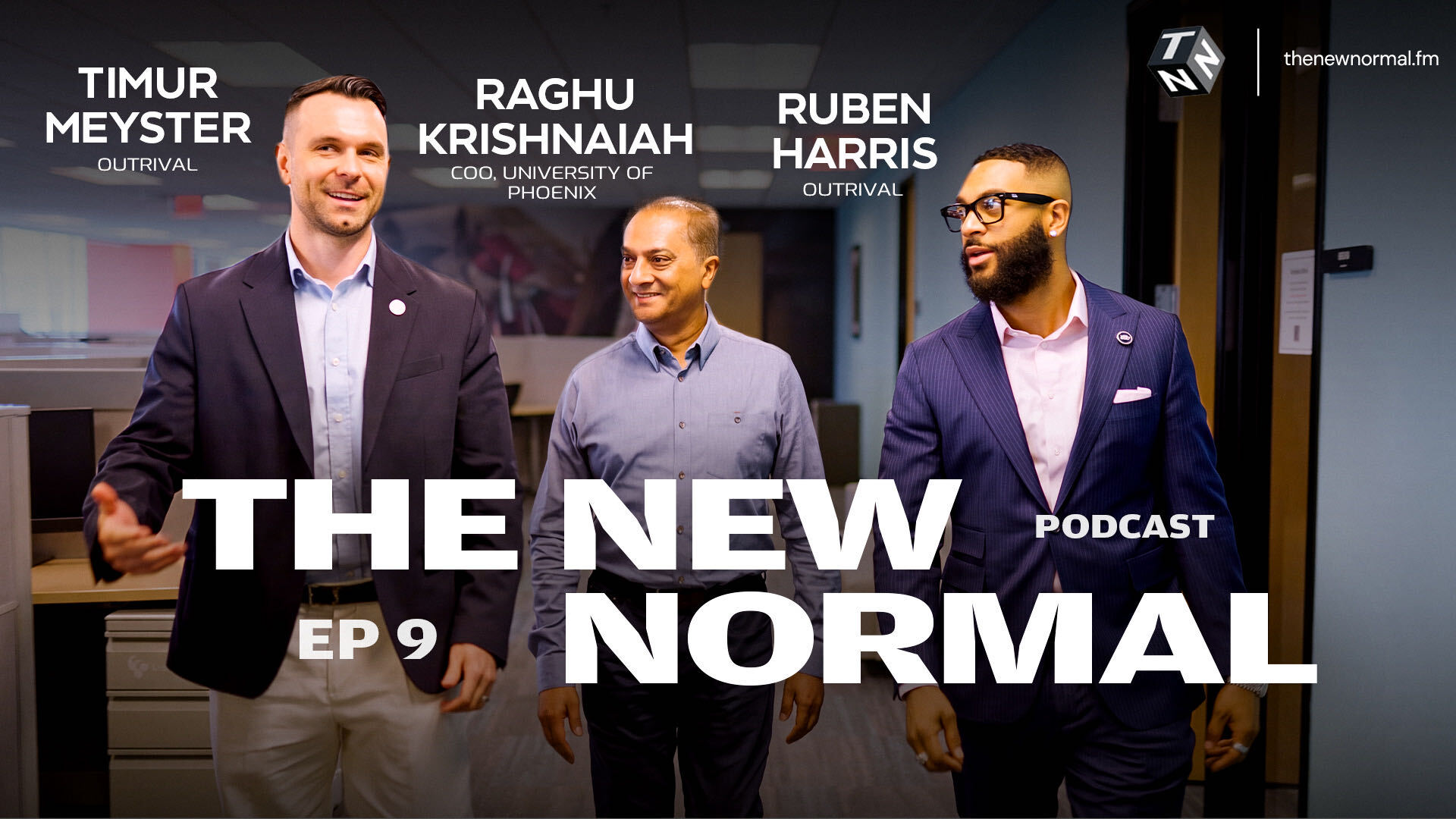
[00:01:44] Timur Meyster: Yeah. So today we have the honor of interviewing, uh, Raghu Krishnayya, who is the chief [00:01:50] operating officer at University of Phoenix. Um, as the COO, he oversees the student experience, um, specifically focusing on areas such as [00:02:00] enrollment, um, product, technology, career advising, and employer partnerships.
[00:02:06] Timur Meyster: Um, what's interesting about our guest is that, um, [00:02:10] he got a-- he, he's an MIT-trained electrical engineer with a degree from Wharton, uh, where he got his MBA. Um, he also, before higher [00:02:20] education, he also, um, worked at Lehman Brothers and Kaplan as a senior vice president. And on today's podcast, we're not just gonna unpack [00:02:30] the technology, but the strategies around deploying it, and that's one of the reasons why Ruben and I are excited to interview Raghu, who, um, is working with [00:02:40] his team to deploy AI across, um, across the student experience in the classroom, uh, driving efficiency and growth.
[00:02:47] Timur Meyster: And, um, Ruben and I speak to a lot [00:02:50] of leaders, um, on a day-to-day basis. Uh, today we're speaking to somebody who is actually deploying it now and someone who is deploying it at [00:03:00] scale. So, um, before jumping into the packed episode, I just wanna say, Raghu, welcome to New Normal.
[00:03:08] Raghu Krishnaiah: Thank you. I'm looking forward to the [00:03:10] conversation.
[00:03:10] Raghu Krishnaiah: I appreciate being here.
[00:03:11] Timur Meyster: Yeah.
[00:03:12] Ruben Harris: So why don't we start off by talking- Yeah ... a little bit about the scale of University of Phoenix, the his- the demographics of the students, and, and so, [00:03:20] so people understand what you all are all about.
[00:03:22] Raghu Krishnaiah: Yeah, absolutely. It's, uh, it's a fascinating organization. So the university was started 50 years ago. This is our anniversary coming up- Mm-hmm ... very, very soon. [00:03:30] Started by a professor at San Jose State called John Sperling, and John's vision was that, uh, and his reason for starting the university is that- [00:03:40] Traditionally, higher ed was not set up to help individuals who were in the workplace- Mm-hmm ... to help them continue to advance and learn and be able to advance in their careers.
[00:03:47] Raghu Krishnaiah: And that's sort of the genesis of what, what the university was [00:03:50] about around it. Today, about 85 or 80-plus thousand students.
[00:03:54] Ruben Harris: Wow.
[00:03:55] Raghu Krishnaiah: Um, we are across the US. We have over a million alumni, uh, who [00:04:00] work in, in many different places. Um, I think we were recently ranked as being the sing- the largest university with the most, um, uh, [00:04:10] uh, alumni in Fortune 500 companies.
[00:04:11] Ruben Harris: Wow.
[00:04:12] Raghu Krishnaiah: So some pretty- Yeah ... pretty impressive. Our, our, our students are incredible people, and they're the- clearly been successful.
[00:04:19] Ruben Harris: Can you talk a [00:04:20] little bit about the demographic? I think it's a unique, some unique stats, right? 'Cause, um, when you think about people graduating from school, you know, I think it's majority female.
[00:04:28] Ruben Harris: There's, like, people in their mid-30s. Can [00:04:30] you talk a little bit about that?
[00:04:31] Raghu Krishnaiah: Yeah. So we, we focus on helping working adults. Mm-hmm. Right? And, and typically the average person's in their mid to late 30s. Mm-hmm. Uh, they have- they've got other commitments, right? They're [00:04:40] working full time. Um, they have families.
[00:04:43] Raghu Krishnaiah: They have community responsibilities, right? So education for them is something they want to do and they strive to do [00:04:50] and they, and but it's not always a first priority for them.
[00:04:53] Timur Meyster: Mm-hmm.
[00:04:53] Raghu Krishnaiah: Um, so we do whatever we can to help those individuals find ways to be successful. Um, most of our students here are [00:05:00] coming to advance in their career.
[00:05:02] Raghu Krishnaiah: That's their, that's their whole purpose, and we have to make sure that whatever we do, however we do it, can fit into their lives so that they can continue on [00:05:10] with the rest of their life while they're also, uh, learning and advancing and growing.
[00:05:13] Timur Meyster: Yeah. And, uh, as someone who is, um, who is the COO overseeing the student experience [00:05:20] and someone who has to think about serving a student population of, uh, over 80,000 students, uh, who graduate every year, um, can you share a [00:05:30] little bit about, uh, what technology, what tools, uh, how do you structure your teams in order to, uh, provide a great student experience and drive [00:05:40] outcomes?
[00:05:41] Raghu Krishnaiah: So, you know, our focus is helping people succeed, right? Mm-hmm. Making sure that they can continue on in class no matter what other obstacles come, come a- and what they're facing, whether [00:05:50] it's educational obstacles- Mm-hmm ... financial obstacles or other things that get in the way of them being able to succeed academically and also, you know, being able to apply that learning in, in the workplace around it.
[00:05:59] Raghu Krishnaiah: [00:06:00] We, uh, we're mainly an online university.
[00:06:02] Timur Meyster: Mm-hmm.
[00:06:02] Raghu Krishnaiah: Right? Um, and so we've deployed a lot of technology, uh, to help individuals not only be able to interact and learn the [00:06:10] material remotely, uh, 'cause everyone's going to school pretty much- Mm-hmm ... from their home-
[00:06:13] Timur Meyster: Mm-hmm ...
[00:06:13] Raghu Krishnaiah: um, around it. Um, but also we, we, we have built a entire, uh- Back-end [00:06:20] data capabilities so we can actually measure- Mm-hmm
[00:06:22] Raghu Krishnaiah: what, what works and what doesn't work best for that individual student. And our focus is around how do you leverage that information [00:06:30] in a way that can then be d- sent and d- and used by our own teams to help students or by students directly themselves to help themselves be able to identify- Mm-hmm ... what is the right next [00:06:40] path and the right next step for them to take so they can continue to move forward.
[00:06:43] Timur Meyster: Yeah. A- a- and I like how, uh, in the pre-chat you, uh, mentioned something about, uh, your unique [00:06:50] view on AI, uh, and how, uh, you and y- the university view artificial intelligence. Um, there's a lot of, uh, our listeners who hear [00:07:00] terms like AI agents, AI, and they may not fully understand, um, what it actually means.
[00:07:05] Timur Meyster: So can you just provide for our listeners in terms of your unique perspective [00:07:10] and kinda the definition of, like, what is AI to you guys, and what are you using it for in terms of serving the students?
[00:07:16] Raghu Krishnaiah: Yeah. So I think everyone seems to feel, I mean, what you would [00:07:20] typically hear in the press is AI is new.
[00:07:21] Timur Meyster: Mm-hmm.
[00:07:22] Raghu Krishnaiah: Right? Artificial intelligence and these type of technologies have been around for years. Um, I remember using it, I mean, just coming out of [00:07:30] college,
[00:07:30] Timur Meyster: right? Mm-hmm.
[00:07:30] Raghu Krishnaiah: Which I'm not gonna mention when that was. So but those are very, very early- Yeah ... early, uh, advances in, in the whole field around it. Um, we use- we've been using it, uh, [00:07:40] since I've been here, which is, I joined about 10 years ago, and we use it to help, uh, create models to help identify those people who are, or those students that could be at risk of moving forward, [00:07:50] right?
[00:07:50] Raghu Krishnaiah: We use it in ways to also then, uh, be able to identify what's the best way to re- interact with those students, like what can help them move forward- Mm-hmm ... and the, the best route, whether it's a [00:08:00] digital route, like sending, you know, getting hold of them through SMS or some other means, or it's having someone call and reach out and call and actually, like, you know, talk them through the situation they're facing.
[00:08:09] Raghu Krishnaiah: So we've been using [00:08:10] those models in a long way. Clearly now with, with the LLMs, the large language models that are out there and the advancements that have been seen, uh, AI today has taken a massive [00:08:20] step forward, and I think- Mm-hmm ... that's fantastic. Uh, if you look at sort of how we've, we've, we've used it, we've used it in, like I mentioned, automation.
[00:08:28] Raghu Krishnaiah: We use it for engagement. Mm-hmm. [00:08:30] We've used it for, um, prediction. identification of, of risk. Uh, we use it for helping, uh, you know, figure out the next best path, and these are all things [00:08:40] that individually you're putting it. The new technology allows me to do all that together and also create a much better experience, not only for the [00:08:50] students- Mm-hmm
[00:08:50] Raghu Krishnaiah: but also for our staff. So instead of now, for example, um, you know, students saying, looking in eight different locations on, on a website or trying to, [00:09:00] you know, go to a tech, uh, tech support help, and then going into the classroom. They can now interact directly with a, with a, a tool, whether it's a, uh, some sort of, you know, a [00:09:10] chatbot of some sort, or they can just, you know, type in something and find out, or they can talk to our staff and also very quickly find the same information.
[00:09:17] Raghu Krishnaiah: They can do that in, in, in a significantly [00:09:20] shorter period of time.
[00:09:20] Timur Meyster: Mm-hmm.
[00:09:21] Raghu Krishnaiah: And, you know, if you go back to what I was mentioning earlier, they've got a lot of other commitments. Time is the one thing they don't have. Mm-hmm. So anything that we can do- Mm-hmm ... to [00:09:30] make sure that they maximize the, the learning that, that can occur in the time they have will allow them be more successful, and to me, AI lets me do that.
[00:09:38] Ruben Harris: Awesome. Um, let's talk [00:09:40] about that point about students that are at risk, right? Just thinking about it from a classroom perspective. A lot of times people don't ask questions. They don't raise their [00:09:50] hand. Um, you kinda gotta wait to under- Sometimes people don't understand if people are at risk. You guys have set up the infrastructure to have the data to see if there's challenges, and [00:10:00] you have the ability to anticipate things.
[00:10:02] Ruben Harris: Can you talk about the proactive versus reactive nature of things?
[00:10:06] Raghu Krishnaiah: Yeah. Um, you know, I tend to think that the, the whole line [00:10:10] between reactive and proactive is actually quite blurry, right? Mm-hmm. At, at the end of the day, our, our intent is to try to get ahead of things- Mm-hmm ... before they become a problem, right?
[00:10:18] Raghu Krishnaiah: Mm-hmm. [00:10:20] Um, and when we say at risk, it's, it's more just like what could actually, uh, get in the way of the student being able to use that time they have to successfully learn the material [00:10:30] and then be able to apply it, uh, in the workplace. Um, so when we think about proactive, reactive, we f- we lean into proactive.
[00:10:37] Timur Meyster: Mm-hmm.
[00:10:38] Raghu Krishnaiah: But clearly s- situations [00:10:40] change, right?
[00:10:40] Timur Meyster: Mm-hmm.
[00:10:40] Raghu Krishnaiah: Um, they may have had, uh, a situation outside of work- Mm-hmm ... that prevents them from showing up the next week in class, right? Mm-hmm. We need to now figure out how to help them, uh, overcome that- [00:10:50] Mm-hmm ... because clearly when you miss a week, you're gonna be a little behind.
[00:10:53] Timur Meyster: Mm-hmm.
[00:10:53] Raghu Krishnaiah: Our classes, our undergraduate are typically five weeks in length, and we only do one class at a time, again, to maximize their learning and [00:11:00] maximize their time. Our graduates are like six weeks or so on, on- Mm-hmm ... pretty much, uh, consistently. So if you miss a week, it means a lot.
[00:11:07] Timur Meyster: Mm-hmm.
[00:11:07] Raghu Krishnaiah: Uh, so you wanna make sure that when that new [00:11:10] information comes in that they were unable to attend a week, you can then very quickly move into a, a different mode with new information on what they should do next, and that's the proactive part.
[00:11:19] Raghu Krishnaiah: So they [00:11:20] feed on each other, and one builds on the other.
[00:11:22] Ruben Harris: Yeah.
[00:11:23] Timur Meyster: A- and a question, um, that Ruben and I always get asked, uh, behind the closed doors around, like, how [00:11:30] does a leader, uh, who might be in a similar position as you, either a chief, uh, operating officer or a CIO or even a CTO, um, who [00:11:40] has the mandate of deploying AI, how, what advice do you have for them on how do you actually start as a leadership team, um, thinking, creating a roadmap, [00:11:50] and getting your team to actually, uh, start somewhere?
[00:11:54] Timur Meyster: Like, what advice do you have for driving not just, uh, pilots, but actually ROI [00:12:00] and having a positive impact on the students?
[00:12:02] Raghu Krishnaiah: Yeah, so it's, um, you know, uh, this new iteration of AI, it's actually a lot of fun to use, right? Mm-hmm. [00:12:10] Um, and, you know, I encourage everybody, even if you're just starting out, is just play with it.
[00:12:14] Ruben Harris: Mm-hmm.
[00:12:15] Raghu Krishnaiah: Play with it, see what it can do. L- pick something small. Like, I was, like, for example, I love to [00:12:20] eat at fine restaurants, right? Mm-hmm. And I travel quite a bit.
[00:12:23] Ruben Harris: Mm-hmm.
[00:12:23] Raghu Krishnaiah: So I built my own little, you know, tool that says, "Help me find the restaurant." Mm-hmm. And it knows my preferences 'cause I put everything in there.
[00:12:29] Raghu Krishnaiah: Mm-hmm. [00:12:30] And so anytime I go to a new place, I will pull the tool out, and it'll give me a list of five restaurants I should go attend. And, um, and I'll say, "Okay, I wanna go book it," and it'll help me go book it. Mm-hmm. That's awesome. Now, now, now, now that's a [00:12:40] game. Mm-hmm. In some ways it's, it's fun, it's playful, but it's also a very useful type of thing.
[00:12:44] Raghu Krishnaiah: Um, so whenever you start, I'd say you always start with something like that. The, [00:12:50] the, um, uh, but if you look at where f- it's all focused on what can you achieve? What is the outcome you're trying to drive, right? Mm-hmm. So in many ways when we think about [00:13:00] AI here, we think about what are we trying to accomplish first and foremost- Mm-hmm
[00:13:03] Raghu Krishnaiah: and what are the problems that would have to be solved to help accomplish that, right? So if we, if our focus, which has always been [00:13:10] around how do you help individuals succeed, if you look at all the factors- Mm-hmm ... that are involved in it, right, there's an academic factor. There is a access to technology factor.
[00:13:18] Raghu Krishnaiah: There is a, um, you know, [00:13:20] clearly a support factor that goes in there. Um, you know, there is a content, there's a content available factor, right? All these things have to play together, uh, to do it. So when we, when we [00:13:30] talk about, uh, finding, you know, where we should, uh, you know- Mm-hmm ... go next, we, we literally have the entire organization working in tandem to say, "Okay, what are the things we're trying to solve for? [00:13:40]
[00:13:40] Raghu Krishnaiah: How do we go attack that?" And we align around what's gonna give us the next best big benefit towards doing that. This place is fantastic 'cause everybody's creative, and we have [00:13:50] more ideas than we can handle. Um, so my challenge is never about what's the right, what's the next thing to do. It's what, of those 10 or 15 or- Yeah
[00:13:57] Raghu Krishnaiah: 20 things that we got should we be doing [00:14:00] next to make sure we can make the next big, big bang?
[00:14:02] Ruben Harris: Awesome.
[00:14:03] Raghu Krishnaiah: Yeah.
[00:14:03] Ruben Harris: So you have people doing these things. Um, it'd be helpful to know who's involved and what are [00:14:10] the outcomes that you all are measuring. Like, what KPIs or key performance indicators are you measuring daily to know if something's working or not?
[00:14:17] Raghu Krishnaiah: Yeah, so it's, um, uh, yeah, it depends on [00:14:20] what the use cases we're trying to do, right? We think very much like a, like a tech company in many ways and a product company. Mm-hmm. Right? What are the use cases? Mm-hmm. How do you define those, and what the benefits you're gonna get, and what are the metrics, like to your [00:14:30] point.
[00:14:30] Raghu Krishnaiah: Um, and it varies, uh, substantially around that. And based upon that use case, like who needs to be involved in helping us design the, you know, design the, the, [00:14:40] design the solution and be able to go test them and make sure it's working around it. So I don't think there's any one particular, uh, metric or one particular piece around it.
[00:14:48] Timur Meyster: Mm-hmm.
[00:14:48] Raghu Krishnaiah: Uh, [00:14:50] we, you know, anytime we have a new technology, we always believe start small, build the capabilities, prove it out, and then move forward. We all hear about AI. The, the [00:15:00] difficulty of AI is that it's, it has tendencies to bring in information and create narratives that aren't necessarily fully factual, fully accurate.
[00:15:08] Raghu Krishnaiah: We have to work within [00:15:10] those parameters- Mm ... and know that. So a lot of what we've done in the early days was actually build guardrails, very strong guardrails around how to ensure that the information that it's- Mm-hmm ... showing us is [00:15:20] accurate, it's, it's real, and we can back it up- Mm-hmm ... with actual information and data around it.
[00:15:24] Raghu Krishnaiah: So that's where we started around it. Mm-hmm. And our technology team and our legal teams and our academic teams and [00:15:30] our operating teams are all involved in, in ensuring that the guardrails and the guidelines were set up around that. We do something similar in the classroom, right? 'Cause we want the students- Mm-hmm
[00:15:39] Raghu Krishnaiah: to also learn how to [00:15:40] use these technologies when they're going out in the workplace. So we, we think the, tend to think the same way. You know, as you mentioned at the beginning, I worked in many different industries, right? Mm. What I find [00:15:50] fascinating is that to be able to solve the number one problem, which is helping people be successful, you have to have the entire university working in tandem.
[00:15:58] Timur Meyster: Mm-hmm.
[00:15:58] Raghu Krishnaiah: Right? If they're [00:16:00] working in, in... If they're not working in sync, it's very hard to achieve the goals. And over the past several years, we've continuously improved year on year, um, [00:16:10] more students being able to move forward in their classes and being more successful. So we continue to, you know, achieve records every year around it.
[00:16:17] Raghu Krishnaiah: Mm-hmm. Which, which is fantastic 'cause that's what we're [00:16:20] about.
[00:16:20] Ruben Harris: Yeah.
[00:16:20] Raghu Krishnaiah: Yeah.
[00:16:21] Ruben Harris: You, you mentioned time earlier, and moving like a tech company. Um, and there's a perception thing in higher ed, right? So, and [00:16:30] e- and in technology too. Tech people move fast. AI's been around for a long time. There's breakthroughs every single week.
[00:16:36] Ruben Harris: But there's a perception that higher ed moves slow. Is [00:16:40] that true?
[00:16:42] Raghu Krishnaiah: So, yeah, there's, um... It depends what you're, what you're kind of referring to, right? Technology is probably one of the fastest moving- Mm-hmm ... industries-
[00:16:49] Ruben Harris: [00:16:50] Mm-hmm ...
[00:16:50] Raghu Krishnaiah: that's out there, right? And, like, within two weeks, something new is coming out.
[00:16:53] Raghu Krishnaiah: You've seen with the LLMs- Mm-hmm ... like every three months there's a new model that beats the previous model hands down, right? Mm-hmm. [00:17:00] Um, when you're talking about education there, it's, it- it, uh, moves at its own, at a different pace, um, mainly because there's lots of other factors than simply just writing a piece of code and- Mm-hmm
[00:17:09] Raghu Krishnaiah: getting a piece of [00:17:10] code out there, right? Um, there's, you know, people are people and his- you know, people learn a certain way, and you have to make sure the foundational capabilities and the [00:17:20] foundational methodologies to help people learn are intact while you're also lev- leveraging these new technologies to find ways to enhance that.
[00:17:27] Raghu Krishnaiah: Like, I think of the new AI as more as [00:17:30] bionics to individuals as opposed to, you know, um, the actual solution for the individuals. Mm-hmm. And there's, there's some very good research out there that's been shown that if you, that [00:17:40] people who just use AI to do their work-
[00:17:41] Timur Meyster: Mm-hmm ...
[00:17:42] Raghu Krishnaiah: are actually struggling to ac- to, you know, build the- Mm-hmm
[00:17:44] Raghu Krishnaiah: basic capabilities to be successful for the next level of work- Mm-hmm ... they need to do. So we have to be very cautious in sort of [00:17:50] how we, how we mo- move forward on it. Um, we have the advantage that, um, we- we- we work as a single unit, right? Mm-hmm. Everybody works together to solve a [00:18:00] sin- s- singular problem around that.
[00:18:01] Raghu Krishnaiah: Um, and we have always believed that at scale, you have to work together and build the foundational pieces together for that to be successful. That's been a core philosophy [00:18:10] for- Yeah ... for us, and that's been, been shown to work.
[00:18:12] Timur Meyster: Yeah. And, um, a lot of the time, um, like, uh, to your point earlier, like AI is not something new.
[00:18:19] Timur Meyster: There's a lot of [00:18:20] institutions that they, they, they have been using AI for predictive analytics and other ways to automate. Um, I think in this kind of new phase, um, AI [00:18:30] could take on a form or a shape, um, either being, um, like a co-intelligence with a human advisor in the loop. Um, [00:18:40] some institutions are thinking about just like, um, agents that might run auton- autonomously.
[00:18:45] Timur Meyster: Other people will refer them, to them as like chatbots. So can you share how, [00:18:50] your perspective and your frame of how sh- how do you look at AI that's touching the student, touching the advisor, and what is that right shape [00:19:00] of helping the student while also supporting the frontline advisors and frontline staff?
[00:19:05] Raghu Krishnaiah: Yeah. Our, our philosophy, my philosophy has always been around the, the, the [00:19:10] individual. A human in the loop is the critical component for, for g- being able to help others succeed.
[00:19:14] Timur Meyster: Mm-hmm.
[00:19:15] Raghu Krishnaiah: Um, you know, when you talk about the different forms of, of AI- Uh, [00:19:20] people talk about agents. Mm-hmm. To me, an agent is something that's, that, that the, the AI is doing by itself in terms of making decisions- Mm-hmm
[00:19:26] Raghu Krishnaiah: on what to, what to do next around it, right? Um, I tend to think a [00:19:30] lot of those decisions do need someone in the middle before they're actually executed and done, 'cause they're critical decisions to helping others be successful. Mm-hmm. And today, AI is still, [00:19:40] in many ways, nascent in being able to really, you know, parse that out and, and do that.
[00:19:45] Raghu Krishnaiah: Um, the delivery mechanisms are numerous. Chat, you know- Mm-hmm ... [00:19:50] models that we talked about before were some of the delivery mechanisms. A chatbot is a delivery mechanism for, for agents or, or, or, or any sort of AI, right? We've [00:20:00] been deploying chatbots here for at least five, six years. Mm-hmm. Uh, the technology we used then is gonna be enhanced by the new technology we have now, and, and should be a [00:20:10] m- much better experience for students because it allows them to do a lot more and more quickly, um, around it.
[00:20:16] Raghu Krishnaiah: Um, but I always tell, like at the end of the day, philosophically, the [00:20:20] people are gonna be critical. Mm-hmm. The people are gonna have to be part of the, part of the solution, and AI's gonna help them become even more successful.
[00:20:26] Timur Meyster: Yeah.
[00:20:26] Ruben Harris: S- speaking of people, um, we [00:20:30] talked about outcomes earlier. Um- I would argue organizations like University of Phoenix have been focused on outcomes for students to get employed, [00:20:40] all right?
[00:20:40] Ruben Harris: And so we talked about KPIs administratively. I'm gonna bring up something con- controversial. Um, there's a debate about whether AI should be used in the classroom to [00:20:50] teach students or not. And if students need to use things in the workplace, do you think that that is important to include in the classroom or not to teach students about AI? [00:21:00]
[00:21:00] Raghu Krishnaiah: Yeah. And so this goes back to, you know, people thought at one point computers were not gonna be as critical, so you didn't need to learn how to use a computer or build a computer, right? Mm-hmm. Or, or what a computer could do [00:21:10] to sort of change your, your lane, your work. Um, then in the, the cellular phone came along, right?
[00:21:14] Raghu Krishnaiah: Mm-hmm. The mobile phones with the, with- Mm-hmm. And the Apple phone came around. People were like, "Well, you shouldn't use phones- [00:21:19] right, [00:21:20] to, to, to learn and, and do it." My kids were writing papers on their phones. Mm-hmm. You have to be able to adapt- Mm ... to where things are. Everyone is gonna use AI in the, in the workplace.
[00:21:29] Timur Meyster: [00:21:30] Mm-hmm.
[00:21:30] Raghu Krishnaiah: It's a given. We wanna make sure that they understand- Mm ... what it can do for them, and they also understand how to use it.
[00:21:37] Timur Meyster: Mm-hmm.
[00:21:37] Raghu Krishnaiah: So we encourage use of AI. [00:21:40] We teach use of AI, uh, in our classes.
[00:21:43] Timur Meyster: Mm-hmm.
[00:21:43] Raghu Krishnaiah: Um, and we, we also have a, you know, a, a, um, you know, AI code- Mm-hmm ... that people have to, have to live [00:21:50] by around it- Mm-hmm
[00:21:50] Raghu Krishnaiah: right? Where they, they're not just using it just to kind of do something-
[00:21:54] Timur Meyster: Mm-hmm ...
[00:21:54] Raghu Krishnaiah: but they're using it as the way to help them learn and help them develop their capabilities much more quickly [00:22:00] in m- in a much more robust manner than we could have done before. Um, you know, I, I think we're gonna see a world where the s- the support, like with AI tutors, is gonna become much more [00:22:10] prevalent.
[00:22:10] Timur Meyster: Mm-hmm. '
[00:22:10] Raghu Krishnaiah: Cause those are, those are tools- Mm-hmm ... that can help individuals around it. So I mentioned earlier that a lot of our s- you know, everything is basically asynchronous.
[00:22:18] Timur Meyster: Mm-hmm.
[00:22:18] Raghu Krishnaiah: Our students are working [00:22:20] nights, right? Mm-hmm. They're learning nights, right?
[00:22:22] Timur Meyster: Mm. Mm-hmm.
[00:22:22] Raghu Krishnaiah: So they have to be able to get support when we don't have someone here on, you know, to actually give them live support.
[00:22:27] Raghu Krishnaiah: They need to be able to get that support These type of [00:22:30] tools are gonna help them do that whenever they have time, whenever they're ready, uh, to help them go do that. And then during their, you know, if there's something super complicated that, uh, the, the [00:22:40] tools can't help them solve, we're gonna know that.
[00:22:42] Raghu Krishnaiah: Mm-hmm. Uh, and we're gonna reach out during, during times that we're here to help support them live, um, to help them figure out how to, how to overcome the challenge that [00:22:50] they were facing. So I, um, I'm a big believer that you have to make AI part of, part of your daily life now. Yeah.
[00:22:55] Timur Meyster: Th- there is a... It's a doozy of a question, but there's always, like, the gray area in terms [00:23:00] of, like, a student writing an essay using AI, uh, and the professor, like, either being in favor of it or feeling like it's cheating.
[00:23:09] Timur Meyster: Just curious about [00:23:10] your take in terms of kinda students. The reality is that students are using ChatGPT and other tools, but what is your perspective in terms of, like, is it cheating? Is it just being savvy [00:23:20] and knowing how to use the tools? Would love to get your thoughts.
[00:23:23] Raghu Krishnaiah: Yeah, I think it's sort of how you're using it, right?
[00:23:25] Raghu Krishnaiah: Yeah. If you're using it to write your paper and submit it, that's clearly wrong. Mm-hmm. You're not learning. It's not helping you. Yeah. [00:23:30] Um, it's gonna catch up to you very quickly, right? Mm-hmm. Um, to me that is cheating.
[00:23:34] Timur Meyster: Mm-hmm.
[00:23:35] Raghu Krishnaiah: Uh, I think the, um, you gotta remember you also gotta train the professors-
[00:23:39] Timur Meyster: Mm-hmm.
[00:23:39] Timur Meyster: [00:23:40] Yeah ...
[00:23:40] Raghu Krishnaiah: around, around what is considered... And they also have to align around what is considered appropriate use of the AI. Yeah. Which is what we, we do. Spend a lot of energy working with our faculty to make [00:23:50] sure they understand it and they also- Mm-hmm ... you know, align on sort of what's important and where it should be used and how we can, can, can see it.
[00:23:56] Raghu Krishnaiah: Um, but yeah As a tool and [00:24:00] resource to help you learn, absolutely fantastic.
[00:24:03] Ruben Harris: Mm-hmm.
[00:24:03] Raghu Krishnaiah: As a answer to just submit-
[00:24:05] Ruben Harris: Nah ...
[00:24:06] Raghu Krishnaiah: absolutely not.
[00:24:07] Timur Meyster: Yeah.
[00:24:07] Ruben Harris: Can, can we shine a light on the, on the [00:24:10] student support teams and, like, the enrollment management teams, the people that are really working to provide an amazing student experience and to really support them after they're enrolled, [00:24:20] and how they're using AI, maybe after hours or during the week or to pro- provide support for students?
[00:24:26] Raghu Krishnaiah: Yeah, I think we're unique in some ways in that we've got [00:24:30] live support for pretty much almost every day.
[00:24:33] Ruben Harris: Mm-hmm.
[00:24:33] Raghu Krishnaiah: Uh, for a significant amount of hours, right?
[00:24:35] Ruben Harris: Mm-hmm.
[00:24:36] Raghu Krishnaiah: And, um, and we have teams you would not normally [00:24:40] expect provide a certain type of support also s- providing that. So for example, our tech support team gets involved in answering things much more than simply tech support.
[00:24:48] Timur Meyster: Mm-hmm.
[00:24:49] Raghu Krishnaiah: And they do that [00:24:50] because they're trained in, not only trained in it, but now with the tools that we have with AI, they can actually s- get and collect more information more readily than they could have before around, and know how to, [00:25:00] how to use that information. Um, one of the areas that, uh, you know, uh, that our teams have, have been able to really use AI and that's shown a measurable improvement- Mm
[00:25:09] Raghu Krishnaiah: more [00:25:10] recently is, is like, if you look at it, typically the staff will have to look across multiple screens and multiple, multiple systems to figure out what's, what's happening with that [00:25:20] individual student, right? Um, now with AI, we can literally give them a, a snapshot immediately, like within seconds, of, of what the student was facing, number of, you [00:25:30] know, what they called us before on, what the, um, whether they were able to actually solve it, um, and then how we can then, you know, it can help them sort of shape- Mm
[00:25:38] Raghu Krishnaiah: how best to go [00:25:40] and support that student in the next step they wanna take around it. So that's, that is a, a just a incredible benefit, 'cause instead of spending the first two minutes [00:25:50] when you, you're on the phone with someone saying, "Let me just s- figure everything out"- Mm-hmm ... you're literally spending those two minutes talking to them about exactly what to do to solve the problem that the, the student is trying to solve, and helping [00:26:00] them work through that to figure out the next step for them.
[00:26:02] Raghu Krishnaiah: So do that at scale across, you know, thousands of calls or hundred thousands of calls and, and, and whatnot, the benefits are [00:26:10] humongous, right? And the benefits is, are primarily around students are, are be able to actually, uh, s- get back on track, stay on track, and continue [00:26:20] forward around it. Mm-hmm. So that's what we're seeing the, the impacts.
[00:26:22] Timur Meyster: Yeah. Yeah. And as a publicly traded company, obviously you guys have your shareholders. You have to keep the student experience front and [00:26:30] center, and also reinvesting into building the platform, the technology, the data, the predictive analytics. Can you talk about, uh, as the CEO, how do you think [00:26:40] about the areas where there's opportunities and ROI, either now or the next 5 to 10 years, that you're excited to run experiments and double down on [00:26:50] in order to kind of, kind of identify those, uh, wins?
[00:26:54] Timur Meyster: Some of them might be quick wins, some of them are gonna require investment to further give you guys that [00:27:00] edge in providing, uh, a top, um, student experience, while also thinking about other stakeholders kind of at the table who care about ROI.
[00:27:09] Raghu Krishnaiah: Yeah. So I, [00:27:10] the, let me just start by saying it's our focus. We were privately held- Mm-hmm
[00:27:14] Raghu Krishnaiah: now we're publicly held. Our focus has not shifted.
[00:27:16] Timur Meyster: Mm-hmm.
[00:27:17] Raghu Krishnaiah: Right? It's still 100% on helping people be [00:27:20] successful. Um, and that which means that what we, you know, um, is how do you continue to reinvest-
[00:27:26] Timur Meyster: Mm-hmm ...
[00:27:26] Raghu Krishnaiah: in new ways and better ways of improving those outcomes for [00:27:30] individuals, right? Um, we spent a lot of energy, uh, in the past several years connecting learning to work.
[00:27:36] Timur Meyster: Mm-hmm.
[00:27:36] Raghu Krishnaiah: So it's not just learning to learn, um, but it's [00:27:40] actually how do you mount up, take that learning and be successful- Mm-hmm ... in, in the career space. And, and our model, everything from our, our faculty that are practitioners in their field-
[00:27:49] Ruben Harris: [00:27:50] Mm-hmm ...
[00:27:50] Raghu Krishnaiah: um, to the learning, you know, the one, one course at a time model, and the, you know, our focus on skills, like every single course now is tied to skills.
[00:27:57] Ruben Harris: Mm-hmm.
[00:27:58] Raghu Krishnaiah: We can now show individuals how [00:28:00] that learning applies directly to the work that they're doing- Mm-hmm ... and, and where they wanna go in their careers. So we built a series of career tools that'll take, you know, your whole experience in the past, um, and [00:28:10] show, you know, options for you to consider as you think about your career going forward. Every single course you take, that, it changes automatically. So you start seeing, you know, over [00:28:20] time, you know, your, your pr- your options opening up in different ways that you may not even thought about and considered before- Mm-hmm ... 'cause we can now align learning to work and, and take it back and [00:28:30] forth around it, right? Yeah. Um, so I think that's, that's, that's where we kinda see that. The, from an economics perspective- Uh, the more y- the people are [00:28:40] successful, the better off everybody is.
[00:28:42] Timur Meyster: Mm-hmm.
[00:28:43] Raghu Krishnaiah: And that's literally what the 100% focus is. Uh, we spend time talking about that more than anything else. [00:28:50]
[00:28:50] Timur Meyster: Yeah. Got it. And, and what's interesting is, uh, and I love the point you made about not just graduation, 'cause a lot of higher education leaders, they emphasize, "We wanna help our students graduate."
[00:28:59] Timur Meyster: [00:29:00] Um, you guys are going a step further saying it's not just learn to learn, it's learn to work. To get a job. Um, yeah, to get a job. So, um, when it comes to [00:29:10] especially the current, um, kinda job market, right, that's changing, um, employers are, uh, probably looking for new skillsets or kinda [00:29:20] skillset that involve, uh, AI or other technology.
[00:29:23] Timur Meyster: Can you share from the employer partners that you speak with, um, what are the-- what feedback are you hearing from [00:29:30] them? Um, what are they looking for in the market? So if our listeners are maybe a student who is, uh, came across a podcast, how should they think about kind of foolproofing [00:29:40] their own career for the current job market?
[00:29:43] Raghu Krishnaiah: That's a big question, right? They want. Yeah. They want. 'Cause there's definitely- Future proof ... the job market is in, is in, is in flux today, right?
[00:29:49] Timur Meyster: Yeah.
[00:29:49] Raghu Krishnaiah: [00:29:50] Um, let me just start with by saying, you know, you can do, you can do well and do good at the same time.
[00:29:56] Timur Meyster: Mm-hmm. Yeah.
[00:29:57] Raghu Krishnaiah: Right? A- and, uh, our, the, if you think, take [00:30:00] that mindset, um, everything sort of falls into place.
[00:30:03] Timur Meyster: Mm-hmm.
[00:30:03] Raghu Krishnaiah: Um, because doing well means focusing on what the individual needs.
[00:30:08] Timur Meyster: Mm-hmm.
[00:30:09] Raghu Krishnaiah: In this case, [00:30:10] the individual's actually more than one. It's not just a student.
[00:30:13] Timur Meyster: Mm-hmm.
[00:30:13] Raghu Krishnaiah: It's also the employer.
[00:30:14] Timur Meyster: Yep.
[00:30:14] Raghu Krishnaiah: Right? And in many ways, the university is a, a, I, I use this term kind of [00:30:20] loose, but a platform for that interface to actually happen- Mm-hmm
[00:30:23] Raghu Krishnaiah: and reduce the friction between l- learning and working. Um, today that, that, uh, you know, [00:30:30] historically it's been go to school, go to work, go back to school, go to work, right? Around it. And then you may learn, continue to learn a little bit on the job- Mm ... but there is more of a back and forth [00:30:40] type of thing.
[00:30:41] Raghu Krishnaiah: Today's, the, the, uh, workplace and even the future is gonna be you're learning while you work. You're building capabilities- Mm-hmm ... while you're doing something. [00:30:50] Um, and you're also need to build capabilities outside of that to help you move to the next level of doing something. So the, the, it gets, it's, it's not so much a back and forth, [00:31:00] it's now more in line around it.
[00:31:01] Raghu Krishnaiah: Mm-hmm. So learning becomes a continual part of the job.
[00:31:05] Timur Meyster: Mm-hmm.
[00:31:05] Raghu Krishnaiah: Right? And employers are expecting their employees to [00:31:10] continuously learn and develop new capabilities. Uh, I think if you look at every single decade, the pace of change has increased [00:31:20] exponentially in each decade. Mm-hmm. We're hitting that next inflection point where the pace of change is gonna be faster.
[00:31:25] Raghu Krishnaiah: So individuals are gonna have to, uh, you know, employees, students, are gonna have to [00:31:30] learn, uh, continuously. Mm-hmm. What you learn today, I think the half-life of skills used to be, I don't know, seven, eight years. Mm. Now it's, like, two to three. Yeah. Right? And people talk about those things, and I don't know what the actual [00:31:40] number is, but it's, it's shorter.
[00:31:41] Raghu Krishnaiah: Yeah. Right? So you're gonna have to cons- cons- find ways to develop on that. Um- Uh, so I think that's what employers are [00:31:50] asking for, and that's what students are asking for, is help me figure out how I make that, that con- continual, uh, the pathways where I can, where I can find the, the learning I need [00:32:00] to take, make sure I, I get that- Mm-hmm
[00:32:02] Raghu Krishnaiah: make sure I, I actually know the material and can prove it, um, so that the employer can see it. I can be also more successful in the workplace. But the employer [00:32:10] also will allow me to n- move on to other places and do more interesting things and continue to grow and advance. Yeah.
[00:32:15] Ruben Harris: Yeah. So we talked about what students need to learn, and yet you gave great answers for [00:32:20] that.
[00:32:20] Ruben Harris: Now let's talk about what faculty and administration needs to learn, not just from the top, but the mid-level, junior level. Um, when you think about, when [00:32:30] people think about experiments, a lot of times people forget that some experiments work, some experiments don't work. To your point, higher ed moves a [00:32:40] little slower because we're dealing with humans and making sure they have great outcomes.
[00:32:43] Ruben Harris: It's not just testing things that may or may not work that may not always affect a human. So what is the balance? How do you, [00:32:50] how do you-- What are the things that staff needs to learn, and how can they play with things, like you mentioned earlier, and try things that may or may not work and, and, and approach that?
[00:32:59] Ruben Harris: How do you think [00:33:00] about that? What skills do they need?
[00:33:01] Raghu Krishnaiah: Yeah, I think in many ways the culture of the organization has to be about test and learn.
[00:33:05] Ruben Harris: Mm-hmm.
[00:33:05] Raghu Krishnaiah: Right? And that's something that we've built here- Mm-hmm ... quite extensively. Uh, so we're willing to take, [00:33:10] take bets on things and, and bets on people- Mm-hmm
[00:33:12] Raghu Krishnaiah: and ideas that may or may not pan out.
[00:33:14] Ruben Harris: Mm-hmm.
[00:33:15] Raghu Krishnaiah: Um, but you also gotta think about the other side is you wanna make sure those bets you're taking [00:33:20] are small enough-
[00:33:21] Ruben Harris: Yep ...
[00:33:21] Raghu Krishnaiah: that the, you know, if it doesn't pan out, you haven't really-
[00:33:24] Ruben Harris: Mm-hmm ...
[00:33:24] Raghu Krishnaiah: lost too much in terms of time and energy against that.
[00:33:27] Ruben Harris: So you time box it.
[00:33:28] Raghu Krishnaiah: You time box it. You scale. You [00:33:30] take a long scale. Um, this is where AI also is helping quite a bit- Mm-hmm ... 'cause now we can test and prototype things much more quickly- Mm-hmm ... much more easily around it.
[00:33:39] Ruben Harris: Mm-hmm.
[00:33:39] Raghu Krishnaiah: Uh, and you [00:33:40] can do that in a very short timeframe. Mm-hmm. What used to take us months, now we can do in weeks.
[00:33:44] Ruben Harris: Nice.
[00:33:45] Raghu Krishnaiah: And so the, um... I think in many ways, uh, what I see is that we're gonna have a, a [00:33:50] very, uh, rapid expansion of new, new things being tested- Which leads into the old, you know, self-fulfilling cycle of we can now advance more quickly-
[00:33:59] Ruben Harris: Mm-hmm ...
[00:33:59] Raghu Krishnaiah: our, our [00:34:00] capabilities and help individuals more quickly in that, and help employers more quickly, help to solve the problems they're trying to solve for in the workplace, um, because of AI around it.
[00:34:08] Raghu Krishnaiah: So test and learns in the [00:34:10] culture, um, and being able to continue to m- move quickly I think is gonna be our biggest strength.
[00:34:15] Ruben Harris: Yeah. And the, and the skill that... So test and learn is the mindset, that's the culture that you [00:34:20] described. So what skills do faculty need to have in order to future-proof themselves and continue leading and teaching students as well?
[00:34:28] Raghu Krishnaiah: Uh, so, you know, uh, our [00:34:30] faculty are maybe unique in compared to other types of schools, 'cause they're practitioners themselves.
[00:34:34] Ruben Harris: Mm-hmm.
[00:34:35] Raghu Krishnaiah: They're working in the workplace. They, they already kinda know- Mm-hmm ... what, what, what [00:34:40] they need to do to be able to- Mm-hmm ... you know, develop new, new prototypes and try new things.
[00:34:44] Raghu Krishnaiah: They're, they're already exposed to the concepts of, of, um, you know, product development- Mm-hmm ... uh, [00:34:50] and continuous evolution and, um, you know, test and learn. Um, so and, and I think we have an advantage-
[00:34:56] Timur Meyster: Mm-hmm ...
[00:34:56] Raghu Krishnaiah: just coming out, out of that things. Um, I, I think, you know, what [00:35:00] we try to do, and our provosts and others try to do very, very, uh, uh, you know, syst- sy- systematically is how do we incorporate them more into, into the everyday-
[00:35:09] Timur Meyster: Mm-hmm
[00:35:10] Raghu Krishnaiah: uh, outcome support for our students-
[00:35:12] Timur Meyster: Mm-hmm ...
[00:35:12] Raghu Krishnaiah: um, and into the university as well. So we get a lot of great ideas from our faculty. Uh, I've met many of them. Um, they're fantastic. They're really, [00:35:20] really bright, fun people, uh, very outgoing. A- and, um, and but they're also 100% focused on the same thing we're focused on-
[00:35:27] Timur Meyster: Yeah
[00:35:28] Raghu Krishnaiah: around it. So that, that really [00:35:30] kinda makes it a lot easier, our jobs a lot easier. Um, I think, you know, a lot of, lot of places, building that culture, if they can build that, it'll happen.
[00:35:38] Timur Meyster: Mm-hmm. '
[00:35:38] Raghu Krishnaiah: Cause every school I [00:35:40] visited, uh, the faculty I've met, they're all very bright people who want to do good, um- And, and, um, and wanna do well.
[00:35:48] Timur Meyster: Mm-hmm.
[00:35:48] Raghu Krishnaiah: Um, and, and they, [00:35:50] um, just, you know, if you give them the opportunity, I think it'll, it'll, it'll happen by itself.
[00:35:55] Timur Meyster: Yeah. Yeah. Um, question around, uh, kinda a bit of the [00:36:00] future. So, uh, Ruben and I, we have a lot of, uh, found- founders from Silicon Valley who believe that artificial general intelligence, um, like it's already here being developed by [00:36:10] companies like Anthropic, OpenAI.
[00:36:12] Timur Meyster: Um, personally, I have a belief that, uh, you might have an Einstein who join your company, but if they, they don't have access, they don't know [00:36:20] your guardrails, your policies, they're pretty useless. They still have to go through the training. They still need to be integrated. Um, yeah, yeah. And that will take, that will take years.
[00:36:27] Timur Meyster: Um, one of our, uh, [00:36:30] previous guests mentioned that, um, kinda the higher ed institutions of today, for the most part, were designed last century. I think, uh, schools like [00:36:40] University of Phoenix that went online, they almost, like, started to use the technology to take the initial step of kind of thinking about skills, the learning, the working adult. [00:36:50]
[00:36:50] Timur Meyster: What is your opinion in terms of the next 10 or 20 years in terms of h- how will this new technological shift, um, kinda reinvent [00:37:00] the institutions of the future? And there's no right or wrong answer, but I would love to hear your thoughts about the future and how you think the, the higher institution will [00:37:10] evolve, uh, given the technological change that's happening.
[00:37:13] Raghu Krishnaiah: Yeah. So I think, like, always, the, uh, future is very much written by the workplace, right? Um, [00:37:20] particularly when it comes to learning and so forth. And just like today, we're gonna see probably more of this where there are s- there are different types of- Mm ... institutions out there, depending on the, the need for the [00:37:30] workplace and, and the need that they're trying to solve for any particular point in time.
[00:37:33] Raghu Krishnaiah: Um, our elite universities, where there's a lot of research done, probably won't change as much-
[00:37:39] Timur Meyster: Mm-hmm ...
[00:37:39] Raghu Krishnaiah: as some [00:37:40] of the other ones. Other schools, uh, like ours will change quite a bit because of, uh, sort of who we serve and how we serve it, and sort of where we're, where we're heading around it, right? Um, [00:37:50] I think though every institution is going to have to come to grips with the fact that you have to, um, you gotta focus on the needs of the in- [00:38:00] of the, the ecosystem, right?
[00:38:02] Raghu Krishnaiah: The individuals, the corporations, and the students, and you gotta solve within those needs. So today there's, there's always, there's a lot of talk about the [00:38:10] cost of education and the fact that it's continuing to- Mm-hmm ... to go up and up, right? There's a, you know, there's a race to $100,000 a year I keep, keep reading about, which is crazy for one year of going to [00:38:20] college.
[00:38:20] Timur Meyster: Yeah.
[00:38:20] Raghu Krishnaiah: That doesn't help anyone-
[00:38:22] Timur Meyster: Mm ...
[00:38:22] Raghu Krishnaiah: around that. That's gotta be part of your equation. Yeah. You have to think about that as part of something to solve for around it. [00:38:30] Um, you know, and, and people, you know, question the value of it. You gotta solve for that as well. Mm-hmm. 'Cause the value, anyone like I know that's going to school now is not [00:38:40] just...
[00:38:40] Raghu Krishnaiah: They're not... Yes, they're going to school to learn and also to be enriched from- Mm-hmm ... from education, but they're also looking for, "How is it gonna take me to my next step- Yeah ... around it," right? [00:38:50] Um, so you have to keep that as part of the equation anytime you put in it. Um, I think you're, you're starting to see more and more schools try to figure that out.
[00:38:59] Timur Meyster: Mm-hmm.
[00:38:59] Raghu Krishnaiah: [00:39:00] Around how do you, you know, find a way to create a more economical delivery, uh, and support for individuals while also helping make sure they can be successful once they learn [00:39:10] what they've learned and continue to evolve around it. Um, I've always had the belief that a degree is, is still gonna be important.
[00:39:16] Timur Meyster: Mm.
[00:39:16] Raghu Krishnaiah: People want the degree. Employers want the degree. [00:39:20] Um, and it has real meaning and, and, and, um, k- uh, you know, a, real meaning in sort of what it, what it delivers and what it provides. But the pathway [00:39:30] towards it are shifting.
[00:39:31] Timur Meyster: Mm-hmm.
[00:39:31] Raghu Krishnaiah: We see it every day. You know, I mentioned earlier that you're not just going to school then going to work.
[00:39:36] Raghu Krishnaiah: You're learning and using that while you're [00:39:40] continuing to work. And while you're working, you're now trying to figure out what next I need to learn and making sure you move within it. So you're gonna see that in a, you know, that, um, [00:39:50] alignment and, and that integration much more in the future than you do today.
[00:39:53] Raghu Krishnaiah: Mm-hmm. And whether you're talking about with, you know, quote, "traditional higher ed" versus a, a school like University of [00:40:00] Phoenix, which focus on working adults- Yeah ... you're gonna see that those two start coming together around how do I actually do that?
[00:40:06] Ruben Harris: So for the organizations that have not changed or that [00:40:10] don't have that culture of change yet but wanna get there, right, obviously you all are ahead of others.
[00:40:14] Ruben Harris: What may be, like, five, whatever, five steps or whatever, what playbook do you [00:40:20] have for them as, like, "Hey, I wanna do this, but I don't know how"? What steps would you give them to create the culture and start trying to do things?
[00:40:27] Raghu Krishnaiah: Yeah, I, I think it starts with, uh, uh, uh-- [00:40:30] Building a culture is not as-- There's no one answer to build a culture, right?
[00:40:34] Raghu Krishnaiah: Um, you gotta first start with, yes, uh, you have to recognize this is something we have to solve for.
[00:40:39] Timur Meyster: Mm-hmm. [00:40:40]
[00:40:40] Raghu Krishnaiah: Um, and this is important. It's gotta start with that awareness first. If you have that awareness, then it's gonna be, you know-
[00:40:46] Timur Meyster: Mm-hmm ...
[00:40:47] Raghu Krishnaiah: very bespoke to that organization, sort of how do you build that [00:40:50] culture around it.
[00:40:51] Raghu Krishnaiah: Um, but if the awareness isn't there, it's gonna be a do or die moment, I think, for many organizations.
[00:40:57] Ruben Harris: Okay. Got
[00:40:58] Timur Meyster: it. Yeah.
[00:40:58] Ruben Harris: Let's go on to rapid fire.
[00:40:59] Timur Meyster: [00:41:00] Yeah. So at, at this point, we do the rapid fire. You can give one, one-word answer, quick responses. And, um- Okay ... we wanna just kinda make it fun and get, um, kinda pick your brain on a, [00:41:10] on, on a lot of different topics.
[00:41:11] Timur Meyster: Um, when it comes to, uh, beliefs, um, is there something that you believe is counter to kinda the [00:41:20] general, um, kinda perspective that higher education leaders have when it comes to AI?
[00:41:26] Raghu Krishnaiah: When it comes to AI, huh?
[00:41:27] Timur Meyster: Or maybe just counter- Yeah ... to just higher [00:41:30] education, uh, like as a vehicle for that upscaling.
[00:41:33] Raghu Krishnaiah: Look, I'm a big proponent on the, what AI's gonna give us, right?
[00:41:36] Raghu Krishnaiah: I don't, I don't believe in the doom and gloom scenario- Mm-hmm ... that's going [00:41:40] out there. It is definitely going to change the workplace- Mm-hmm ... and jobs. Every job's gonna be impacted by AI, just like every job has been impacted by computers- Mm-hmm ... and mobile and every other [00:41:50] internet and everything else. It's gonna happen faster, and we just have to keep up with it.
[00:41:54] Raghu Krishnaiah: But I'm, I'm a, I'm actually look- I actually believe that, uh, that speed of which, I [00:42:00] think you mentioned earlier, speed at which it'll get integrated into organizations-
[00:42:03] Timur Meyster: Mm-hmm ...
[00:42:04] Raghu Krishnaiah: will be at a pace at which we, we should be able to adapt to-
[00:42:08] Ruben Harris: Mm-hmm ...
[00:42:08] Raghu Krishnaiah: uh, if we a- accept [00:42:10] that and m- and, you know, be aware of that and just build for it.
[00:42:13] Ruben Harris: Yeah. Yeah. A lot of people don't know that you grew up as a classical pianist. I, I'm a classical cellist. Uh, what kind of music do you [00:42:20] listen to whenever you're being creative, or d- or what do you do when you wanna be creative and play with ideas?
[00:42:25] Raghu Krishnaiah: Yeah, I'll listen to jazz.
[00:42:26] Ruben Harris: Jazz?
[00:42:27] Raghu Krishnaiah: Yeah, 'cause that's all about creative, right?
[00:42:28] Raghu Krishnaiah: Yeah,
[00:42:28] Ruben Harris: yeah.
[00:42:29] Raghu Krishnaiah: Yeah, so that's [00:42:30] what I listen to around that.
[00:42:31] Ruben Harris: Awesome. Awesome. Yeah.
[00:42:32] Timur Meyster: Yeah. And, um, th- this question is, is about, uh, like pro- proactive outreach to the student, whether it's, um, a student [00:42:40] who is applying, uh, so the applicant or the student who is, um, already enrolled. Um, there might be misconceptions whether students today will answer their phone if you [00:42:50] call them.
[00:42:50] Timur Meyster: Uh, kind of what is your take on that? Will students answer the phone if they receive a phone call?
[00:42:56] Raghu Krishnaiah: Uh, y- yes, they will. But it's gotta be purposeful, right?
[00:42:59] Timur Meyster: Yeah.
[00:42:59] Raghu Krishnaiah: Mm-hmm. [00:43:00] Um, uh, y- so we work on across all, all different types of channels when we, when we work- Yeah ... with students, right? And they can, they pick and choose what they want, and we- Mm-hmm
[00:43:08] Raghu Krishnaiah: we respond within that. [00:43:10] We also are proactive in some other channels, like voice. Mm-hmm. If, if it's a critical s- scenario, we will definitely go and help support them ar- around that piece of it. But yeah, more people are going to chat and emails [00:43:20] now than they ever have before. Yeah.
[00:43:21] Timur Meyster: Yeah. No, I, I, I like that 'cause, uh, it's not a, like, one, um, solution fits all.
[00:43:26] Timur Meyster: Um, and it does depend, like if someone is getting a [00:43:30] phone call and they already spoke to their advisor and they have them saved in their contact book, right? Right. Or is the caller ID saying that it's University of Phoenix, or is it just, like, [00:43:40] unknown number that they previously haven't seen? So, um, I like, I like your perspective in terms of using it as a tool and as a
[00:43:46] Ruben Harris: channel.
[00:43:46] Ruben Harris: Yeah, and not a call out of the blue. Yeah. Like you said, it's purposeful. I like, I like that word. Let's [00:43:50] talk about that tool that you built for yourself, the fine dining tool.
[00:43:52] Raghu Krishnaiah: Yeah.
[00:43:52] Ruben Harris: What's the best fine dining recommendation you got from AI?
[00:43:56] Raghu Krishnaiah: Oh, geez. Uh, you know, it's-- I was [00:44:00] in Portugal. Mm-hmm. I was in Lisbon, right?
[00:44:02] Raghu Krishnaiah: And there's literally this small little restaurant. I never would've heard of it. Mm-hmm. Never would've seen it.
[00:44:07] Ruben Harris: Mm-hmm.
[00:44:07] Raghu Krishnaiah: Uh, it popped up on there, um, and I had a great, [00:44:10] great meal, right? Mm-hmm. People were super friendly, uh, food was fantastic, and there's literally, like, eight people in the restaurant. Mm-hmm.
[00:44:15] Raghu Krishnaiah: That's all-- That's the size of the restaurant. Mm-hmm. You couldn't put any more than eight people in there. Mm-hmm. So I think that [00:44:20] was- It's amazing ... unique, yeah.
[00:44:21] Ruben Harris: Awesome. Awesome.
[00:44:21] Timur Meyster: Yeah. Well, um, I think at this point in the podcast, uh, we, um, appreciate your time, um, but maybe you can leave our [00:44:30] audience with some of the last, uh, thoughts in terms of, uh, where you see kinda AI going and, um, how should, uh, people, uh, maybe approach [00:44:40] AI, uh, in the next few years just to kinda make sure that their university or their organizations are, uh, kinda staying ahead.
[00:44:47] Raghu Krishnaiah: Uh, so, you know, AI [00:44:50] has a chance to personalize everything for the individual, right? And do it in a way that will help them be successful in the environment that they're in, and that's [00:45:00] powerful. Uh, 'cause I'm gonna be more engaged, and we're all gonna be more engaged- Mm-hmm ... if it, if I see it doing things for me.
[00:45:05] Ruben Harris: Yep.
[00:45:05] Raghu Krishnaiah: Right? With- within whatever organ-- w- uh, lo- location I'm in around it. [00:45:10] So whether it's being able to help me figure out, you know, the next step in my learning path, whether it's helping, uh, students figure out the next, you know, step in their career path, whether it's helping [00:45:20] employers figure out, you know, who do I- Mm-hmm
[00:45:21] Raghu Krishnaiah: you know, w-where do I already have the talent I need, and I'm trying to, you know, as I'm trying to build something new, how do I bring those people into this new [00:45:30] project very quickly around it? It's gonna be able to do that and do that at scale- Mm-hmm ... uh, very quickly, uh, and very inexpensively. I think that's a big win for everyone because today [00:45:40] there's too much friction between learning and, and working, and that friction's gotta go away, and this will be a great help to help do that.
[00:45:48] Ruben Harris: Well, Raghu, thank you for your time. [00:45:50] We enjoyed spending time with you this morning, and this is "The New Normal."










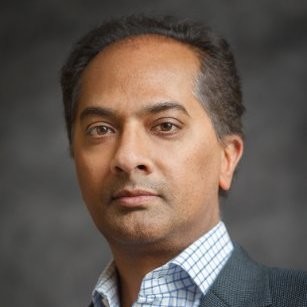
Raghu Krishnaiah is Chief Operating Officer of University of Phoenix, which has spent 50 years building flexible online degree programs for working adults. His remit spans nearly every part of the student journey: academic, financial aid, enrollment, technology and career advising, along with the university's corporate, tribal and community college relationships, product development, operational analytics, regional campuses and business innovation.
He came to Phoenix after serving as Chief Operating Officer of Western Governors University, where he led growth in student outcomes, and before that as Senior Vice President at Kaplan Higher Education Group. Earlier he held senior operating roles at global organizations in financial services, management consulting and business services, building more than 20 years of P&L, strategy, product and technology leadership with a particular focus on data and analytics that drive faster, more accurate decisions. He has become a frequent voice on generative AI and workforce development, speaking on upskilling and reskilling at SXSW EDU, World Summit AI and the ASU+GSV Summit. He holds a bachelor's degree in electrical engineering and computer science and a master's in electrical engineering from MIT, and an MBA from the Wharton School at the University of Pennsylvania.
This episode of The New Normal was recorded on the top floor of University of Phoenix's campus in Phoenix, Arizona. Raghu Krishnaiah is the university's Chief Operating Officer, responsible for a student experience that runs from enrollment and technology to career advising and employer partnerships. His students number more than 80,000, most of them working adults in their mid to late 30s with full-time jobs, families and community commitments. The university was founded 50 years ago by San Jose State professor John Sperling to serve people already in the workplace, and it now counts more than a million alumni. Krishnaiah, an MIT-trained electrical engineer with a Wharton MBA, runs it with a product company's discipline.
Ruben Harris and Timur Meyster ask how a 50 year old institution puts AI into production. Krishnaiah explains that Phoenix has used AI for about a decade, building models that identify students at risk and choose the best way to reach them, whether by SMS or a phone call, and that large language models now let the university combine automation, engagement, prediction and next best path guidance into one experience. The work started with strong guardrails built by the technology, legal, academic and operating teams together. A human stays in the loop for critical decisions, AI is taught in the classroom under an AI code, and support staff now see a full snapshot of a student within seconds instead of searching across multiple screens. The culture is test and learn: small, time boxed bets, with prototyping that used to take months now done in weeks.
The through line is connecting learning to work. Every course is tied to skills, career tools update as students progress, and Krishnaiah argues that learning has become a continual part of the job as the pace of change accelerates. He still believes the degree matters, says higher education has to solve for cost and value, and holds that students will answer the phone when the call is purposeful. For leaders whose organizations have not started, awareness comes first. Without it, he warns, this becomes a do or die moment.
Key ideas from the conversation
- AI is not new at Phoenix. Predictive models have flagged students at risk for about a decade, and large language models now tie automation, engagement, prediction and next best path guidance together.
- Time is the one thing working adult students don't have, so anything that helps them get more learning out of the time they have helps them succeed.
- The line between proactive and reactive support is blurry. Phoenix leans proactive and shifts fast when new information arrives, such as a missed week in a five week course.
- Start by playing with AI on something small, then anchor every effort on the outcome you are trying to drive.
- Think like a product company: define the use case, its benefits and its metrics, start small, prove it out, then move forward.
- Guardrails come first. Technology, legal, academic and operating teams worked together so that what AI shows is accurate and can be backed up with data.
- AI works best as bionics for people rather than a replacement, and a human in the loop stays critical for decisions that affect student success.
- Everyone will use AI in the workplace, so Phoenix encourages and teaches it in class. Writing and submitting a paper with it is cheating; using it as a tool to learn is fantastic.
- Support staff get a full student snapshot within seconds, so the first two minutes of a call go to solving the problem instead of searching systems.
- Going public did not change the focus, which is still 100 percent on helping students succeed, with every course tied to skills and career tools that update as students learn.
- Learning is now continuous with work, and employers expect their people to keep building new capabilities as the half-life of skills shrinks.
- Culture is test and learn: small, time boxed bets, with prototypes that used to take months now built in weeks.
- The degree still matters, but the pathways toward it are shifting, and every institution has to solve for cost and value.
- Every job will be impacted by AI, just as every job was by computers and mobile. It will happen faster, and organizations have to keep up.
- Students will answer the phone if the call is purposeful, though more of them now choose chat and email.










.png)