[00:00:00] Taylor Stockton: In order for America to win on AI, we have to win on three things. We have to win on AI innovation. Secondly, we have to have the best AI infrastructure. And then third is AI diplomacy. [00:00:10] Um, we really believe this is a global conversation, and we wanna make sure that other countries around the world are building on the American tech stack.
[00:00:18] The number one principle that [00:00:20] this administration cares about in terms of how we win is winning in a way that fundamentally improves the livelihood of American workers. Part of the thinking that I think resonates with [00:00:30] me is this notion in economics called the lump of labor fallacy, that, you know, whenever a new technology comes along, some people get scared and fearful, uh, [00:00:40] because there's this notion that, well, if technology is doing some of the work, that'll be less work out there for humans.
[00:00:46] And part of our goal at the Department of Labor, as well as the broader administration, including the [00:00:50] Department of Education, is to make sure that we don't only prepare workers and students for the future of the AI era, but also prepare, uh, teachers [00:01:00] and parents and higher education institutions and all of the really critical stakeholders that we recognized have to be at the table.
[00:01:07] Ruben Harris: Happy Tuesday. My name's Ruben Harris, [00:01:10] and this is The New Normal. Today's show is a little different because The New Normal usually goes inside of organizations that are interviewing leaders that have made [00:01:20] decisions to use AI in production at scale to make a meaningful impact in their organization.
[00:01:26] This interview is different because we're still interviewing a leader, but we're [00:01:30] interviewing a leader in government. And not just any government, we're talking about the United States of America. Today's guest is [00:01:40] Taylor Stockton, Chief Innovation Officer for the US Department of Labor. I'm excited, Taylor, to welcome you to the show.
[00:01:47] Taylor Stockton: Ruben, I'm excited to be here.
[00:01:49] Ruben Harris: [00:01:50] So you and I go way back, um, and I'm not gonna lie to you, I don't know a lot about government. I know a lot about tech, I know a lot about entrepreneurship. You and I met back in the day in tech. [00:02:00] So why don't we just start off by explaining what is the Chief Innovation Officer for the US Department of Labor, and how did you get here?
[00:02:07] Taylor Stockton: Well, I can't blame you for not knowing much about [00:02:10] government, because I didn't necessarily know too much either. Um, I know we met in the startup and, and venture world- Mm-hmm ... and when I was selling into state governments, you know, workforce [00:02:20] software- Mm-hmm ... uh, I started to understand how impactful of a role government can play on some of these issues like education, workforce development, AI.
[00:02:29] Um, and so [00:02:30] that led to conversations about what a role might look like at the federal level. And the Chief Innovation Officer role, as you mentioned, it's really was created acknowledging the [00:02:40] reality that the concept of labor itself, uh, we think is changing at, at this moment more than it has at any time in American history.
[00:02:47] Ruben Harris: Yep.
[00:02:48] Taylor Stockton: How because of technology, because of AI, [00:02:50] all of these dynamics of what work looks like across the economy, uh, requires a level of innovation that is not just incremental improvement. It's really [00:03:00] saying we need a paradigm shift in the way that we support workers to really thrive in the age of AI, um, and so that's the mandate that I'm privileged to have.
[00:03:08] Ruben Harris: Awesome. And so [00:03:10] obviously we met in tech, but how does someone become- Uh, someone, how does someone get this position, right? So I know your, your career has, has followed an amazing trajectory, but [00:03:20] tell us a little bit. Maybe walk us through your resume. I'm gonna just do it like that.
[00:03:23] Taylor Stockton: Yeah. Well, as, as you said, my, my experience is mostly in the startup and venture world.
[00:03:27] Ruben Harris: Yeah.
[00:03:28] Taylor Stockton: Uh, most recently I was the chief [00:03:30] operating officer of a workforce technology company called FutureFit AI. Yep. I was also the co-founder, uh, of a venture firm called Pathway Ventures.
[00:03:39] Ruben Harris: Awesome.
[00:03:39] Taylor Stockton: And so [00:03:40] had experience in the workforce development sphere- Mm-hmm ... on both the investor side and the operating side.
[00:03:46] Um, and so again, the reason that I got into government was not because I had a [00:03:50] passion for government- Mm-hmm ... um, but it was because I have a passion for economic opportunity and, and how we make more pathways to the American dream. Um, and while I've always [00:04:00] been drawn to the venture ecosystem, the startup ecosystem as the way to approach that passion, uh, I saw the opportunity to, to join the administration and, and really support the [00:04:10] priority, uh, from this lens, and so it's been a privilege to do so.
[00:04:13] Ruben Harris: Nice. So a lot of people don't know this, but the government wants to work with the private [00:04:20] sector, and historically the private sector hasn't really worked with the government. So can you tell us about why that has been the case historically, and why you [00:04:30] all want to work with the private sector?
[00:04:31] Taylor Stockton: Well, I, I don't know if I have a good reason of why it has happened historically-
[00:04:34] but I, but I can certainly support that view- Mm-hmm ... that in the past, both in my [00:04:40] shoes but also friends across the startup ecosystem, I think there's been this notion that the government is, is on its high horse and doesn't really wanna engage. Um, but what the [00:04:50] Trump administration is saying is that we believe that innovation is core to our success in a lot of these industries and a lot of these fields, and we wanna make sure that we are hearing the [00:05:00] perspectives, um, and having the, the types of collaboration with the, the most emerging and innovative companies that are out there.
[00:05:07] Mm-hmm. Um, and so there's lots of different ways at the Department [00:05:10] of Labor that we are working with both the largest companies in the world- Mm-hmm ... as well as some of the smaller and emerging companies- Mm-hmm ... to really make sure that we're harnessing innovation in the right way to [00:05:20] support workers across the country.
[00:05:21] Ruben Harris: Awesome. And so for the operators watching this show- What do you want them to understand about how the Department of Labor wants to [00:05:30] partner with them? So like, if I'm, if I'm a leader at a large or small organization, how should I work with the, the Department of Labor? What do I need to do?
[00:05:37] Taylor Stockton: I, I think what I would want those operators to know is [00:05:40] that the US Department of Labor and across the administration want to accelerate innovation, uh, across the economy, and so we are partnering formally and informally with [00:05:50] private sector players.
[00:05:51] Uh, formally, and I'm sure we can get into this later, but we have an initiative called the AI Workforce Hub. Mm-hmm. We're working with 40 of, of some of the biggest and, and most [00:06:00] important companies across the economy. And, and so there are ways that we are, are working with companies formally. Uh, but on the informal side, we are constantly having conversations with [00:06:10] startups, having, uh, you know, asking for input, hearing people's thoughts on, uh, questions like, what is preventing you from accelerating innovation?
[00:06:18] What is preventing you from solving these [00:06:20] problems? Are there ways that we can get government out of the way- Mm-hmm ... um, to make it easier for a lot of these entrepreneurs to have the type of impact that we realize is gonna be [00:06:30] impactful for both businesses, but also workers themselves.
[00:06:32] Ruben Harris: Obviously, we're gonna talk about the AI Workforce Hub in a second, but before getting into that, clearly you could have continued accelerating [00:06:40] in your career, 'cause we're gonna talk about careers as well.
[00:06:42] You could have gone to amazing levels in the private sector. Maybe you do that in the future, but what made you wanna leave the private sector [00:06:50] to go work in government?
[00:06:51] Taylor Stockton: Well, it's, it's funny 'cause both you and I have backgrounds in career pathway navigation companies. Um, and so certainly I think, uh, [00:07:00] long term I'm still very, very enticed by the private sector, by the startup world.
[00:07:04] Um, but really why I came to government at this moment is because it truly is a moment in [00:07:10] time where, again, the concept of labor itself is, is changing more rapidly than any time in history. Mm-hmm. And I think this inflection point and how we harness this inflection [00:07:20] point is so, so critical, uh, to whether some workers get left behind or if we really make sure that all workers across the country are able to thrive- Mm-hmm
[00:07:28] in this new [00:07:30] era, uh, in the age of AI. And so it is such a privilege to work in this administration at this moment, um, when we have the opportunity to really harness the technology in [00:07:40] the right way that supports workers.
[00:07:41] Ruben Harris: I like that you touched on this. I was gonna go onto this later, but we do have an intersection.
[00:07:46] So before Outrival, for the people that don't know, we started another company [00:07:50] called Career Karma. Uh, when you were at Reach, you actually made a, a presentation about middle skills. Um, the pandemic, there was, uh, [00:08:00] schools going online, people were trying to get skills, and obviously with AI and things moving, uh, people are confused about how to future-proof their careers.
[00:08:00] Ruben Harris: What are your thoughts about [00:08:10] that skills conversation that we had before, and how should students and people in general think about how they're supposed to learn and, and stay relevant in the workforce?
[00:08:19] Taylor Stockton: We [00:08:20] believe that that conversation is more relevant than ever. Mm-hmm. Uh, because in the age of AI, the, the skills that employers need, the talent that employers need, that is changing faster than it ever has [00:08:30] before.
[00:08:30] Mm-hmm. And so part of our belief is that we need more mobility- Mm-hmm ... for workers across the economy. Right. How do we make sure that workers are able to... Well, I should say, how do we, how students are able to enter the [00:08:40] workforce for the first time, but then how workers are able to advance through their career- Mm-hmm
[00:08:44] and all of the potential jumps those might be, whether those are geographic jumps, jumps to new companies, [00:08:50] uh, jumps to being educated and, and gaining new sets of credentials. Um, and technology can play a role in that- Mm-hmm ... in, in assessing and learning, in identifying what [00:09:00] opportunities are out there. Um, and so certainly it's something the Department of Labor is supporting, um, and thinks that that conversation is more important than ever.
[00:09:07] Ruben Harris: Yeah. Now, I wanna get this next question [00:09:10] right because I think it's one of the biggest possible frames, and the question is: how do you, how do we ensure that America is the global leader in AI? [00:09:20] And what does the workforce piece of that answer look like from your seat?
[00:09:24] Taylor Stockton: Well, the White House last year released the AI Action Plan- Mm-hmm
[00:09:27] which really answered that question [00:09:30] of how can America be dominant in AI and really make sure that its citizens benefit from that leadership. Mm-hmm. And part of why that, that strategy came out is [00:09:40] because I think we recognize that how AI has developed and, and how that conversation evolves, this is something that's gonna redefine what economic growth looks [00:09:50] like for countries, this is gonna redefine what national security and military strength look like for countries.
[00:09:55] And so it's incredibly important that America remains dominant, [00:10:00] um, on that front. And so part of what that plan outlined was that in order for America to win on AI, we have to win on three things. We have to win on AI innovation, right? We [00:10:10] have to be the most innovative in, in our, in our model companies, in our application companies.
[00:10:14] How do we get red tape out of the way- Mm-hmm ... and, and have the right incentives and right ecosystem such that our [00:10:20] innovators thrive? Secondly, we have to have the best AI infrastructure. Mm-hmm. So we have to do that data center build-out in the right way. And so similarly, what are the recipes and the, and the pieces [00:10:30] of that success that can lead to that build-out?
[00:10:32] And then third is AI diplomacy. Mm-hmm. Um, we really believe this is a global conversation, and we wanna make sure that other [00:10:40] countries around the world are building on the American tech stack- Mm-hmm ... because that tech stack is defined by our values, our levels of security. And, and so we wanna make sure those partnerships [00:10:50] happen throughout the world.
[00:10:51] But one of the things to your, to your second question that the AI Action Plan also says is that it's not just about if we win the AI race- [00:11:00] Mm-hmm ... it's about how we win the AI race. Mm-hmm. And the number one principle that this administration cares about in terms of how we win is winning in a way that fundamentally [00:11:10] improves the livelihood of American workers.
[00:11:12] Mm-hmm. And so that's the role that the Department of Labor plays that we're really excited about some of the efforts so far.
[00:11:17] Ruben Harris: Got it. And so before going [00:11:20] into the details of the AI Action Plan, uh, I think it's important to understand the workforce priorities inside the plan and where [00:11:30] does the Department of Labor sit.
[00:11:32] Taylor Stockton: There's really two big sections of workforce priorities inside the AI action plan. Um, one of them goes back to this front of [00:11:40] AI infrastructure, which is to say, if we are gonna do this build-out across the country, we need the talent to do so. Mm-hmm. And right now, there's significant shortages- Mm ... of the types of blue [00:11:50] collar workers that we need for that build-out.
[00:11:52] And so think about electricians, HVAC technicians, pipe fitters, plumbers. Mm. All of these really important roles that are [00:12:00] incredibly in demand, uh, are very high-paying- Mm ... and the vast majority of which do not require a four-year degree. Mm-hmm. Um, and so it's both something that we wanna make sure Americans across the [00:12:10] country are aware of these opportunities, but it's also really cri- critical that we build the pipelines because of that end result, uh, of being able to build out, uh, [00:12:20] America's AI infrastructure.
[00:12:20] And so that's one big section- Mm ... of the AI action plan. But the second big workforce section is perhaps this most traditional question around, given how [00:12:30] much AI is disrupting the economy, how do we make sure that we have, uh, the programs and policies in place that will allow American workers to thrive and, and navigate both [00:12:40] the opportunities and the challenges of an AI-driven economy?
[00:12:43] Ruben Harris: Got it. And you don't just have this action plan, and you don't just have the Department of Labor all involved. There's a [00:12:50] talent strategy as well. I think the talent strategy is important because if you're not an opp- operator or someone that is giving people jobs and you are [00:13:00] someone that is in the workforce, you are concerned And some people are optimistic, right?
[00:13:07] So there's, there's fear-mongering, [00:13:10] there's the optimistic view. Uh, what is your take on the future of labor, and how does America's Talent Strategy fit into that? [00:13:20]
[00:13:20] Taylor Stockton: Our, our view of the future of labor is one that is optimistic- Mm-hmm ... but one that it also takes seriously the fact that we have to do a paradigm shift in the way that we approach [00:13:30] workforce development- Mm-hmm
[00:13:31] in order for that optimistic future to become a reality. Um, you mentioned America's Talent Strategy- Mm-hmm ... which is the administration's overall workforce [00:13:40] development blueprint- Mm-hmm ... of, of the changes that we need, uh, to unfold. And part of what that strategy says is that even taking aside AI for a second, uh, [00:13:50] the way that the federal government has approached workforce development in the past has fundamentally failed, and it has failed workers, right?
[00:13:56] Uh, workers do not have, uh, reliable [00:14:00] pathways to economic opportunity that they need, but also businesses do not have reliable ways to find the talent and skills that they need. And so in this area, uh, as, as we are d- redefining, you know, the reindustrialization of America, as we are looking at the impact that AI and other technologies have, it is critical now more than ever [00:14:20] to truly have that paradigm shift to say we need to approach these workforce investments in a fundamentally new way.
[00:14:26] And so, um, you know, I won't go into, to all of them, but [00:14:30] at a very high level, there's five pillars of America's Talent Strategy, and, and those are industry-driven strategies, integrated systems, worker mobility, [00:14:40] accountability, and flexibility and innovation. Um, and so those are the kind of central pillars that are on our mind at the US Department of Labor every day to make sure [00:14:50] that we innovate a new world that is b- better for both workers, but also for businesses.
[00:14:54] Ruben Harris: Yeah. Something that you mentioned earlier that's relevant to all of the episodes that we've had before [00:15:00] is the importance of removing red tape When I hear that, I think the reason why you wanna remove red tape is [00:15:10] speed, and speed is important if we wanna win with AI. What is the red tape when it comes to private sector working with government, and why are you removing it?[00:15:20]
[00:15:20] Taylor Stockton: I think historically when it comes to AI and technology, but also workforce development generally, government has oftentimes prioritized rigid inputs- Mm-hmm ... of [00:15:30] programs- Mm-hmm ... rather than the outcomes of the programs themselves. Um, and a lot of times what that does is not only slow down innovation- Mm-hmm
[00:15:38] it, it actually discourages a lot [00:15:40] of the most promising models for even engaging with government. Mm-hmm. Because it's simply at times not worth it- Mm-hmm ... to go through the registration and compliance and- Mm-hmm ... reporting process, uh, of [00:15:50] programs that again, aren't even actually incentivizing outcomes. Mm-hmm.
[00:15:53] And so that's part of what we are trying to do at the US Department of Labor in things like, for example, uh, our [00:16:00] programs around registered apprenticeships- Mm-hmm ... a really crucial, uh, workforce development model. And, uh, again, there's, there's been huge results with registered apprenticeships in the past, [00:16:10] but way too much red tape, way too, uh, long timing around how it takes to get registered for a program, uh, what it looks like to comply and, and report on it.
[00:16:19] And, and so [00:16:20] that's part of what the US Department of Labor has done, has made that model more flexible, more attractive- Mm-hmm ... um, partially based on really streamlined timelines [00:16:30] that can make it a worthwhile model for more businesses and more industries.
[00:16:33] Ruben Harris: Awesome. So with, with that in mind, since we're talking about businesses and apprenticeships, tell [00:16:40] us what is the AI Workforce Hub?
[00:16:43] Taylor Stockton: The AI Workforce Hub is fundamentally a R&D lab- Mm-hmm ... around how we support workers in the age of AI. Mm-hmm. [00:16:50] And I think part of what it acknowledges is that in this moment, one of the greatest challenges around AI and work is the speed of change. Mm-hmm. Things are just moving so quickly. [00:17:00] Um, and the reality because of that is that we need agility.
[00:17:03] Mm-hmm. And, and the federal government, what that agility looks like is through this hub really responding to what the new [00:17:10] opportunities and challenges are that are happening across the economy. But part of the problem right now is that the societal conversation around AI and work right now is not very data-driven.[00:17:20]
[00:17:20] In fact, it's very speculative. Mm-hmm. It's highly fragmented. Mm-hmm. No one knows what to believe. Mm-hmm. You see a lot of extreme headlines that are out there. Um, and part of what the Department of Labor wants to do [00:17:30] is ground that conversation in data- Mm-hmm ... of saying, "Let's actually bring some of these data sources together," and say, "How is AI affecting different jobs?
[00:17:37] How is it affecting the skills of those jobs? What [00:17:40] does AI adoption look like? Where are we seeing productivity gains, wage gains across the economy?" And really having a, a more level-headed conversation perhaps around some of these big [00:17:50] questions. And so one of the exciting things that we're doing through the AI Workforce Hub is partnering with about 40 different organizations across the economy to share data with [00:18:00] us that then we can share back to the American public on an aggregated and, and anonymized way, uh, around some of these critical questions.
[00:18:08] And, and so we're bringing together [00:18:10] partners like the AI research labs, like HR tech companies, job boards, staffing firms, all of these interesting organizations that have incredibly unique vantage points- [00:18:20] Mm-hmm ... uh, of what these questions are. But this type of data has never before been brought together in a central place, um, and shared with the American public, and so we're very excited to do that.
[00:18:29] Ruben Harris: [00:18:30] Awesome. Very excited about the promise of the AI Workforce Hub. And also for the people that are watching the show, I don't know if you all noticed, but Taylor is one of the first people [00:18:40] to bring us a gift. I love gifts. And he brought us these hats. This hat says, "Make America AI ready." And you can see [00:18:50] something on the side about a text message campaign.
[00:18:52] We like text messages a lot. We talk a lot about calls, emails, voicemails to serve customers, serve users, serve people in the [00:19:00] workforce, figure out how to help them. Obviously, the customer or the person that the government is serving is obviously the citizens of the United States. [00:19:10] The other side says the US Department of Labor.
[00:19:11] So what, what are these hats about? If I had a very nice navy suit like you had on today, I would, I'd be rocking it like this so you can see it. But I, I'm, you can see what it would look [00:19:20] like if I had the navy suit. I,
[00:19:21] Taylor Stockton: I think the hat looks good. Let's, let's, let's talk about it. I, I think you need to may- maybe wear it in all of your episodes.
[00:19:25] I love it. Um, but it, but it's a very serious initiative too. Mm-hmm. And it's one that we're really, really excited about. [00:19:30] Um, the Make America AI Ready initiative really was, was founded on this notion that the most critical, uh, priority for the Department of Labor when it comes to [00:19:40] preparing all American workers for the age of AI is really advancing AI literacy across the country, right?
[00:19:46] Because part of what we're seeing in the data is that AI's creating new [00:19:50] jobs across industries. AI's creating new levels of productivity that's gonna lead to higher wages. AI is creating new opportunities for entrepreneurship, for small business ownership. [00:20:00] But none of those opportunities are possible, uh, unless people have those foundational skills and knowledge o- of how to interact with AI, how to harness it to really benefit [00:20:10] in, them in their life and work.
[00:20:11] And so as a part of our overall set of efforts around AI literacy, one of the big initiatives that we launched, uh, was Make America AI Ready. And [00:20:20] at its core, as you alluded to, is an AI 101 course that's entirely free, but it's also entirely over text message. And so any American can text the word READY- [00:20:30] To the number 20202.
[00:20:32] Um, and in only 10 minutes a day over seven days, they will be introduced and equipped with those foundational skills that will allow [00:20:40] them to thrive in the AI era. Um, part of it, I will say, is that, you know, part of the notion here is that a lot of Americans are on the sidelines when it comes to AI.
[00:20:47] Mm-hmm. Mm-hmm. Um, they're either not interacting with it, [00:20:50] or perhaps they're using, you know, some of these chatbots a little bit- Mm-hmm ... but really just using them like a glorified Google search.
[00:20:56] Ruben Harris: Mm-hmm.
[00:20:56] Taylor Stockton: And we really want them to think deeper- Mm-hmm ... and think about the [00:21:00] use cases that are out there that can allow them to thrive.
[00:21:02] And really excited to share that in the last few months of, after launching, we've already had 100,000 Americans-
[00:21:08] Ruben Harris: Wow ...
[00:21:09] Taylor Stockton: that, that have been [00:21:10] upskilled by this course. Um, and so we're very, very proud of, of the work that
[00:21:13] Ruben Harris: it's been. So can you tell us why you chose to reach people on text message, and what is the, [00:21:20] the number that they need to be texting in order to, to engage into this program?
[00:21:23] Taylor Stockton: Yeah. So just, just to confirm again, uh, appreciate the opportunity to plug it one more time. It's texting the word "ready"- Mm-hmm ... to [00:21:30] the number 20202. Mm-hmm. And we did that very intentionally- Mm-hmm ... uh, going over text message- Mm-hmm ... because the reality is 98% of Americans have cell [00:21:40] phones. Many of those Americans are on them quite often, uh, over text message.
[00:21:44] And, you know, in my career, I've seen a lot of education workforce initiatives that, really nice [00:21:50] technology, but maybe it requires a mobile app download- Mm-hmm ... or maybe it requires a laptop, or maybe it requires internet access. Mm-hmm. And the reality is, if we're truly trying to reach all Americans- Mm-hmm
[00:21:59] [00:22:00] sometimes those things can be barriers. Mm-hmm. And we really wanted to say, how do we develop a, an approach to introduce people to AI education that has the least possible [00:22:10] friction, right? Mm-hmm. And it's, and it's not just the text message format, it's also the element of being bite-sized- Mm-hmm ... of 10 minutes a day for seven days.
[00:22:17] Mm-hmm. Because there's a lot of busy Americans out there. Mm-hmm. And [00:22:20] this is something that even if it's on an American's daily commute- Mm-hmm ... or even if it's something that, uh, a worker does between shifts- Mm-hmm ... this is something that can fit in. And, you [00:22:30] know, what we're trying to achieve here is not make everyone AI experts- Mm-hmm
[00:22:33] uh, in seven days. Mm-hmm. But it is to say that research shows that oftentimes the first step- Mm-hmm ... in engaging [00:22:40] with AI is the hardest step. Mm-hmm. And so how do we make that s- first step as easy and fun and approachable as possible- Mm-hmm ... uh, to really spark an interest in people that hopefully they can [00:22:50] continue from there.
[00:22:50] Ruben Harris: So it's amazing you all chose to reach the average person because they can use text message without having to log on to the internet, and you're [00:23:00] clearly getting success with over 100,000 people using it. But why did you choose this medium? C- uh, there's challenges that you mentioned about chatbots, and what, what are [00:23:10] those challenges that you wanted to avoid?
[00:23:11] Taylor Stockton: Well, really when you ask the average American about what they think about AI or if they've used AI, they really assume that you're talking about have they used ChatGPT. [00:23:20] Mm-hmm. Mm-hmm. Right? It's, it's become synonymous with, with the, the word AI. And part of what we wanna do is, is push that notion in their mind- Mm-hmm
[00:23:27] to say there's so many possible use [00:23:30] cases. Mm-hmm. So many po- possible examples and applications of AI- Mm-hmm ... that are perhaps vertical specific in the economy to what you do. Mm-hmm. Right? There's AI applications that are specific to [00:23:40] lawyers- Mm-hmm ... specific to healthcare professionals- Mm-hmm ... specific to manufacturing workers.
[00:23:44] Mm-hmm. And so really understanding that AI goes beyond that chat, uh, ChatGPT experience, [00:23:50] um, and really can help people in profound ways, both in the workplace but also in their life overall. And, and so part of that exploring different use cases and applications, [00:24:00] um, was, was one of the core pillars of the overall approach.
[00:24:00] Ruben Harris: Clearly this is an educational program, and if we want to prepare the citizens of America to be the future leaders of [00:24:10] the world, we also have to modernize our educational institutions of higher ed. How should higher ed leaders think about getting involved, not just with this campaign, but [00:24:20] with the Department of Labor to serve the citizens of, of the world?
[00:24:24] Taylor Stockton: It's an incredibly important point, and, and part of our goal at the Department of Labor, as well as the broader administration, [00:24:30] including the Department of Education, is to make sure that we don't only prepare workers and students- Mm-hmm ... for the future of the AI era- Mm-hmm ... but also prepare, uh, [00:24:40] teachers and parents- Mm-hmm
[00:24:41] and higher education institutions- Mm-hmm ... and all of the really critical stakeholders that we recognized have to be at the table, um, and engaged at every part of the process [00:24:50] for this to work. Mm-hmm. Um, and so part of, you know, when we started on the AI 101 course, what that came from was actually a previous effort earlier this year, uh, [00:25:00] that we launched called our AI Literacy Framework- Mm-hmm
[00:25:02] that actually outlined the core content areas- Mm-hmm ... that when we say, you know, someone should be AI literate, what does that actually mean? [00:25:10] Um, and so we outlined those areas, but we also outlined a set of delivery principles, that as we are looking at different AI skills development efforts across the country, [00:25:20] um, we see keys to success that we believe different stakeholders should keep in mind.
[00:25:24] And one of those delivery principles that we highlighted was it's not just about preparing students [00:25:30] and workers, it's about preparing the enabling roles around them. And so whether that's career counselors, managers, or teachers themselves. Um, and so teachers [00:25:40] are certainly a core part, uh, of our overall effort, not only at the Department of Labor, but also at the Department of Education.
[00:25:47] Ruben Harris: Got it.
[00:25:48] Ruben Harris: You spent a lot of time at Future [00:25:50] Fit AI helping people with career mobility. I helped a lot of people with skills through Career Karma. My opinion when people ask me about how to [00:26:00] get ready for jobs and who's hiring right now is learn how to use AI. Right? The people that are using AI are getting hired.
[00:26:08] The people that are not [00:26:10] using AI are not getting hired. What's your take on what people need to be doing today to be relevant in the workforce now and in the next five, 10 years? [00:26:20]
[00:26:20] Taylor Stockton: Well, it's certainly about AI literacy, AI skills development, as we've talked about, but the thing that I would push alongside that, that, um, sometimes gets forgotten in conversations [00:26:30] is the soft skills, the human skills, the critical thinking, communication, empathy alongside that.
[00:26:35] Uh, part of our view at the Department of Labor is that as AI takes [00:26:40] on some tasks within roles, uh, those roles transform. Mm-hmm. And as humans work alongside AI, humans spend more time focused on tasks that [00:26:50] AI can't do or AI- Mm-hmm ... can't do as well. And that goes back to a lot of those soft skills, like critical thinking, judgment, communication, um, empathy, relationship building.[00:27:00]
[00:27:00] And so all of those things become even more important. Uh, and so a lot of the efforts that we're excited about, uh, as we look across higher education, the workforce development [00:27:10] efforts, is not only the AI skill development, but some of these more innovative efforts to actually really advance, uh, durable skills development, uh, for workers and students as well.[00:27:20]
[00:27:20] Ruben Harris: Yeah. So, uh, we talked about teachers, we talked about different people that need to learn these different skills. Uh, a lot of people when they talk about AI, like you said, they talk about [00:27:30] ChatGPT, they talk about chatbots, uh, but a very important thing that people are talking about are AI agents. At Arrival, we actually [00:27:40] refer to AI agents as digital workers because our view is that in the future, there's gonna be more AI agents than humans on the planet.
[00:27:49] There's gonna be [00:27:50] dig- digital labor and humans, and the agentic shift is like the internet and apps, and because of AI, people are gonna be using agents that are working with humans [00:28:00] in the workforce, and you need to start thinking about that. So how-- Is that your view? How, how do you think about digital workers from a Labor Department perspective [00:28:10] in the future?
[00:28:11] Taylor Stockton: At the end of the day, I think agentic AI is incredibly powerful- Mm-hmm ... but it's still technology. Mm-hmm. Our, our view is that, uh, you know, workers are still [00:28:20] distinct. Mm-hmm. Um, but there can be incredible power- Mm-hmm ... that agentic AI brings- Mm-hmm ... that again, furthers this overall narrative and, and view that we have that AI will [00:28:30] represent a new frontier of opportunity for workers.
[00:28:32] Mm-hmm. What jobs will be able to exist, what productivity, um, and wages workers will be able to have. Um, part of [00:28:40] the thinking that I think resonates with me is this notion in economics called the lump of labor fallacy. Mm-hmm. That, you know, whenever a new technology comes along, some people get scared- Mm-hmm
[00:28:49] [00:28:50] and fearful, uh, because there's this notion that, well, if technology is doing some of the work, that'll be less work out there for humans. But the reality that has been proven in [00:29:00] every single wave of, of history as, as new technology comes in, is that the pie doesn't stay the same. Mm-hmm. The pie actually expands.
[00:29:08] Mm-hmm. Technology [00:29:10] allows us to do new things- Mm-hmm ... that were never possible before, and so agentic AI is incredibly important that we all stay aware of and, and understand how it's gonna [00:29:20] affect different industries. But I think our core thesis remains that AI will represent opportunity for workers, and there will be opportunities to do and accomplish things [00:29:30] that were never possible before.
[00:29:31] Ruben Harris: Yeah. Can you tell us a little bit about- What you are bringing to this administration, given your [00:29:40] tech background, 'cause clearly you mentioned that even though we're talking about AI agents, it's a technology, and now you're in this government position and you've been in the private sector, and tech is gonna continue [00:29:50] coming out with new innovations.
[00:29:51] How should the private sector that's not venture or startups be thinking about its relationship [00:30:00] with technology and how it might want to partner with those types of people?
[00:30:05] Taylor Stockton: I think it continues to come back to this notion that one of the most important [00:30:10] things for all stakeholders, whether it's government or higher ed or, or startups in various stages of companies, uh, one of the most important things for them to think about is just the speed of change and [00:30:20] this level of agility that is needed in this new world.
[00:30:23] Because when we talk to, uh, HR leaders at companies a lot, um, a lot of times they tell us about their traditional [00:30:30] processes for recruiting or internal mobility or performance management or- Mm-hmm ... even their strategy, uh, roadmaps, and historically it's been in one-year increments- Mm-hmm ... [00:30:40] or, or maybe at best- Mm-hmm
[00:30:41] you know, every six months. Mm-hmm. And the reality is technology is changing every single day. Mm-hmm. And that means the ideal talent and skill needs [00:30:50] of companies are changing every single day. And so the way that I think all stakeholders, including the government, need to think about is how do we adjust those cycle times?
[00:30:59] [00:31:00] How do we adjust the way that we do business, the way that we make decisions, that actually aligns with the remarkable speed of change that we're seeing in the age of AI?
[00:31:08] Ruben Harris: Yeah. In addition [00:31:10] to speed of change, removal of red tape- Uh, a lot of stuff that we talk about with technology and talent, something that is shining out in this conversation [00:31:20] to me is the importance of collaboration.
[00:31:23] And when I think about collaboration, I think about the famous build versus buy question in enterprise. And [00:31:30] clearly, the government is partnering with people, but what are your thoughts about build versus buy collaboration in general for operators that are listening to this show that are thinking [00:31:40] about whether they should leverage the technology to build or whether they should partner and buy?
[00:31:43] How, how should they be thinking about it?
[00:31:45] Taylor Stockton: Well, I think that certainly build versus buy is an age-old question for companies- Mm ... and, and [00:31:50] is more true than ever to, to unpack in the right way- Mm-hmm ... with, with technology being here. I think that the other layer that I would add to that framework- Mm ... that people should be thinking about, [00:32:00] um, is also top-down versus bottom-up. Mm-hmm. Uh, I think a lot of HR leaders perhaps tried very top-down strategies when it comes to AI integration within [00:32:10] their workforce- Mm-hmm ... and discovered some pushback. Mm-hmm. Uh, people, perhaps their workers were concerned, they weren't as bought in, they weren't as engaged. I think the most successful companies that we see, [00:32:20] regardless of whether they build or buy, are ones that are ultimately building trust- Mm
[00:32:24] with their workforces and allowing them to be a part of the conversation of how AI can be [00:32:30] integrated within the workforce in the most meaningful way. Because the reality is, the front lines of these workforces are the ones that know best- Mm-hmm ... uh, where in the workflow is the [00:32:40] most annoying places, where are the most inefficient places, where are the places that, uh, are a little bit off track, and perhaps that's the places where AI can be really impactful.
[00:32:48] Um, and so again, build [00:32:50] versus buy, I think there's, there's arguments for both in particular situations. Um, but really the, the combination of top-down and bottoms-up integration of AI, [00:33:00] um, are, are the lenses by which we see a lot of companies being successful.
[00:33:04] Ruben Harris: So I have a buddy that has a way to find, uh, [00:33:10] RFPs for education or for, for government, and it's a startup. But if I wanted to either go through him or go directly to the government and I wanted to partner with the [00:33:20] government on whatever it is that you're trying to do, whether it's Agentic or not, what is the way to do that? Like, even if I wanted to work with you, I know you, I still don't know what I need to do if I [00:33:30] wanna work with the government.
[00:33:31] Taylor Stockton: Yeah. So on dol.gov- Mm-hmm ... uh, we list both our press releases of, of major announcements of initiatives, but also new funding opportunities. Mm-hmm. [00:33:40] Um, and it's incredibly important for the government that that's in one place- Mm-hmm ... that's highly transparent- Mm-hmm ... that all stakeholders have, uh, an equal ability to see and, and apply for if- Mm-hmm
[00:33:49] [00:33:50] if it's relevant to them. Um, and so dol.gov really is that central place- Mm-hmm ... where all of these different formal opportunities and funding streams will come out, and we certainly [00:34:00] encourage, uh, all of your listeners, uh, regardless of if they've engaged with the government in the past, um, to, to keep in touch with that, sign up for the, the email, uh, [00:34:10] alerts- Mm-hmm
[00:34:10] when new programs initiatives come out because, again, this administration wants to work with entrepreneurs. We want to work with innovators. We wanna make sure that we work with the best of the best, uh, to make [00:34:20] sure that we're supporting American workers.
[00:34:21] Ruben Harris: Awesome. And before going into the lightning round, are there any other things that you want us to know about the work that you're doing and [00:34:30] any other clear action items that you think that we can take to support the work that you're doing?
[00:34:34] Taylor Stockton: The, the one thing I'd say as, as a through line between some of these different initiatives, the [00:34:40] Make America AI Ready initiative, the AI Workforce Hub, some of our work around apprenticeships, is that we're really, uh, we think it's important that there is a, a narrative [00:34:50] shift, um, to be less about the, the risks that might exist with AI and more about the opportunities.
[00:34:56] Because we're seeing the opportunities across the economy right now, and, and [00:35:00] our belief is, is that every American worker across this country should have access to those opportunities. And so that's the type of narrative that, uh, we're advancing at, at DOL [00:35:10] and, and we're excited, um, to support Americans in this new age.
[00:35:13] Ruben Harris: Awesome. So now we're about to get into the lightning round. I ask a bunch of questions that's designed to have short answers, and we'll [00:35:20] go from there. So the first question I have is, you, uh, told me that you did a run this morning. So what's your workout routine? You've been-- Clearly you've been-- You're in shape, you've been training, so what's, [00:35:30] what's your workout routine?
[00:35:30] Taylor Stockton: Well, uh, running a few times a week. Mm-hmm. Uh, I go to fitness classes. Yeah. Barry's Boot N- Bootcamp a couple times a week. It's hot out there. Um, but most importantly, I think you may know this, [00:35:40] uh, racket sports. Yeah. Uh, I was a pickleball guy and a tennis guy. Uh-huh. But the hot racket sport right now, as you know, being from Miami, is Padel.
[00:35:48] Ruben Harris: Yes, sir. Yes, sir. What [00:35:50] about reading? Are you a big reader?
[00:35:51] Taylor Stockton: I, I, I do read. I would say sometimes that's books- Uh-huh ... sometimes that's, that's long-form articles. Um, one book that I'm rereading right now is a book called [00:36:00] Second Class- Okay ... um, by a woman named Batya Ungar-Sargon. Uh-huh. And it's really about this idea of the American Dream and, and some of the ways that American workers have [00:36:10] been abandoned- Mm-hmm
[00:36:10] um, and how we can address that.
[00:36:12] Ruben Harris: Awesome. Tell me about where you grew up and what is the most impactful thing about your [00:36:20] upbringing that you're bringing into the workforce today?
[00:36:23] Taylor Stockton: Well, I grew up in El Paso, Texas. Mm-hmm. Um, I think it was unique, uh, because of the cultural makeup of it. Uh, it's, it's in [00:36:30] Texas, but it's very close to New Mexico- Mm-hmm
[00:36:32] uh, and also very close to Mexico, the country. Mm-hmm. Um, and so a lot of cultural elements there- Mm-hmm ... that I think taught me to have very different [00:36:40] perspectives- Mm-hmm ... um, from, from when I grew up. But I think the, the biggest influence from my upbringing, uh, is from my mom- Mm-hmm ... who, who in many ways experienced the American Dream.
[00:36:49] Mm-hmm. Um, you know, [00:36:50] went to college and, and was able to provide her kids with so many different opportunities that she didn't have access to, and so continues to inspire me to, to say how do we [00:37:00] create more pathways to that American Dream?
[00:37:02] Ruben Harris: So I have two fill-in-the-blank questions. The first fill-in-the-blank question is if America does [00:37:10] not do blank, it will not win the AI race. And then the second fill-in-the-blank question is if America does blank, it [00:37:20] will win the AI race.
[00:37:22] Taylor Stockton: Well, I think it comes down to the same core components. I think workers need to be at the center- Mm-hmm ... of America's AI strategy, and that's [00:37:30] exactly what this administration and Department of Labor are trying to do.
[00:37:33] And at the core of that, of what does it look like to keep workers at the center, um, is equipping Americans with [00:37:40] foundational AI skills. Mm-hmm. Such that they can benefit from all the new opportunities across the economy.
[00:37:45] Ruben Harris: So for the last question, the question is, if you had to describe the American [00:37:50] worker in one word, what would it be and why?
[00:37:54] Taylor Stockton: Resilient. The, the American worker is resilient, and I think what we've seen in every single wave [00:38:00] of, of change throughout American history is that Americans can adapt, uh, to new skills, new industries better than any other country in the world. And [00:38:10] we are very confident that, uh, you know, with the supports and, and types of programs that we're investing in at the Department of Labor, um, the American worker will be resilient once again [00:38:20] and, and thrive in the age of AI.
[00:38:22] Ruben Harris: Well, Taylor, I'm proud of you. I am very glad that we did this. Uh, as a reminder, make sure we, we gotta make America [00:38:30] AI ready, that's the campaign, and this is the new normal.










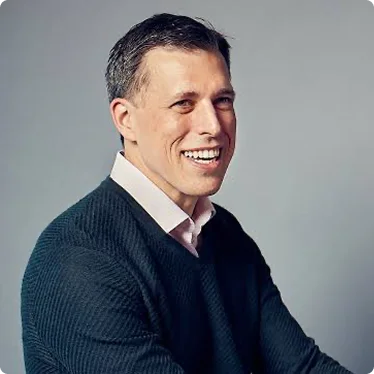
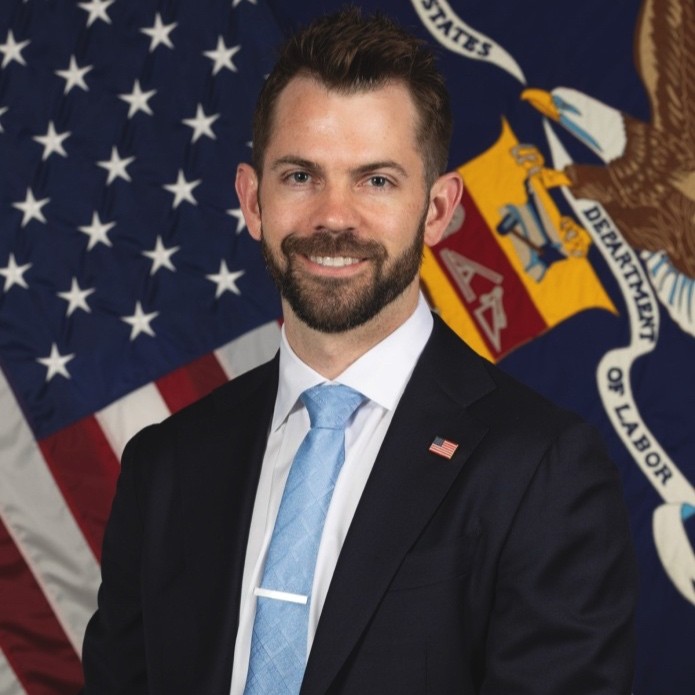
Taylor Stockton is Chief Innovation Officer of the U.S. Department of Labor, where he leads the department's exploration of how artificial intelligence and other emerging technologies are reshaping the labor market and the day-to-day experience of the American worker, and identifies the innovations most likely to support economic mobility.
His career runs through education, workforce development, and technology. Before joining the department he was Chief Operating Officer of a workforce development technology company that partnered with state agencies and local workforce boards to deploy AI-powered job matching, and he co-founded Pathway Ventures, a seed-stage venture fund backing startups focused on economic mobility. Earlier he served as Chief of Staff at an education startup in South Africa working on K-12 technology innovation. He holds a bachelor's degree in business management from Boston College and an MBA from Harvard Business School.
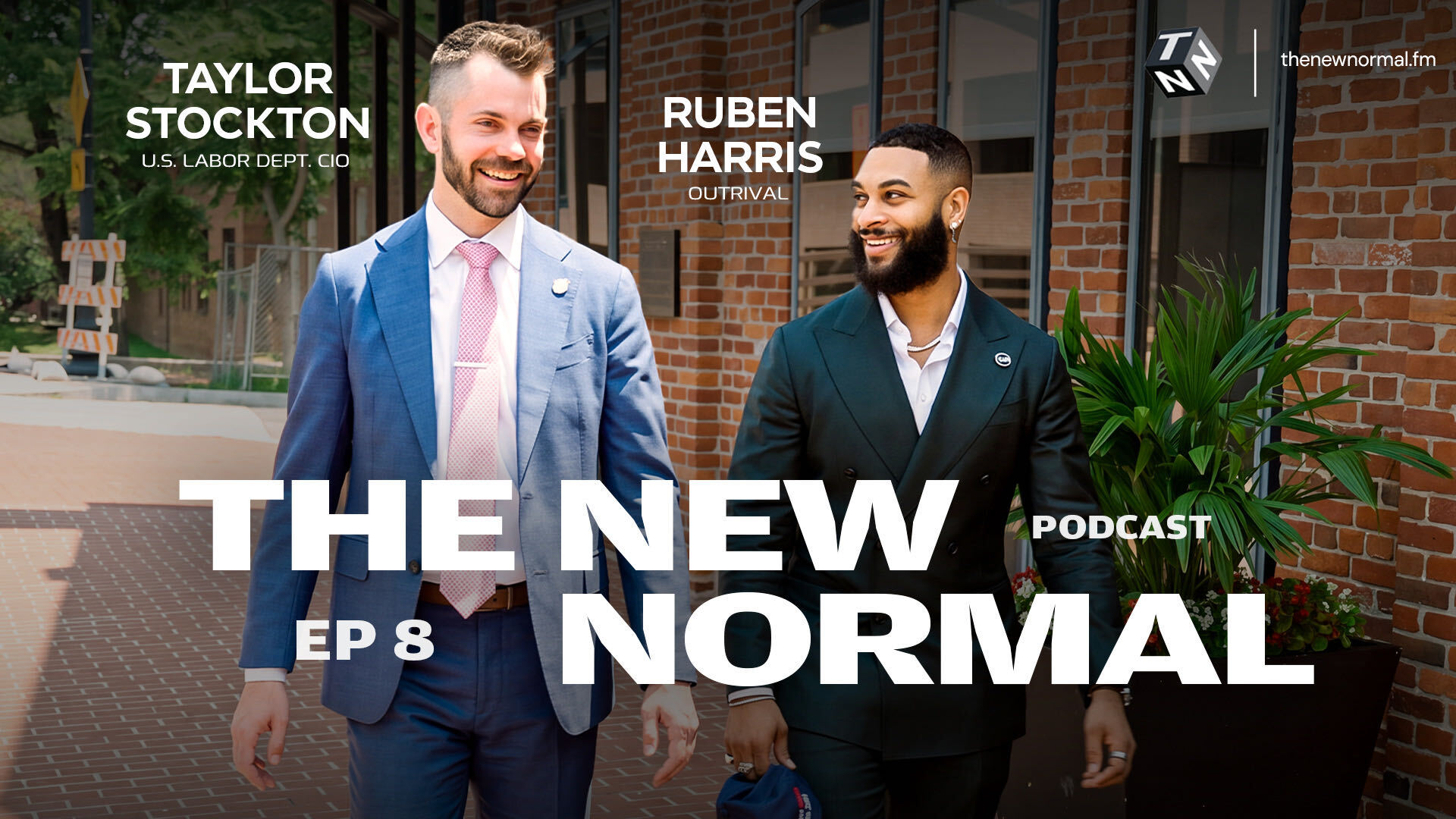
This episode of The New Normal leaves the university campus for Washington. Taylor Stockton is Chief Innovation Officer of the U.S. Department of Labor, a role created on the premise that the concept of labor itself is changing faster than at any point in American history. He came to it from the startup and venture world, most recently as Chief Operating Officer of the workforce technology company FutureFit AI and co-founder of Pathway Ventures, and he is candid that his passion is economic opportunity rather than government for its own sake.
Ruben Harris walks him through the workforce half of the White House AI Action Plan: winning on innovation, infrastructure and diplomacy, but winning in a way that improves the livelihood of American workers. That means building the pipeline of electricians, HVAC technicians, pipe fitters and plumbers the data center build-out needs, most of them jobs that pay well without a four-year degree, and it means a paradigm shift in workforce development that America's Talent Strategy lays out in five pillars. Stockton explains the AI Workforce Hub, an R&D lab that pools data from roughly 40 partner organizations, from AI research labs to job boards and staffing firms, so the national conversation about AI and jobs runs on evidence instead of headlines. And he makes the case for Make America AI Ready, a free AI 101 course delivered entirely by text message: text READY to 20202, ten minutes a day for seven days, already completed by more than 100,000 Americans.
The through line is optimism grounded in economics. Stockton points to the lump of labor fallacy and argues that every wave of technology has expanded the pie rather than shrunk it, that soft skills like judgment, communication and empathy grow more valuable as AI absorbs routine tasks, and that the companies getting AI adoption right are the ones that pair top-down strategy with bottom-up trust from the front lines who know where the workflow breaks. For operators who want to work with the department, the door is dol.gov.
Key ideas from the conversation
- Winning the AI race is about how America wins, not just whether it wins: the first principle is improving the livelihood of American workers.
- The infrastructure build-out has a talent problem. Electricians, HVAC technicians, pipe fitters and plumbers are in short supply, high paying, and mostly do not require a degree.
- Government has historically rewarded rigid program inputs instead of outcomes, which drives the most promising models away. Registered apprenticeships are being streamlined for that reason.
- The AI Workforce Hub exists because the conversation about AI and work is speculative and fragmented; 40 partners are sharing data so it can be aggregated, anonymized and shared back with the public.
- Make America AI Ready runs over text because 98 percent of Americans have a cell phone and an app, a laptop or an internet connection can each be a barrier. The hardest step into AI is the first one.
- Most Americans equate AI with ChatGPT. AI literacy means seeing the vertical use cases specific to lawyers, healthcare workers and manufacturing workers.
- Preparing students and workers is not enough; the enabling roles around them, teachers, career counselors and managers, need preparing too.
- As AI takes on tasks inside a role, the role transforms and the human skills it cannot do well, critical thinking, judgment, empathy and relationship building, matter more.
- Agentic AI is powerful but it is still technology. The lump of labor fallacy says the pie expands with every wave of change.
- HR runs on one-year cycles while technology changes daily. Every stakeholder, government included, has to shorten its cycle times.
- Build versus buy matters less than top-down versus bottom-up. The companies that succeed build trust with their workforce and let the front lines point AI at the most broken parts of the workflow.
- Press releases and funding opportunities live in one transparent place, dol.gov, and every listener can sign up for the alerts.
- In one word, the American worker is resilient.










.png)