[00:00:00] Dr. David Andrews: Actually, I did the first dissertation at Florida State University on a word processor on a computer. They, they accused me of cheating because it wasn't a typewriter. Every time you do something for the first [00:00:10] time- Yeah ... you're gonna get this pushback that they're, this is, you know, this is skirting the rules.
[00:00:15] Dr. David Andrews: The cost of higher education has, has gotten outta hand. Um- Mm-hmm ... and the most selective [00:00:20] institutions have taken advantage of it, uh, more than the open access institutions, but we're an open access institution trying to find ways to make, uh, higher education [00:00:30] affordable.
[00:00:30] Rubén: Where haven't you deployed AI agents that you think are low-hanging fruit opportunities?
[00:00:34] Dr. David Andrews: Where we want to deploy, and I think we can deploy soon-
[00:00:37] Rubén: Mm, mm-hmm ...
[00:00:37] Dr. David Andrews: student-facing AI- Mm ... [00:00:40] without human intervention.
[00:00:41] Rubén: Mm-hmm.
[00:00:41] Dr. David Andrews: Now, people are gonna think that's heresy. Mm. What we're wai- waiting for in competency-based education and microcredentials is employers to value those as [00:00:50] much as they value- Yeah ... a traditional degree.
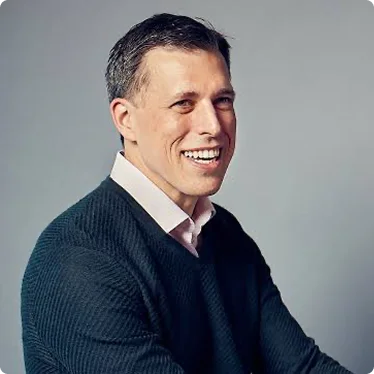
[00:00:54] Rubén: Happy Wednesday. My name's Ruben Harris. I'm here with my co-founder and co-host, Timur Meyster, and this is The New [00:01:00] Normal. The New Normal is a show where we go inside of organizations that are actually using AI in production at scale in a way that's making a meaningful impact [00:01:10] in their organizations. This is not a show about hype.
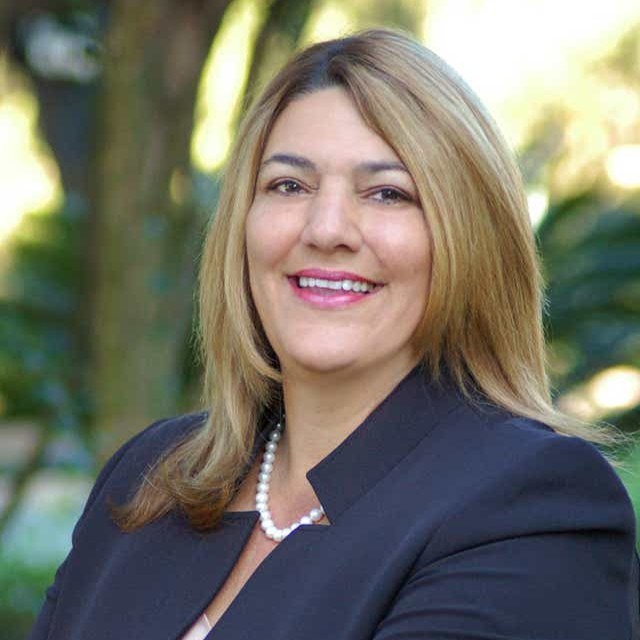
[00:01:13] Rubén: It's a show where we interview leaders that have made decisions to reimagine their organizations with AI at [00:01:20] its core. Today we're in California, Southern California to be at exact, in UMass Global headquarters, and I'm excited to introduce our guest. [00:01:30] Timur, can you please introduce the guest?
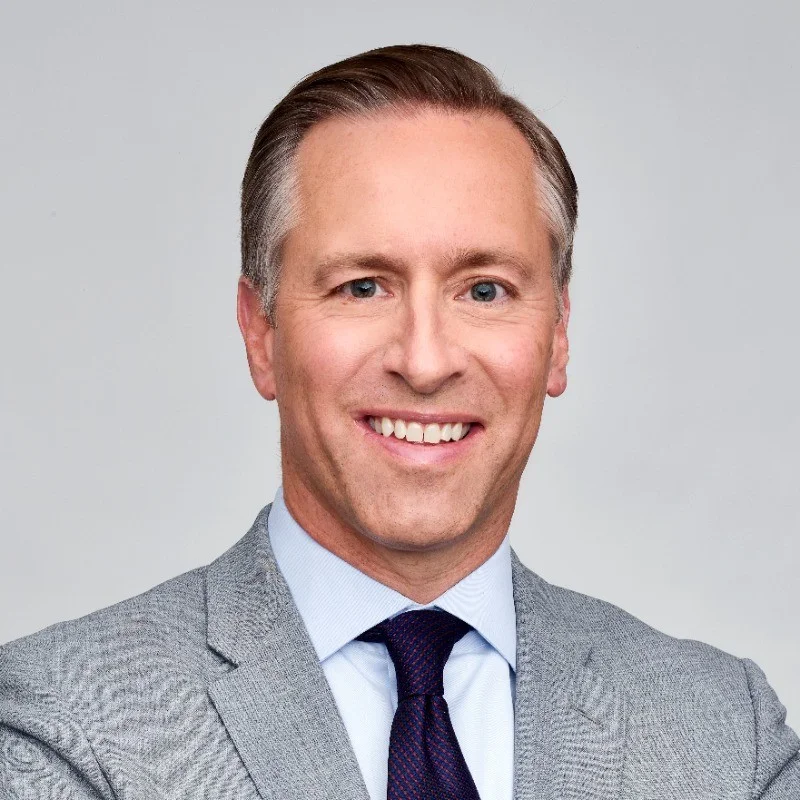
[00:01:31] Timur: Yeah. So today our guest is Dr.
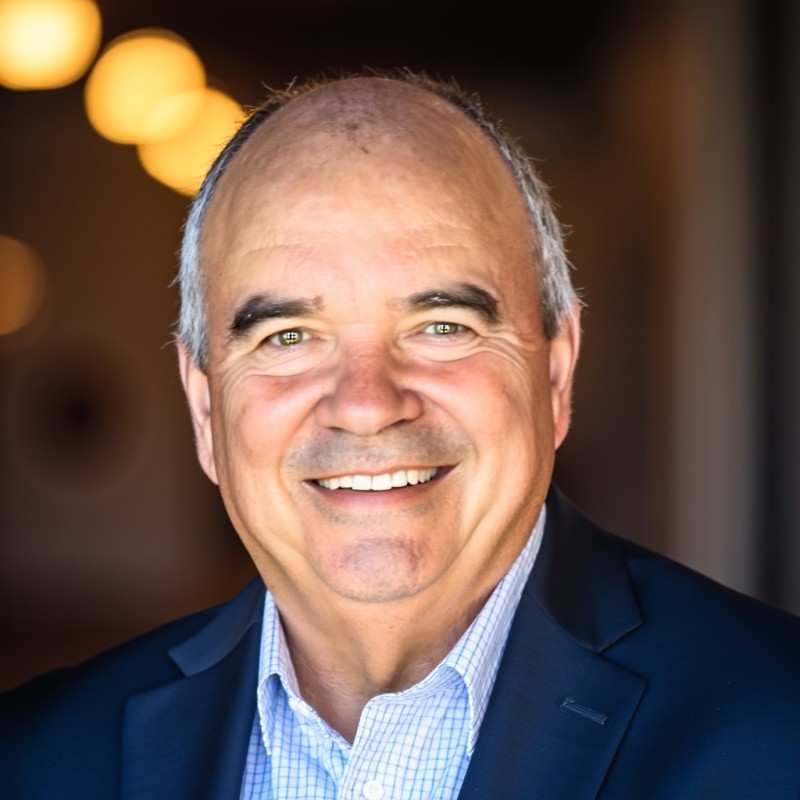
[00:01:34] Timur: David Andrews, who's the chancellor at UMass Global. Uh, before, David served [00:01:40] as the president at National University and the Dean of School of Education at John Hopkins, where the school ranked, um, number one in the country for two [00:01:50] years in a row. Now, at UMass Global, David leads, um, a university that's fully online with the mission of serving the working adult, uh, [00:02:00] and making higher education cheaper, easier, um, and faster without sacrificing quality.
[00:02:07] Timur: Um, now, you hear us talk about proactive [00:02:10] outreach a lot. Uh, David has actually been, been talking about AI proactive student outreach and stackable credentials before it was cool. We're gonna unpack all of that on [00:02:20] this episode and all the things that David and his team are doing in deploying AI agents.
[00:02:25] Timur: Um, before that, though, I just wanna say, David, uh, welcome to New Normal.
[00:02:29] Dr. David Andrews: Oh, [00:02:30] thanks for having me. It's a pleasure to be here.
[00:02:31] Timur: Yeah.
[00:02:32] Rubén: So as technologists, we talk about scale a lot in software perspective, but why don't we start talking about your school scale? Like, what is the scale of UMass [00:02:40] Global? Uh, who do you serve?
[00:02:41] Rubén: What's the demographic? Tell us a little bit about that.
[00:02:44] Dr. David Andrews: We have 19,000 students. They're all online. Um, they are across the United States, in all 50 [00:02:50] states, uh, in eight other countries, uh, where we have a concerted effort to, to serve the students in, in those countries. I would say they are as diverse as any [00:03:00] population that you, that you could find.
[00:03:01] Dr. David Andrews: Um, but the one common denominator that our students have is they're all working. Mm-hmm. 97% of our students are w- are working adults. Awesome. Uh, their average [00:03:10] age is 35, uh, for undergraduates, 36 for graduate students. Wow. Uh, so these are not your 18 to 22-year-olds who have gone straight through on a, on a path of kinda [00:03:20] US higher education.
[00:03:21] Dr. David Andrews: Um, and I would say they're, they're, they're, they're harried in some way. Mm-hmm. These are busy people- Mm-hmm ... uh, who really need a path forward with, it's, [00:03:30] uh, kind of a no-nonsense path forward, and that's what we pride ourself in.
[00:03:34] Rubén: Awesome. Awesome. And you spent a lot of time in higher ed- And obviously, [00:03:40] a lot of the breakthroughs that are actually coming out from AI are actually from researchers that are some of the best educated people in the world, and you have some unique perspectives on how to think about [00:03:50] how to take advantage of these technologies.
[00:03:51] Rubén: Can you talk a little bit about AI, higher ed, and, like, what they need to do in order to take advantage of some of these technologies?
[00:03:58] Dr. David Andrews: Well, that's a great question. You know, a, [00:04:00] a lot of higher education is not organized, uh, to take advantage of the technology that exists. In fact, we're organized around people.
[00:04:07] Dr. David Andrews: Um, most of the time we're organized around [00:04:10] faculty. Mm-hmm. You know, faculty play a, a significant role, uh, as they should in all institutions, but they have designed and built a delivery model that is probably more [00:04:20] fact- faculty centric than is necessary with the new technology. Mm. So navigating the changes that the university has to make, um, is as important [00:04:30] as selecting the right technology.
[00:04:32] Dr. David Andrews: Uh, you can't just pick a technology and plug it in, and so-- Or oftentimes you can't pick a technology and assimilate it into the way you're [00:04:40] doing things. You have to actually take a deep look at how you're doing things and why. I think the why is more important. Uh, how, why are you doing things the way that we've always done them?
[00:04:48] Dr. David Andrews: And are there new ways [00:04:50] of doing things that will allow you to take advantage of the technology?
[00:04:53] Timur: Yeah. And, and David, uh, do you mind giving our listeners kind of a sense of how, uh, I guess [00:05:00] what, how you define AI and AI agents? And then give a sense of, um, where are you deploying AI, whether it's inside the classroom, [00:05:10] on, um, admissions, enrollment, and so on, just so our li- listeners can understand the scale of, uh, kind of where you, where your team is at in terms of deploying AI.[00:05:20]
[00:05:20] Dr. David Andrews: So there's, there's two sides to that. I mean, we, we talk about reactive and proactive kind of AI- Mm-hmm, mm-hmm ... and the notion that, uh... And I believe that reactive AI has [00:05:30] become ubiquitous. It's everywhere. You can't sort it out.
[00:05:32] Timur: Chatbots,
[00:05:33] Dr. David Andrews: like those. Yeah In fact, you have to opt out at this point. Mm-hmm. And that's, that's a pretty recent development.
[00:05:37] Dr. David Andrews: So I've seen in the last six months that, you know, most [00:05:40] of our tools that have an AI component- Mm-hmm ... are now asking you to opt out rather than to opt in- Mm-hmm ... to the use of that AI, everything from Google on- Mm-hmm ... across the board. Mm-hmm. [00:05:50] Now, even our Zoom, um, tools now ask you, uh, to opt out of using AI rather than to...
[00:05:56] Dr. David Andrews: The, the assumption is you're going to use it in a- Mm-hmm ... in a reactive kind of [00:06:00] way.
[00:06:00] Rubén: Mm-hmm.
[00:06:00] Dr. David Andrews: The difference is the proactive side, reaching out and understanding who students are, what they need, and predicting what they need to do to improve their chances of, of [00:06:10] being successful in the future- Mm-hmm ... is where you don't see as many, uh, universities participating.
[00:06:14] Dr. David Andrews: Mm-hmm. So I would say on the reactive side, every one of our tools has some element of, uh, of AI driving the, the- Mm ... looking back at the experience. Looking forward and predicting and working to serve students better, I would [00:06:30] say, uh, probably 60% now of our, uh, efforts are- Mm-hmm ... either fully engaged with an AI component or actively exploring those.[00:06:40]
[00:06:40] Dr. David Andrews: And that goes from everything from the front end of acquiring students, marketing, to enrollment-
[00:06:46] Timur: Mm-hmm ...
[00:06:46] Dr. David Andrews: admissions, scheduling, putting together a student's [00:06:50] schedule. All of those things- Mm-hmm ... have really proactive approaches, uh, using AI. And then I think where we're probably ahead is in the student experience- Mm-hmm
[00:06:58] Dr. David Andrews: is how much student-facing, [00:07:00] uh, experience are you going to, you know, deliver with at least support- Mm-hmm ... from, uh, uh, machine learning. And, you know, the place where the kind of rubber hits the [00:07:10] road is with faculty. You know, how much are they actually gonna- Yeah ... use these, these skills, and how much do you need them to intervene in models that are largely being driven [00:07:20] by AI at this point?
[00:07:21] Timur: Yeah. Yeah. And f- for us, like Rub- uh, Ruben and I are c- co-founders of, uh, an AI company, but before, uh, Outrival, we also [00:07:30] started Career Karma, where we were s- serving the adult population. I know for people going through the educational journey, like, human touch is still [00:07:40] important, and AI can do a great deal in improving the student experience.
[00:07:44] Timur: Can you share how you find that balance in terms of areas where you [00:07:50] kind of delegate to AI, and then areas where you feel like students, uh, still need to be speaking to their advisors and kind of the staff?
[00:07:58] Dr. David Andrews: So I have a, uh, I think a pretty [00:08:00] unique perspective- Mm-hmm ... on that, is that a lot of the time that we spend interacting, uh, with humans in a higher education setting, um, can be replaced.
[00:08:08] Dr. David Andrews: Uh, but those [00:08:10] precious moments where- Mm-hmm ... that human interaction for mentoring, for, uh, advice that, um, you know, needs to, to be h- handled very [00:08:20] careful- carefully, um, where the consequences are high for- Mm-hmm ... for making a mistake, those places, those are places. So the AI allows you to free up the time of the individuals- Mm-hmm
[00:08:29] Dr. David Andrews: that you [00:08:30] do have so that the meaningful interactions that they have are truly meaningful interactions. I mean, we have a lot of... W- people don't wanna admit that a lot of our interactions, um- Yeah ... with each other [00:08:40] are not as important as, as we think they are. Those important interactions, though, we need to have time for.
[00:08:46] Dr. David Andrews: Yeah. So when a, when a faculty member needs to reach out and really deal with a [00:08:50] delicate issue with a student, unless they have the bandwidth to do that, you're not gonna get the same kind of outcomes. Mm-hmm. Uh, and so if a faculty member is spending most of their time grading papers, [00:09:00] um, and not interacting with students, and you can relieve the burden of the time burden- Mm-hmm
[00:09:05] Dr. David Andrews: of grading those papers and free up their time to do things that are more [00:09:10] uniquely necessary from a human perspective, uh, that's a win for our students. Yeah. And so how do you become as efficient as you can in those activities that [00:09:20] can be automated or, uh, facilitated with, with AI, and then free up that time for really meaningful social interactions?
[00:09:27] Timur: Yeah,
[00:09:28] Rubén: yeah. So, so as you think about [00:09:30] your leadership and student experience and the difference between meaningful interactions, non-me- meaningful interactions, or necessary versus unnecessary interactions, [00:09:40] can you touch on any KPIs or things that you measure that are Showing that the things that you're doing with AI are successful, and any [00:09:50] improvements that you've made to an increase in the meaningful interactions for your staff?
[00:09:54] Dr. David Andrews: We're just on the front end of that, you know- Mm-hmm ... uh, of setting those things up. And I think it is, you know, some of the traditional metrics [00:10:00] still apply- Mm-hmm ... like retention rates. Um- Mm-hmm ... you know, can, can you maintain higher retention rates- Mm-hmm ... if you do have more time for your, your faculty and your advisors to [00:10:10] spend with the highest risk students?
[00:10:11] Dr. David Andrews: Mm-hmm. So identifying high-risk students and then- Mm-hmm ... making sure that they do have the, the personal touch that's necessary to get them over whatever [00:10:20] issues are, are, are keeping them from persisting, I think are, are, are gonna remain the most important indicators or performance indicators as we move forward.
[00:10:29] Dr. David Andrews: Um, [00:10:30] what we're seeing is the allocation of time is a, is a slow thing to change. Mm-hmm. You know, when we, when we create, um, efficiencies, people don't [00:10:40] actually raise their hand and say, "Hey, I've got more bandwidth to take on more responsibility." You know, they just quietly let you- Mm-hmm ... uh, reduce the load.
[00:10:47] Dr. David Andrews: Uh, and then you've gotta be looking at how do [00:10:50] you redeploy human effort- Mm-hmm ... in order to be as efficient as possible. So I think you're gonna see, um... A- and then you're gonna see some [00:11:00] metrics that come out around faculty satisfaction. You know, it's not satisfying, uh, to do menial task a- as a faculty member.
[00:11:06] Dr. David Andrews: Mm-hmm. The most s- most meaningful interactions I have with [00:11:10] students are with a handful of students that I know really well, and typically I learned about those students because they needed a little extra. Mm-hmm. They needed something different. Mm-hmm. Mm-hmm. They needed a little different approach. They weren't, they [00:11:20] weren't following the mainstream of students.
[00:11:21] Dr. David Andrews: 80% of the students, 90% of the students, doing just fine. I could go in, interact with them without- Yeah ... any personal attention. But that [00:11:30] 5% or 10% that really needs the personal attention, you've got the bandwidth to do that if you can free up some of this other activity that, um, that used to take so much time and, and had [00:11:40] limited value to the students.
[00:11:42] Timur: Yeah. A- and, and I, I, I... When Ruben and I have these types of conversations, uh, with leaders, I'll, I'll always kinda ask them, [00:11:50] like, what type of work, whether it's faculty or an admissions advisor, what type of work drains their energy-
[00:11:56] Dr. David Andrews: Mm-hmm ...
[00:11:56] Timur: and what type of work gives them energy? And, uh, most [00:12:00] of the faculty when they kinda were dreaming of becoming a professor, they were, they wanted to impact the student, not grade papers, to your point.
[00:12:08] Timur: Right. Same thing with [00:12:10] admissions. People wanna help someone figure out, do you wanna go the accounting route or the finance route? And have those meaningful conversations, and they don't wanna be [00:12:20] stuck in a phone dialer, right? Calling leads who didn't start their applications, you know? Right. And that those are the things that we're starting to see AI agents, uh, [00:12:30] starting to have impact.
[00:12:31] Timur: Um, you mentioned retention, enrollment rates. Like, are you seeing any successes in terms of, uh, improving those retention rates or, uh, [00:12:40] enrollment rates by deploying AI agents?
[00:12:42] Dr. David Andrews: I think conversion rates for sure. Conversion
[00:12:43] Timur: rates?
[00:12:44] Dr. David Andrews: Yeah, yeah. Nice. Conversion rates from, you know, and, and most people in higher education don't think about lead generation and conversions, [00:12:50] you know, unless, unless you're in that- Yeah
[00:12:51] Dr. David Andrews: aspect of the institution. Mm-hmm, mm-hmm. Unless that's your job or that's your area of s- of supervision or the, the area- Mm-hmm ... that you're responsible for. I mean, but they're [00:13:00] critical to the lifeline o- of the institution. A- and we are seeing that you ga- the more information you gather. And some of this has, has less to do with AI than data structures and [00:13:10] the organization of your data- Mm-hmm
[00:13:11] Dr. David Andrews: and the ability to get to that data, uh, and then have it flow across the, the life course of the student, and that's what we don't do very well. I mean, [00:13:20] because we partition the student experience in, in different ways. You're in the enrollment cycle. Mm-hmm. You are a new student. You're a continuing student.
[00:13:29] Dr. David Andrews: You're an [00:13:30] alumni, and much of the information that we know about you as an individual- Mm-hmm ... doesn't cross those boundaries. Mm-hmm. Uh, so w- we are underutilized all of the [00:13:40] data that's- Mm-hmm ... in our CRM around things we- Okay ... learned about students before they ever started. Mm-hmm. You know, don't get converted into meaningful [00:13:50] data.
[00:13:50] Dr. David Andrews: It's summarized in a way where in that first class, uh, there's a meaningful experience with, with a faculty member, uh, or with other students in that class because [00:14:00] we've been able to surface all of this data from a previous phase of the student life cycle.
[00:14:05] Timur: Yeah.
[00:14:06] Dr. David Andrews: We partition these things, you know, in ways that it's not very [00:14:10] useful, even the, the notion of courses.
[00:14:12] Dr. David Andrews: So if you sign up and you take a course from one professor, that professor might know you pretty well at the end of that course. Uh, they've learned a lot about you. How much of that [00:14:20] information gets translated to the next professor- Mm-hmm ... who's gonna try to help you? Almost nothing- Mm ... uh, gets translated.
[00:14:25] Dr. David Andrews: Same thing in, in K-12. Uh, in, uh- Mm ... what you learn as [00:14:30] a fourth grade, uh, what the student learn- what the teacher learns about you as a fourth grade student, a fraction of that information gets passed on to the fifth grade student that could, to the fifth grade [00:14:40] teacher, who could use that information to actually help that student.
[00:14:43] Dr. David Andrews: So we have this, I call it serial monogamy with our instructors. You know, we, we go through a s- period of time- Yeah ... where that's our person [00:14:50] that's gonna help us. Mm. And then as they transition to the next course or the next grade level, somebody else starts over, and they start from scratch. You know, none of that is necessary at this point- Yeah
[00:14:59] Dr. David Andrews: because [00:15:00] we have the information, and we just have to document it and, and have it available. But if you're not collecting information at a micro level, then all the AI in the [00:15:10] world is not gonna help you personalize and deploy on-demand support because you're not creating the, the depth of the profile- Yeah
[00:15:17] Dr. David Andrews: of the student that you need in order to be [00:15:20] most helpful. And when we, when we start thinking that way, we're gonna see massive changes in, in, in education in terms of the, the value, the cost, [00:15:30] the, the ease of navigating the system because they know me as a customer. Yeah. They know who I am as a student, and I think areas outside of education actually do this better [00:15:40] to retain customers than, than we see in, in most aspects- Yeah
[00:15:43] Dr. David Andrews: of education.
[00:15:44] Timur: Yeah. It, it's almost as if, um- The student needs like this AI coach [00:15:50] or some type of, uh, assistant that stays with them through the life cycle. And as, uh, classes change, you go from enrollment to now re-enrolling [00:16:00] from semester into another semester, there is kind of the entity that knows you, right?
[00:16:04] Timur: And personalizes, uh- Right ... the journey. I think AI, it's still the early inning. We haven't seen anyone [00:16:10] who does it super well 'cause it's... But that's where the th- where the future is. And to your point, it, it is thinking about the data, thinking about, um, compliance, [00:16:20] thinking about, um, privacy, and also thinking about- Right
[00:16:22] Timur: how do you, uh, give now tools to the financial aid office, the student services office, the [00:16:30] admissions office, kind of the tooling to translate their business k- kind of process and the practices into something that AI can understand. Um, do you have any [00:16:40] examples of, um, AI inside of the classroom? 'Cause there's a lot of kinda companies trying to impact the retention enrollment.
[00:16:47] Timur: What about inside of the classrooms? What are you guys [00:16:50] doing, and what are you seeing there?
[00:16:51] Dr. David Andrews: Yeah, two, two big areas. You know, instructional support, actually content generation- Mm-hmm ... before the class ever starts. I mean, the curriculum now is put together [00:17:00] with- And that's video and- ... with heavy support ...
[00:17:01] Timur: video, audio
[00:17:02] Dr. David Andrews: Video creation- Yeah
[00:17:04] Dr. David Andrews: um, uh, content, um, you know, acquisition of content. Mm-hmm. [00:17:10] Uh, and, and then there's some big decisions to be made, uh, when you do that. Uh, and one, one of the things that, that we've learned early is that we, we shut down [00:17:20] the sources of content for our courses to try to protect against hallucination or going outside and getting information that we didn't think was- Mm-hmm
[00:17:29] Dr. David Andrews: uh, where we had [00:17:30] to vet that information or spend a lot of time, um, sorting through the accuracy. So we, we locked it down in a way where it was only going after sources of [00:17:40] information that we fully understood and- Mm-hmm ... and had vetted. Turns out that's not very useful to our students, uh, because all of that information is in the course anyway.
[00:17:47] Dr. David Andrews: And so if you needed help- Mm-hmm ... in consuming that [00:17:50] information, basically an advanced search mechanism to find where it exists within the content- Yeah ... whether it's video content or text content. So, you know- [00:18:00] The risk then is going how, how far do you let it go, uh- Mm-hmm ... in, in importing content, uh, that your faculty members may not be aware of, your faculty members may not [00:18:10] agree with, it may be- Mm-hmm
[00:18:12] Dr. David Andrews: inaccurate information, may not be aligned with the learning outcomes that you're looking for. But the power is the, the [00:18:20] decision-making is around the power of how far you let, uh... how far you reach into content, and then what's the risk of that content- Mm-hmm ... you know, leading [00:18:30] somebody astray or being inappropriate or, or, or not getting the outcomes that you want.
[00:18:34] Dr. David Andrews: So we've, we've done a lot with, uh, AI, uh- Mm-hmm ... student-facing AI, uh, to [00:18:40] try to help them digest content, learn the assessments- Mm-hmm ... uh, be successful in demonstrating what they know and can do. Um, we've also used it a lot in the creation of [00:18:50] assessments. So this is an area that people don't think about.
[00:18:52] Dr. David Andrews: You know, it's like, as much as, um, faculty members, uh, complain about grading, they also complain about creating- Mm-hmm ... uh, [00:19:00] assessments. And so, you know, the depth of assessments that you can create, especially authentic assessments, and then turn around and grade those assessments based on the rubrics- Mm-hmm
[00:19:08] Dr. David Andrews: has been something that, [00:19:10] um, we've learned a lot from. And, and one of the things ... And this is where the institution has to change with the feedback you're getting from the deployment- Mm-hmm ... of a particular [00:19:20] tool. Uh, so for example, the grading, um- approach that we're using where s- a student submits a paper, that paper was read by a faculty member traditionally.
[00:19:29] Dr. David Andrews: The [00:19:30] faculty member had all of the information that they wanted to use to assess the quality of that paper- Mm-hmm ... in their head sometimes, sometimes in a rubric, uh, that's been written out, but [00:19:40] often not a very detailed rubric. Mm-hmm. AI can't help you grade that paper unless that rubric gets really detailed.
[00:19:45] Dr. David Andrews: Mm-hmm. I mean, so what you're using as a judgment around what people know and [00:19:50] can demonstrate and can do as a faculty member needs to be articulated in a really detailed rubric in order for the grading system to, to use it, to [00:20:00] utilize it. Mm-hmm. Um, and so what we've found is that faculty members are now spending their time on getting better rubrics- Yeah
[00:20:07] Dr. David Andrews: developed than actually grading [00:20:10] papers one at a time. Because if you can articulate what you're using as information to make judgments and put that into a sophisticated enough rubric, you know, you've [00:20:20] actually done the work, uh- Yeah ... ahead of time, and then it can be applied to any student the way they, they submit their, their papers.
[00:20:26] Dr. David Andrews: Um, that's easier said than done, uh, and it [00:20:30] pressures you to challenge faculty members to be objective, uh, to be really able to articulate how do you know the difference between- Mm ... a B and an A [00:20:40] in- Mm-hmm ... a creative endeavor assessment, and how c- can you articulate that so that somebody else could do that?
[00:20:47] Dr. David Andrews: Now, we've done it forever with graduate [00:20:50] teaching assistants, right? I mean, so you, you have a big class, you got 250 students you're teaching, and you got five graduate teaching assistants grading your papers. Mm-hmm. You need to communicate to them the same thing. What [00:21:00] do you use as the reference criteria for making a judgment about that, that particular paper?
[00:21:06] Dr. David Andrews: Um, and sometimes we did that well, sometimes we didn't. Um, [00:21:10] but now it's making us ... And I think it's a much ... It, it's a more fair process, a more objective process, and it cuts the time. You know, we had- Yeah ... papers being submitted with, uh, [00:21:20] 48 hours to grade them, uh, was the turnaround time that we expected.
[00:21:23] Dr. David Andrews: You know, you can do that in 48 seconds or, or- There you go ... .48 seconds- Right ... uh, you know, to, uh, a- [00:21:30] and you can't argue the efficiency of it. Mm-hmm. But it changes the role of the faculty member. The faculty member then spends their time developing authentic assessments that are [00:21:40] conducive to A product that comes out of that, that can be, uh, efficiently graded with an AI-supported tool.
[00:21:47] Timur: Yeah. And- It, it's so, it's, it's so interesting 'cause, [00:21:50] uh, Outrival has engineers, and the role of the- similar to the faculty's role changing to create the rubrics- Yeah ... in the software engineering role, it's [00:22:00] creating the prompts, the requirements. Um, what are you trying to build? Because actually writing the code is no longer as needed as if- No
[00:22:09] Timur: having [00:22:10] good taste, being able to ensure that the quality is there, uh, the product works, and truly problem solve. So, um, I don't know if the professors and faculty [00:22:20] even realize it or not, but they're essentially, like, creating these prompts- Yep ... these, uh, these rubrics, and their role is changing. Um, we, R- Ruben and I ask this [00:22:30] question to all of our guests.
[00:22:31] Timur: Um, it's kind of like a, it's kind of a doozy, but, um, what are your thoughts, what are your personal thoughts on students using AI to write [00:22:40] essays? Is it considered, um, like, being creative, or is it cheating? Just curious.
[00:22:46] Dr. David Andrews: Well, um, I think that's a great question because [00:22:50] what we expect students to know and do and why is gonna change dramatically.
[00:22:56] Dr. David Andrews: So we t- we tend to focus on the faculty. Uh, I think a lot of my [00:23:00] colleagues across, uh, higher education are worried about s- students using, um, AI to write, uh, for them. I heard the same arguments with [00:23:10] spellcheckers. Um, you know, when spellcheckers came out. Uh, I was a professor when you could check it with spellchecking.
[00:23:16] Dr. David Andrews: I was a professor... Actually, I did the first dissertation at Florida State [00:23:20] University on a word processor on a computer. Oh. They, they accused me of cheating because it wasn't a typewriter. It wasn't a typewriter. It hel- it was a Xerox 820 that held, [00:23:30] uh, eight-inch floppies- And you did pretty
[00:23:31] Timur: well for yourself.
[00:23:32] Dr. David Andrews: eight-inch floppies with eight pages of text on each floppy. So my dissertation's in a box- Yeah ... of eight floppy disk, [00:23:40] uh, of floppy disks that are eight inches. Um, but I had members on my committee that said that's cheating because you can change the words too quickly. Um, [00:23:50] I also had, uh, the library wouldn't accept it because it was a dot matrix printer.
[00:23:54] Dr. David Andrews: Wow. Uh, so every time you do something for the first time- Yeah ... you're gonna get this pushback that [00:24:00] they're, this is, you know, this is skirting the rules. Uh, because the rules have been put in place to keep people moving at a similar pace- Yeah ... without much [00:24:10] variation, and it's, it's a very industrial and assembly line type of model.
[00:24:15] Dr. David Andrews: And so we still have some of that. Yeah. And so, yeah, we have... I, I, I question why [00:24:20] do people need to be able to write with unassisted tools when there are tools that can assist them? Um, if you're gonna be a, a [00:24:30] creative writer, maybe. Uh, if you can use a tool and get the same thoughts across, uh, sometimes get them across better.
[00:24:38] Dr. David Andrews: Mm-hmm. Um, I'll give you a real [00:24:40] concrete example, and this, this is kind of, um- not bugged me, but, um, made me think about it quite a bit. We just had commencement. So one of our commencement activities [00:24:50] is to, we only use student speakers. They're more interesting, they have personal stories. Mm-hmm. You know, you don't have to worry about controlling what they say.
[00:24:58] Dr. David Andrews: Uh- ... and we pick, we [00:25:00] pick their, their s- their, we ask them to, to submit a graduation speech, and then we go through them and pick them. Uh, this year, and, and s- to some degree last [00:25:10] year, we got... Last year we probably had eight applications to be the commencement speaker. This year we had 50, and every one of them was written by AI.
[00:25:19] Dr. David Andrews: Uh, [00:25:20] now they were personal stories. Yeah. So it was a c- we had, the one that was selected was an orphan, uh, raised in foster homes till she was 19, had a wonderful story, [00:25:30] but it was clearly assisted by, uh, sh- uh, a, a creative writer, uh, that was an agent. Uh, and it was a more meaningful story, came across better to the, [00:25:40] um, to the audience.
[00:25:41] Dr. David Andrews: Yeah. It made her feel proud. Um, I don't know why I should argue with her using AI to write that, uh, commencement speech. I [00:25:50] thought it was a wonderful speech. Yeah. Yeah. And it was a perfect use of that. And I'm, you know, I, you can't ch- accuse her of plagiarism. Uh, and why would I diminish her [00:26:00] experience and the quality of that commencement speech- Yeah
[00:26:03] Dr. David Andrews: because it was assisted- Yeah ... um, and, and written for the most part, you know, by, by AI? And [00:26:10] she probably just plugged her story in and came out with a better story. Yeah.
[00:26:13] Timur: Yeah.
[00:26:13] Dr. David Andrews: Um, these are, these... And we're not asking her to be a storyteller. Yeah. I mean, her career is not gonna be a storyteller. Her [00:26:20] career- Yeah.
[00:26:20] Timur: Now she can express herself better
[00:26:21] Dr. David Andrews: and- She can express herself much better ... she can get her story out. Yeah. Uh, so I just don't understand why that would be considered cheating, um, or why we would expect [00:26:30] them to be able to do that unassisted when we have the tools available to assist them.
[00:26:34] Rubén: Mm-hmm. No, I love that story, and I love that you talked about the career side.
[00:26:38] Rubén: 'Cause in a similar [00:26:40] note, right, if the workplace is changing in addition to higher ed, and employees and managers and leaders have to use AI- The [00:26:50] students should probably learn how to use AI. So beyond- Yeah ... like, the question of should students be allowed to use AI or not, what other things do you think s- students should [00:27:00] be learning from a AI perspective to make them more employable when they graduate?
[00:27:04] Dr. David Andrews: Well, they should be learning how it works.
[00:27:05] Rubén: Mm-hmm.
[00:27:06] Dr. David Andrews: They should be learning applications that are relevant to the field that they're in- [00:27:10] Mm-hmm ... the discipline they're in. They shouldn't be, uh, trying to avoid those applications. They should be actually embracing, uh, and understanding. But they also be understanding, it's like we've talked about [00:27:20] how do we organize a university to be able to take advantage of these tools?
[00:27:23] Dr. David Andrews: How do they organize their work life? Mm-hmm. How do they organize, you know, the, the way they approach their job [00:27:30] to be better able to take advantage of, of these opportunities? So we have very specific, you know, uh, courses and trainings on, on the use of AI, [00:27:40] um, they, y- by discipline. You know, our social work discipline will talk about how, how do you use AI in social work to do case planning- Mm-hmm
[00:27:48] Dr. David Andrews: and to be more [00:27:50] efficient in those types of things. So we're trying to integrate as much of it as we can into the curriculum, and it's easy because you can't avoid it. Mm-hmm. I mean, you, you literally, I mean, it's becoming so [00:28:00] ubiquitous that you have to make a purposeful effort to avoid it-
[00:28:03] Rubén: Yeah ...
[00:28:03] Dr. David Andrews: rather than embrace it.
[00:28:05] Dr. David Andrews: Yeah. And if you're doing that, I think, I mean, and there's always going to be, uh, [00:28:10] situations where, you know, people take advantage, uh, or situations where it leads you astray, uh, situations where things go wrong, but that happens on our [00:28:20] freeways every day. Um, you know, every, every day something happens in a car that, um, you know, is an unintended consequences of, of, of us using that form of transportation.
[00:28:29] Rubén: Yeah.
[00:28:29] Dr. David Andrews: [00:28:30] But nobody says, "I'm gonna stop."
[00:28:31] Rubén: Yeah.
[00:28:31] Dr. David Andrews: Um, it's, it's just part of what, what will happen in life.
[00:28:35] Rubén: Yeah. Another point that you brought up was efficiencies. Um, you talked [00:28:40] about costs as well. Can we talk about how technology affects costs, not just for students, but from an administrative perspective in general?
[00:28:49] Rubén: I know [00:28:50] this is a tricky question to answer as well, but what, what are your thoughts about how technology can affect costs within- It should- ... university delivery model?
[00:28:57] Dr. David Andrews: It should be helping us reduce cost- Mm-hmm ... in higher [00:29:00] education. You know, the cost of higher education has, has gotten outta hand. Um- Mm-hmm
[00:29:04] Dr. David Andrews: and the most selective institutions have taken advantage of it, uh, more than the open access institutions. But we're [00:29:10] an open access institution trying to find ways to make, uh, higher education affordable- Mm-hmm ... and accessible. A lot of times that, um- [00:29:20] Depends upon the cost. Mm-hmm. But other times it's, um, accessibility is when can students actually access [00:29:30] the opportunities- Mm-hmm
[00:29:31] Dr. David Andrews: you're providing. Mm-hmm. And a lot of our students are doing their work at 2:00 o'clock in the morning. Mm-hmm. I'm amazed. Um, they have a full-time job, they have a full-time family, kids go to [00:29:40] bed, they take care of what they need to take care of in their personal life, and then they, you know, they, they work on their schoolwork.
[00:29:46] Dr. David Andrews: Mm-hmm. Um, we had a, a student that came in from Michigan to [00:29:50] commencement here in California, um, who was a 30-year truck driver for Walmart. Um- Mm-hmm ... and he said, "I'm doing my work at truck stop, at truck stops." [00:30:00] Mm-hmm. "After I'd have dinner and before I go to bed in my truck- Mm-hmm ... uh, I would do a few lessons."
[00:30:05] Dr. David Andrews: And it took him four years to get an AA degree. Mm-hmm. Uh, but he was one of the proudest students that we've [00:30:10] had. He was 56 years old, got an AA degree for the first, and the first one in his family to ever get a college degree, and he did it while driving a truck for Walmart.
[00:30:18] Rubén: Uh-
[00:30:18] Dr. David Andrews: I love that ... and, and Walmart [00:30:20] was actually paying his tuition, uh, to their credit.
[00:30:22] Dr. David Andrews: Yeah. Um,
[00:30:23] Rubén: and- That reminds me of, um, Mario, that was learning how- Yeah ... like, there was a guy named Mario, when we were running Career Karma, that was learning how to code, and this, [00:30:30] he was a Uber driver.
[00:30:30] Dr. David Andrews: Yeah.
[00:30:31] Rubén: And he became a software engineer just doing it in between-
[00:30:33] Dr. David Andrews: Just doing it ... car
[00:30:34] Rubén: rides.
[00:30:34] Dr. David Andrews: You know? And, and so nobody criticized him for taking five years to get an associate's degree.[00:30:40]
[00:30:40] Dr. David Andrews: We all celebrated it. Yeah. Uh, and you know, it was interesting because we talk about the workforce relevance of the degree. He just wanted to be the first person in his family to get a [00:30:50] college degree.
[00:30:50] Rubén: Mm-hmm.
[00:30:51] Dr. David Andrews: And he was hell bent he was gonna do it. And it, and, and he came, he drove in from Michigan. I don't think he drove the Walmart truck, but he drove from Michigan to-
[00:30:59] Dr. David Andrews: to [00:31:00] California-
[00:31:00] Rubén: That's awesome ...
[00:31:00] Dr. David Andrews: uh, in order to attend commencement.
[00:31:02] Rubén: Can you talk about your role at the Presidents' Forum? Share what the Presidents' Forum is, and how that [00:31:10] might be helpful to think about innovation in higher ed in, in general.
[00:31:14] Dr. David Andrews: So there are 18 universities, uh, that are members of the Presidents' Forum now, and the [00:31:20] presidents are the, the actual members are the, are the presidents of ins- uh, those institutions.
[00:31:23] Dr. David Andrews: I think it's among the most innovative group in our education. Uh, we picked each other to be part of this [00:31:30] organization because of our commitment to student-centric innovation. Not innovation in general, but innovation that actually allows universities to become more student-centric. Mm-hmm. [00:31:40] Uh, and I think to a, to a president, everyone is, is committed to that, and it's an opportunity for us to share ideas.
[00:31:47] Dr. David Andrews: It's an opportunity for us to, to challenge [00:31:50] each other, uh, in terms of the types of innovation. We bring in collaboration partners like yourself, uh, who we think are doing things for the right reason, uh, to support students- Mm-hmm ... and to create [00:32:00] better opportunities for, for all of our students, and, um, it's, um, it's a great organization.
[00:32:05] Dr. David Andrews: We, we, we lean on each other a lot, uh, because other institutions, while they have [00:32:10] great missions, a great purpose, um, highly selective institutions with highly selective reputations, like when I was at Johns Hopkins University, loved the place, uh, it's not [00:32:20] our student. Mm-hmm. Uh, these are not working adults that are actually trying to manage, uh, schedules that are, you know, sometimes prohibitive for them, uh, taking advantage of what's being [00:32:30] offered.
[00:32:30] Dr. David Andrews: Mm-hmm. So the Presidents' Forum's a good, good vehicle for us, to, to keep, uh, together. Uh, and collectively, we represent well over a million students, um, a- as [00:32:40] institutions, so it has some scale to it.
[00:32:42] Rubén: Awesome, yeah.
[00:32:43] Dr. David Andrews: And when you have that kind of scale, some people will listen. Yeah. Um, so.
[00:32:47] Timur: Yeah, and k- and kind of speaking about, uh, [00:32:50] like, institutions coming toge- together and sharing the knowledge, experiments, um, things that are working or things that are challenging or not, um, can you [00:33:00] share with our listeners, uh, you guys certainly have done a lot in terms of impacting the s- the student experience in the classroom, outside of classroom with the AI and other [00:33:10] technologies.
[00:33:10] Timur: Um, how should other institutions that might find themselves feeling like they could be doing more, what advice do you have for them in terms of kind of getting started? [00:33:20] Where should they look to start? How they should start thinking about kind of organizing their leadership teams? What advice do you have for them?
[00:33:27] Dr. David Andrews: Two, two pieces of advice. One [00:33:30] is it's always easier to start with pilots. Mm-hmm. Um, you know, you, you get very little resistance in any organization. If you say, "Hey, we're gonna do a little pilot over here." Mm-hmm. Uh, the problem is taking those pilots to scale, you [00:33:40] know? So it's pilots by themselves are not sufficient, but they're good starting places- Mm-hmm
[00:33:44] Dr. David Andrews: and they're low risk. Uh, you can... Typically, if you say, "I wanna do a pilot to introduce an AI a- [00:33:50] approach in one particular area of your institution," whether it's student-facing or not, you'll get a handful of people to raise their hand. A lot of people are excited about it. Yeah. You know, they wanna do it.
[00:33:58] Dr. David Andrews: And so it's the c- I say, I call it the [00:34:00] coalition of the willing. Mm-hmm. Can you find the willing- Mm-hmm, mm-hmm ... a- and bring them together? And, and then the question is, do you get enough meaningful information out of those pilots or [00:34:10] impact out of those pilots to, to take it to scale? And then taking that- Mm
[00:34:13] Dr. David Andrews: to scale is, is the challenge. So then you need another approach, which is find the [00:34:20] low-hanging fruit. Mm-hmm. I mean, what's the pain point in the institution that is creating the most angst across the institution- Mm-hmm ... and that holds a lot of people? So you [00:34:30] look around, you say, "What's our biggest problem that holds a lot of people, that i- is impacting, you know, 75, 80% of, of our, uh, institution?"
[00:34:38] Dr. David Andrews: And then you do something small in that [00:34:40] area. Mm-hmm. You say, "Well, let me tweak something here." Mm-hmm, mm-hmm. Just to get people understanding that you can do something at scale- Yeah ... at that end of the continuum, and you can also pilot things. And then [00:34:50] over time, you start seeing the number of examples grow.
[00:34:54] Dr. David Andrews: And then I, I think the other is to send messages from the top, uh, from my position, [00:35:00] that it's okay to explore these opportunities- Mm-hmm, mm-hmm ... and that we'll be cautious, uh, we'll be careful. Uh, we're not gonna throw everything out, uh, that we've [00:35:10] always done. Mm-hmm. Uh, but we're gonna throw some things out.
[00:35:12] Dr. David Andrews: Uh, and just keep- Yeah ... that, you know, beating that drum around innovation so that you're creating better [00:35:20] experiences for your students. And the minute you get to a point where people are comfortable exploring these opportunities- Mm-hmm ... [00:35:30] um, things start to explode. I just, you know, since I knew you guys were coming, I talked to our, um, head of IT, and I asked Khalid, I said, "You know, what, what do we have on the, on the front right now?"[00:35:40]
[00:35:40] Dr. David Andrews: There were five new things out of 20 that he listed that I had not heard about, you know? And they, they feel empowered to explore- Mm-hmm ... those things because we've given them [00:35:50] permission, uh, as an institution to be innovative. And it starts with that permission, I think, to, and- Yeah ... and the culture that you create.
[00:36:00] Rubén: Yeah. I, I love that answer. [00:36:10] Um, and I like the try a little pilot, low risk. There's low hanging... Focus on the low hanging fruit. Figure out how to scale it. But you also said [00:36:20] some things don't work out, and the things that don't work out, throw it out. Can you talk about an example of something that didn't work out that you threw out that was low risk so that [00:36:30] people...
[00:36:20] Rubén: 'Cause some people are scared to try because of failure. You know, higher ed has a perfection culture. It's perfect grades- Right ... perfect everything, so. But trying things and [00:36:30] innovating requires doing things that may or may not work.
[00:36:33] Dr. David Andrews: Yeah. And, and failing fast. I mean, I think that's- Yeah ... where, you know, technology has, has t- has taught us to.
[00:36:38] Dr. David Andrews: It, it's interesting [00:36:40] because it's, it is challenging, um, to get across to people that it's okay to fail. Mm-hmm. But, uh, eh, but it's, it's interesting because you never hear people remember the failures. They only [00:36:50] remember the successes. Yeah. So failures fall out of your mind pretty quickly. Mm-hmm. So you don't have to do much.
[00:36:54] Dr. David Andrews: Mm-hmm. You just have to give people permission to, to fail, uh, and not make a big deal [00:37:00] about it, you know? Mm-hmm. And so we have had some... And sometimes it's not failing, it's slowing down. Yeah. So I think the grading system is, is one- Mm-hmm ... where, you know, we s- it has great promise. Um, our [00:37:10] faculty members are saying the rubrics aren't exactly right.
[00:37:12] Dr. David Andrews: It's gonna takes us some time to fix it. So we didn't say we're not gonna do it. Mm-hmm. We didn't say we failed. We said, "It's not happening- Try another way ... as fast as we thought it would be." Mm-hmm. "And it's gonna [00:37:20] have to happen in a little bit different format than we thought it was gonna..." And so you pivot.
[00:37:25] Rubén: Mm-hmm.
[00:37:25] Dr. David Andrews: You don't fail, you pivot. You just pivot to other opportunities that are aligned. [00:37:30] Um, and you learn from, learn from your failures, and I, I do think you learn a lot from- Mm-hmm ... from your failures.
[00:37:35] Rubén: I love that. Same idea, different approach.
[00:37:38] Dr. David Andrews: Yeah. And you just don't worry about it. [00:37:40] Yeah. You know? It's, uh- Yeah
[00:37:41] Dr. David Andrews: that thought, I thought that was gonna be a good idea, but it's not.
[00:37:43] Rubén: Yeah.
[00:37:44] Dr. David Andrews: Uh, and then you have to challenge yourself to remember all those bad ideas that you had. Yeah. 'Cause you- Yeah ... you purge them [00:37:50] pretty quickly.
[00:37:50] Rubén: Yeah, and I like
[00:37:51] Dr. David Andrews: the re- Uh, and start focusing on the success
[00:37:53] Rubén: I like the reminder that you forget your failures, and then you mentioned something called, you said fast.
[00:37:57] Rubén: The reason why I wanna talk about that is because [00:38:00] obviously technology moves very quickly, and we need to try things. We're, what, what's the month? June? We're in June now, right? It's 2026, and people might be listening to this, and they [00:38:10] might wanna do something today. And even if they do get the green light to do a pilot, a lot of times it takes a very long time to get anything done, even in a free [00:38:20] pilot type of message.
[00:38:21] Rubén: So what is your- Yeah ... advice to move faster for people?
[00:38:25] Dr. David Andrews: Well, I mean, universities are not known for, you know, moving in real time. [00:38:30] Mm-hmm. I mean, we move in... Some say we move in geological time. Mm-hmm. You know, we just, uh, uh, at a crawl. Some of that's our fault, some of that is regulatory- Mm-hmm ... and compliance.
[00:38:38] Dr. David Andrews: I mean, some of that is just [00:38:40] historical- Mm-hmm ... um, culture. Um, but I, I think that to, to move faster, you have to listen- Mm-hmm ... and embrace [00:38:50] opportunities, and again, try to figure out where your pain points are. Mm-hmm. And, and it's interesting because in some ways we've got slow adoption. In other ways, every product that we [00:39:00] use is, has some AI version either embedded in it- Mm-hmm
[00:39:05] Dr. David Andrews: uh, or that is being developed currently. Um, and so these [00:39:10] aren't independent vendors. Mm-hmm. Uh, uh, it's, it's the vendors you know and love- Mm-hmm ... who are now int- introducing products, and products you already know how to use- Mm-hmm ... that are actually [00:39:20] moving the adoption- Mm-hmm ... at a higher speed than new entrants.
[00:39:24] Dr. David Andrews: You guys may not wanna hear that, but, uh, I mean, what happens is you, you break ground- Mm-hmm ... with, with new [00:39:30] entrants, and then everybody else catches up, and then you gotta break new ground. I mean, you know this better than anybody else. Mm-hmm. Uh, and so what we're seeing is the... I, I think are seeing [00:39:40] the catch-up rate- Yeah
[00:39:41] Dr. David Andrews: in traditional products is faster and faster. Mm-hmm. And so I will talk to somebody, see an opportunity, [00:39:50] present it to either the academic side or the non-academic side. Uh, they'll start exploring it, and then a traditional partner will say, "We can do the same thing." Mm-hmm. Uh, we had a [00:40:00] great example with D2L and, and LearnWise.
[00:40:03] Dr. David Andrews: LearnWise was developing a lot of our products on the student-facing side. Um, we helped them develop a partnership with [00:40:10] D2L, uh, the learning management system.
[00:40:11] Timur: Mm-hmm.
[00:40:12] Dr. David Andrews: Now D2L has everything they have- Mm ... um, built into, to our basic... So we don't have to worry about integration, we don't have to worry about...
[00:40:19] Dr. David Andrews: [00:40:20] And, and we have all of our academic side of the house very comfortable- Mm-hmm ... with the learning management system. Now, the learning management system doesn't need any kind of [00:40:30] augmentation to do the same types of things we're talking about in grading- Mm-hmm ... in tutoring assistance. Um, those elements become embedded into the mainstream.
[00:40:38] Dr. David Andrews: Yeah. And I think that's where we're [00:40:40] seeing the speed pick up.
[00:40:42] Rubén: Well, I, I like this point because, you know, whether you're an incumbent or the, a new entrant- Right ... on the technology side, whether you have an [00:40:50] advantage or not, or a moat, um, a lot of people in Silicon Valley and our friends across the nation in tech, they're saying, "Moats are a verb," right?
[00:40:57] Rubén: And whatever advantage you have, it might not last [00:41:00] very long, so you gotta constantly innovate. Right. So can you talk about the ri- not only the risk of not doing something, but the risk of standing still and not changing for a [00:41:10] higher ed institution? Because higher ed is competitive with enrollment cliff and things like that.
[00:41:15] Dr. David Andrews: Yeah. So it's really interesting because there's, there's two sides to higher ed. Mm-hmm. I mean, i- in some [00:41:20] ways, higher ed has been the most innovative driver of, uh, advancement in society, uh- Mm-hmm ... you know, because of the research that we do, everything from the health-related side of the [00:41:30] institution to the engineering sides of the institution, and the non, I would say, non-training and educational side of the institutions is driven and is fast-paced.
[00:41:39] Dr. David Andrews: Mm-hmm. [00:41:40] I mean, so, you know, we're talking about grant programs in, in medicine or engineering. They can be, you know, super competitive with the, with the private sector. It's the other side of the [00:41:50] institution- Mm-hmm ... that's actually moving students through the pipeline that is kinda less competitive from a, from a timeframe perspective.[00:42:00]
[00:42:00] Dr. David Andrews: So, um, I think some of the, the challenges are self-imposed, some of them are regulatory, some of them are just what people's mindset is around the role of, of higher [00:42:10] education. And then part of it is the expectation that we're supposed to sort people, not serve people. Um- Mm-hmm ... is that, you know- Mm-hmm ... at the end of the [00:42:20] day, have you sorted out, you know, those who are worthy, uh- Mm-hmm
[00:42:23] Dr. David Andrews: of a degree? Have you sorted out those who should be, you know, going to McKinsey as a- Mm-hmm ... as a [00:42:30] consultant? Have you sorted out who's gonna get into Harvard to law school? Mm-hmm. Or did you just serve everybody and give them what they wanted, uh, and made a difference in the [00:42:40] impact- Mm-hmm ... uh, of their life because you positioned them for a better job, you've positioned them for advancement, you've given them the first AA degree in their family, uh- Mm-hmm
[00:42:49] Dr. David Andrews: and that's all they wanted. [00:42:50] You know- Mm-hmm ... have you met the value proposition? And sometimes we all get lumped into the same bucket- Yeah ... of needing to sort people, when my perspective is we need to [00:43:00] serve everybody to the degree that they wanna be served and meet the, their individual value proposition for, for why they made the investment in education.
[00:43:08] Rubén: Yeah. You've talked about [00:43:10] regulatory and compliance a few times. Um, this isn't a political question, but my question is, given that America wants to become a leader in AI, [00:43:20] and this is a very special time to be building, is there a role that government plays with higher ed, not just from a caution perspective on [00:43:30] how to serve students, but just from an innovation perspective?
[00:43:33] Rubén: Are there any things that you all are doing to think about things in that regard?
[00:43:37] Dr. David Andrews: Most of the regulatory challenges are, [00:43:40] um- stripping out unnecessary regulations from a, a time gone by-
[00:43:47] Rubén: Mm-hmm ...
[00:43:47] Dr. David Andrews: that are keeping us from serving students. They're not [00:43:50] specifically related to AI- Mm-hmm ... and the regulatory side of, of the use of AI.
[00:43:53] Dr. David Andrews: Mm-hmm. So I'll give you an example. Um, regular and substantive interaction with faculty.
[00:43:58] Rubén: Mm-hmm.
[00:43:58] Dr. David Andrews: That's a rule. Mm-hmm. Uh, [00:44:00] you, you have to, to be accredited and to get, uh, Title IV funding, financial aid in the United States, you have to have regular and substantive interaction with faculty. [00:44:10] That's a rule. Mm-hmm.
[00:44:10] Dr. David Andrews: Uh, and there are ways of determining that, whether you had enough. My question, is that absolutely necessary for every student?
[00:44:18] Speaker 3: Mm-hmm.
[00:44:18] Dr. David Andrews: Uh, for some students, [00:44:20] absolutely. For other students, no.
[00:44:22] Speaker 3: Mm-hmm.
[00:44:22] Dr. David Andrews: Uh, I've been through plenty of courses where I didn't need regular and substantive interaction with a faculty member.
[00:44:27] Dr. David Andrews: Other courses I did. Uh, so is that a joint... [00:44:30] Is that a across the board requirement? Seat time- Mm-hmm ... is another one. You know, we, we measure better how long people try- spent trying to learn something- Mm-hmm ... than we measure what they [00:44:40] actually learn. Yeah. So when you get to competency-based approaches, you still have to consider how do you map that onto seat time?
[00:44:47] Dr. David Andrews: How much time did they actually invest- Mm-hmm ... in [00:44:50] trying to make that work, uh, and trying to learn those concepts? And, you know, I, I think it's an antiquated concept. So you got a lot of regulatory things that we push back against that are not specifically [00:45:00] related to AI, but as AI makes things more possible and more efficient, then we need to change some of these, you know, outdated regulatory [00:45:10] concepts, um, in order to better serve students.
[00:45:13] Rubén: I don't know if this is a secret sauce question, so you don't have to answer it or not. But- I don't
[00:45:17] Dr. David Andrews: have any secrets ...
[00:45:17] Rubén: what are the areas [00:45:20] that UMass Global has not- actually optimized from an AI perspective? Where haven't you deployed AI agents that you think are low-hanging fruit opportunities? [00:45:30]
[00:45:30] Dr. David Andrews: Uh, two different questions.
[00:45:32] Dr. David Andrews: Where we should de- where we want to deploy, and I think we can deploy soon-
[00:45:36] Rubén: Mm-hmm ...
[00:45:36] Dr. David Andrews: um, it's not the lowest hanging fruit-
[00:45:38] Rubén: Mm-hmm ...
[00:45:38] Dr. David Andrews: is [00:45:40] totally student-centric, student-facing AI- Yeah ... without human intervention.
[00:45:46] Rubén: Mm-hmm.
[00:45:46] Dr. David Andrews: Now, people are gonna think that's heresy. Mm-hmm. Uh, can you just turn it loose- [00:45:50] Mm-hmm ... uh, on certain students, and they don't ever have an interaction with a faculty member?
[00:45:53] Dr. David Andrews: They have, they are influenced by faculty members because they're helping create the content, they're vetting it, they're creating the [00:46:00] assessments, they're overseeing the management, but you're not in a regular interaction with a faculty member or a human.
[00:46:08] Rubén: Mm-hmm.
[00:46:08] Dr. David Andrews: Uh, is that [00:46:10] possible? Yeah. I think it's possible, yeah.
[00:46:12] Dr. David Andrews: It is possible. Are we waiting for the technology? No.
[00:46:14] Rubén: Mm-hmm.
[00:46:14] Dr. David Andrews: We're not waiting for the technology. We're waiting for the fear to resi- reduce- Mm-hmm ... um, that it's [00:46:20] going to, you know, create, um, irrevocable damage to, to students, that there's something gonna go wrong in the process. I mean, so it's, how do you get brave [00:46:30] enough to- Mm-hmm
[00:46:30] Dr. David Andrews: to take that step and say, "Here's an, here is a learning experience that is faster, easier, and cheaper-
[00:46:38] Rubén: Mm-hmm ...
[00:46:38] Dr. David Andrews: because they're not [00:46:40] in a direct interface with a human"?
[00:46:43] Rubén: Mm-hmm.
[00:46:43] Dr. David Andrews: Um, I don't know who's gonna do that. I don't know if I'm bold enough to do that. Uh, but somebody's gonna do it. [00:46:50] Uh, and-
[00:46:50] Rubén: Yeah
[00:46:51] Dr. David Andrews: Probably already is.
[00:46:52] Dr. David Andrews: Mm-hmm. Uh, we just haven't surfaced it as part of the mainstream in higher ed.
[00:46:56] Rubén: That's a- Yeah ... great transition.
[00:46:57] Timur: There are, there are examples, um, in [00:47:00] K-12 with, uh, uh, with organizations like Alpha School- Yeah ... that are reimagining kinda the mastery approach, where, uh, literacy, math classes are taught [00:47:10] by AI that's personalized to your kinda mastery of different topics.
[00:47:14] Timur: And then, um, I think they're, they're calling their teachers, like, um, like workshop... [00:47:20] I, I forget the ti- the title of those, but they're not teachers. They're, uh, like workshop facilitators for- Hmm ... like hands-on projects, uh, starting businesses, and so on. [00:47:30] And I think, uh, that's kinda what employers need as well.
[00:47:33] Timur: Like, we speak to a lot of leaders that kind of match what they're teaching to what employers are asking [00:47:40] for- Right, right ... in terms of the skill set in a workplace. In a workplace, um, you can use AI to write an essay, right? Right. If that's what you're doing. Uh, I'm curious on that [00:47:50] topic, um, what are you hearing from employers in terms of- Yeah
[00:47:53] Timur: what are their needs, uh, given the current kinda environment where, like their needs might be changing a lot [00:48:00] quicker than, uh- Right ... like traditional higher education institutions can even update their courses. So what are you hearing from them?
[00:48:06] Dr. David Andrews: So I, I think that's a great question, and [00:48:10] it doesn't, you know, it doesn't mean that we have to provide everything.
[00:48:13] Dr. David Andrews: Mm-hmm. So we work with employers. Some of our biggest programs, uh, our two big- two largest programs are teacher [00:48:20] preparation programs in education and Masters of Social Work. Uh, in both of those, there's a lot of human interaction. Mm-hmm. But the clinical experience is supervised [00:48:30] at the work site. Mm-hmm, mm-hmm.
[00:48:31] Dr. David Andrews: Uh, so they're in internships. They're in paid internships. So we are actually allowing and crediting the [00:48:40] employer with being able to deliver specifically- Mm-hmm ... what they need in their school or what they need in their, uh, behavioral health setting for, for Masters of Social Work. [00:48:50] And so we, our job is to make sure that- The basics that we cover in order to get somebody certified to be a teacher or a, a social worker [00:49:00] are actually aligned with what they're gonna be able to customize in the field when they get into- Mm-hmm
[00:49:05] Dr. David Andrews: clinical support and training. And then we trust those people to [00:49:10] actually... We don't- we're not sending somebody out- Mm-hmm ... across the country to observe, a faculty member to observe. We used to, uh, in education. Mm-hmm. We would send a faculty member out to a [00:49:20] school to observe a teacher in training to make sure that she was meeting the standards.
[00:49:23] Dr. David Andrews: Mm-hmm. That school knows whether they're meeting the standards or not, and if they change the, the, um, literacy [00:49:30] curriculum or if they change the math curriculum, then we don't need-- we don't really care. Uh, I mean, we just need to know that the student has the ability to [00:49:40] adapt and utilize what's being required of them at the workforce.
[00:49:44] Dr. David Andrews: Now, if the c- employer comes back and says, "You know, we're seeing a lot of your students coming out without this basic [00:49:50] ability to do X," and we need to change the curriculum to do that. But you also have to get into these trusting relationships with where there is personal contact- Mm-hmm ... um, and personal support [00:50:00] and clinical support, uh, which is absolutely necessary across a number of disciplines.
[00:50:04] Dr. David Andrews: Uh, make sure that's provided. It just-- I spend a lot of my time signing contracts across the, the [00:50:10] country with all of these sites- Mm-hmm ... that are-- And they have obligations to the student, we have obligations to the student. We work together to make sure that the outcome, the product is, is what both of us- [00:50:20] Yeah
[00:50:20] Dr. David Andrews: desire it to be. Uh, but it doesn't have to be the university that's providing all of that, uh, exclusively.
[00:50:30] Timur: Yeah. No, I, I loved hearing about that kind of, uh, that, uh, joint [00:50:30] effort to make sure that the students are graduating with relevant skills. Um, what is-- what are your thoughts, uh, kind of further out, uh, the next five, 10, [00:50:40] maybe 20 years?
[00:50:41] Timur: Uh, we have guests who've shared that kind of the, the establishment, the higher education es- establishment [00:50:50] was built in the f- in the last century in terms of how people go to school, how they get degrees. They go for two years, they go for four years, they go to graduate schools. How do [00:51:00] you see things evolving in the next maybe a decade, two decades from now?
[00:51:05] Dr. David Andrews: Well, I certainly gonna think more flexibility in how long it takes. Um, [00:51:10] we have students that could get through... Uh, we had a student who just got through our competency-based program, a four-year program, in 18 months. Nice. Uh, and so if they just wanna buckle down and [00:51:20] do it and that's all they do- Mm-hmm ... um, why, why should we put spacing- Mm-hmm ... um, you know, variables into the, the equation? So I think you're gonna see more of that. We [00:51:30] see a, a real increase in three-year bachelor's degrees, um, where you take out some of the fluff and allow that- Mm-hmm ... to, to be, you know, um, to be determined [00:51:40] by the workforce. Uh, and we're seeing, seeing that moving forward.
[00:51:43] Dr. David Andrews: So I think you're gonna see, and I've been talking about it for a long time, I do think you're gonna see faster, cheaper. And the place where I get the [00:51:50] most pushback is in easier. Mm. Nobody wants to make learning easier- Mm ... and I don't understand that. Mm. I mean, we're trying to make- Yeah ... everything else in life- Mm-hmm ... easier. Mm. So imagine... And, and we in [00:52:00] higher education sometimes like to celebrate rigor. We're rigorous. Uh, and we're gonna make it hard. Mm-hmm. I mean, imagine going to a personal trainer, and every day they- Mm-hmm ... tell you how hard it is. Mm. And you're probably [00:52:10] not gonna make it. Mm-hmm. Uh, and so that's kinda driven by this underlying sorting mentality- Yeah ... that we've developed over a [00:52:20] century, you know, is that we only want to credential those who are worthy, and it makes us feel better as an institution- Mm-hmm. Mm-hmm ... if we set a high bar- Mm ... as to who's [00:52:30] worthy. Mm-hmm. Uh, but we should have standards that are acceptable for our employers, they're acceptable across the, you know, across society, and if you meet those standards, [00:52:40] everybody gets a degree that meets those standards.
[00:52:42] Dr. David Andrews: Yeah. So this notion of, of easier is hard for people to get their head around. But most things [00:52:50] in our lives are becoming easier because of technology, assistance- Mm-hmm ... and you know, and I don't see why that has to be an issue in higher, [00:53:00] uh, uh, why, why people push back so much in higher education. Even some of my most innovative colleagues will say, "Ooh, I don't know if I wanna make it easier."
[00:53:07] Dr. David Andrews: Mm-hmm. Yeah, we should make it easier. What's wrong with that? Yeah. [00:53:10] Um, and then, you know, the final thing i- is I think, um- You're gonna see a lot more customization, um- Mm-hmm ... so, and, and even the degree [00:53:20] itself may not survive. Uh, because we want things so customized at the credential level that you're gonna see stackable micro-credentials.
[00:53:29] Dr. David Andrews: Mm-hmm. Mm-hmm. What we're [00:53:30] wai- waiting for in competency-based education and micro-credentials is employers to value those as much as they value- Yeah ... a traditional degree. Mm-hmm. [00:53:40] So there's still value in a traditional undergraduate degree, a traditional graduate degree, but as soon as people start hiring people based on a unique set of skills that you can surface through a [00:53:50] transcript that is- Mm-hmm ... you know, um, a c- presented probably with AI as an- Mm ... accumulation of what your skills and knowledge are relative to what the job wants you to [00:54:00] do. Uh, as soon as we start seeing people hired on that basis rather than whether or not you have a degree from a selective institution, then you're gonna see a d- a change [00:54:10] in, in behavior that's gonna lead to, uh, I think, um, a real revolution in higher education.
[00:54:16] Rubén: Yeah. Yeah.
[00:54:16] Timur: Yeah. I- I would say even as a company, like Ruben and I [00:54:20] observe a lot of, um, candidates when they're applying for jobs. They're obviously kind of following the traditional approach, submitting their applications, using AI, cover letters- Mm ... and [00:54:30] so on. Um, but we've changed our process, our interview process, to make it project-based.
[00:54:36] Dr. David Andrews: Right.
[00:54:36] Timur: You come on site. Uh, very rarely I'll even open, kind [00:54:40] of wh- where did they go to school? They come on site. They build a voice agent or whatever they gotta do. They gotta present. They gotta communicate with a team, and, [00:54:50] um, that's what they get judged on, right? Not necessarily where you went to school, your degree, and it's a- it's all about what you can do, and you can do things based on what you learned in school, what you learned [00:55:00] on YouTube, or micro-credentials.
[00:55:02] Rubén: So that's, that's a very good point.
[00:55:03] Rubén: It's a lot of pretty resumes. What can you actually do- Yeah ... to get outcomes?
[00:55:06] Dr. David Andrews: And you're gonna have, you know, AI-supported ways [00:55:10] of making those judgements too.
[00:55:11] Rubén: Yeah.
[00:55:11] Dr. David Andrews: Um, i- Yeah ... in terms of, and that's where you're gonna get better and better at your rubrics about what you're looking for.
[00:55:17] Dr. David Andrews: I mean, so it's, the more better you can articulate what you're [00:55:20] looking for in an objective way where you guys agree- Yeah. Yeah ... uh, then the more you're gonna be able to subject that to the kind of tools that will help you make those [00:55:30] evaluations more objectively.
[00:55:31] Rubén: Re- related to that point, it's interesting.
[00:55:33] Rubén: Um, I've been helping a lot of people in the job search lately, and the job search is very different than what it was when we were going through it. And speaking of [00:55:40] open access, a lot of times when you apply to a, a company, you get rejected, but for a lot of them, they actually got the interview. And so everybody gets an interview, but it starts [00:55:50] with an AI recruiter.
[00:55:51] Rubén: Yeah. And then you go to a recruiter, and then you go to the hiring manager. Right. So that's been very interesting to see that phenomenon.
[00:55:58] Dr. David Andrews: Yeah, I think the next five to 10 years is [00:56:00] gonna see some massive changes. And, you know, and the cat's out of the bag. We're not- Mm-hmm ... you know, we, you know, s- there were several instances across the United States, uh, at commencement this season-
[00:56:09] Rubén: [00:56:10] Mm-hmm
[00:56:10] Dr. David Andrews: you know, where whether it was a, a, a tech, uh, um, innovator or somebody's- Yeah ... somebody mentions AI in the, in their [00:56:20] commencement speech- Yeah. I've heard that ... and everybody boos. Mm-hmm. You know, and everybody boo because there's a backlash against it. Mm-hmm. Uh, that's short-lived. Mm-hmm. Um, those same people that are booing are the ones that are writing papers using [00:56:30] it and, uh- Yeah ... do, and, and, you know, doing Google searches and opting- Mm-hmm ... uh, you know, and failing to opt out- Mm-hmm ... of an AI, uh, generated response. Uh, [00:56:40] it's well down the tracks. Yeah. Uh, and I don't see a, a retreat. Yeah. Uh, I do see, you know, we have, has to be mindful of, of challenges, um, places where it disrupts the [00:56:50] workforce.
[00:56:50] Dr. David Andrews: Mm-hmm. Um, but I think it's gonna change the, the way we think about work-
[00:56:54] Rubén: Yeah ...
[00:56:54] Dr. David Andrews: um, in a lot of disciplines, not all. Um, but yeah, it, it's, it's [00:57:00] fascinating and a fun time to, to be here. A long way from, uh- Yeah ... a dissertation written on a Xerox 820 with a floppy disk. I
[00:57:07] Rubén: know. I love that story. That's a great story.
[00:57:09] Timur: Yeah. [00:57:10] Uh, David, at, at this point in the podcast we do the, uh, we do the l- rapid lightning round- Sure ... where we'll ask you, um, a bunch of questions. You could respond [00:57:20] even with, uh, one-word answers or something that's short. Uh, so R- Ruben, you wanna start?
[00:57:25] Rubén: Well, there's a lot of books behind you, um, and I love reading books.
[00:57:28] Rubén: I love my Kindle. What would [00:57:30] you say is your favorite book on a bookshelf?
[00:57:33] Dr. David Andrews: A book about children's friendship-
[00:57:35] Rubén: I like that ...
[00:57:35] Dr. David Andrews: with an article in it that I wrote a long time ago.
[00:57:37] Rubén: I love that. And
[00:57:38] Dr. David Andrews: my, my core discipline is [00:57:40] how, how kids develop friendships.
[00:57:41] Rubén: I love that.
[00:57:42] Timur: Yeah. So this question we also ask a lot, uh, on the podcast.
[00:57:48] Timur: Um, so you [00:57:50] mentioned, uh, you're s- working the working adult. Uh, you're also building agents that reach out to students. Advisors and counselors are reaching out to students, [00:58:00] phone, SMS, and calls. Um, what is your take, uh, when a school calls a student, does that student actually pick up the phone? [00:58:10]
[00:58:10] Dr. David Andrews: No. And we still require them to.
[00:58:12] Dr. David Andrews: It's a, it's a bone of contention.
[00:58:14] Timur: Yeah.
[00:58:14] Dr. David Andrews: No. They don't wanna pick up the phone. I don't pick up the phone. You could call me right now, I [00:58:20] wouldn't answer. Yeah.
[00:58:20] Rubén: Mm-hmm.
[00:58:21] Timur: Yeah. Yeah. No, and we, we like bringing different perspectives to the table, 'cause we are living in an age where, um, everyone relates on their [00:58:30] personal level to the technology.
[00:58:31] Timur: And, um, the big point you me- mentioned earlier is AI can personalize and adapt, and it should adapt. You might not answer the [00:58:40] phone, you might answer a text message, or you might answer an email. And the, the key part is understanding what channel, right, is the best for that student at the [00:58:50] right time, and, and so on.
[00:58:51] Timur: Um.
[00:58:52] Rubén: We're in, um, California. Um, we, we enjoy a lot of things about Ca- I was born in Southern California. What's your [00:59:00] favorite restaurant close by here?
[00:59:02] Dr. David Andrews: It's a fish restaurant here called Opa's.
[00:59:05] Rubén: Opa's,
[00:59:05] Dr. David Andrews: nice, yeah. Nice little restaurant. Yeah. It's inside But there's so many, so many choices here. [00:59:10] Um- Yeah ... so. I like things that are open air.
[00:59:12] Rubén: Nice.
[00:59:12] Timur: Yeah. And w- we also like to ask, um, uh, kinda beliefs that are counter to what other people believe in. [00:59:20] Um, is there anything related to AI or higher education that you, you believe that, um, others, uh, would probably disagree with you on [00:59:30] or kinda believe otherwise?
[00:59:33] Dr. David Andrews: That it should make things easier.
[00:59:34] Dr. David Andrews: Mm-hmm.
[00:59:35] Timur: Mm-hmm.
[00:59:35] Dr. David Andrews: I mean, it's just, uh, that's become such a prevalent, uh, pushback. You know, I- [00:59:40] I've said a lot of controversial things over the years, and, you know, until just recently, when you start saying, "You know, we should really make this easy," uh, it's just like you get a visceral reaction from people- Mm-hmm.
[00:59:49] Dr. David Andrews: Yeah ... about trying to make [00:59:50] education easy, and I don't understand that.
[00:59:53] Rubén: Yeah. Yeah. You have an impressive career, obviously. Um, you've been a leader at a lot of places. [01:00:00] What's the best piece of career advice that you've ever received?
[01:00:04] Dr. David Andrews: The best piece of career advice.
[01:00:07] Rubén: Mm-hmm.
[01:00:07] Dr. David Andrews: I had an interview one time. Um, [01:00:10] they asked me, "What could you learn today that would make you not want this job?"
[01:00:14] Dr. David Andrews: Hmm. And so know yourself and your capabilities, you know? Mm-hmm. And if you're [01:00:20] getting yourself into a situation that is clearly not what you wanna do, and that, what you're not gonna have fun doing, you're not gonna be successful. So it's about having fun and understanding [01:00:30] yourself.
[01:00:31] Rubén: What'd you grow up, and is there anything that your parents gave you that also is, like, a big life lesson for you?
[01:00:38] Dr. David Andrews: Yes, yes. I grew [01:00:40] up in the South during, uh, forced integration. Mm-hmm. Uh, went to an all Black, uh, previously all Black high school-
[01:00:46] Speaker 2: Mm-hmm ...
[01:00:46] Dr. David Andrews: um, with parents who were, you know, super [01:00:50] supportive of desegregation. Uh, and it taught me that, um, you have to keep your eyes wide open for [01:01:00] diversity and opportunity, and that there, there are things, uh, that are privileged.
[01:01:05] Dr. David Andrews: Um- Mm-hmm ... and you have to be aware that not everybody had the same [01:01:10] opportunities that you had coming up. And so I'm very thankful- Mm-hmm ... that they gave me that view. Mm-hmm. Uh, and I don't assume that people had the same opportunities that I had, uh, to do the [01:01:20] things that I've done.
[01:01:21] Rubén: Love that.
[01:01:22] Timur: Yeah. Well, David, uh, thank you so much for your time.
[01:01:25] Timur: Uh, this was definitely a treat, and, um, we're excited to hear all the amazing [01:01:30] things your team builds in terms of impacting the student, uh, in the classroom and beyond, so thank you so much.
[01:01:35] Dr. David Andrews: Well, congratulations to you guys, and thanks for taking the time. I appreciate it. Yeah.
[01:01:39] Rubén: Appreciate it. You [01:01:40] guys heard what we talked about.
[01:01:41] Rubén: He gave you perspectives on the future of higher ed, what's happening now, what's happening in the future, and this is the new normal
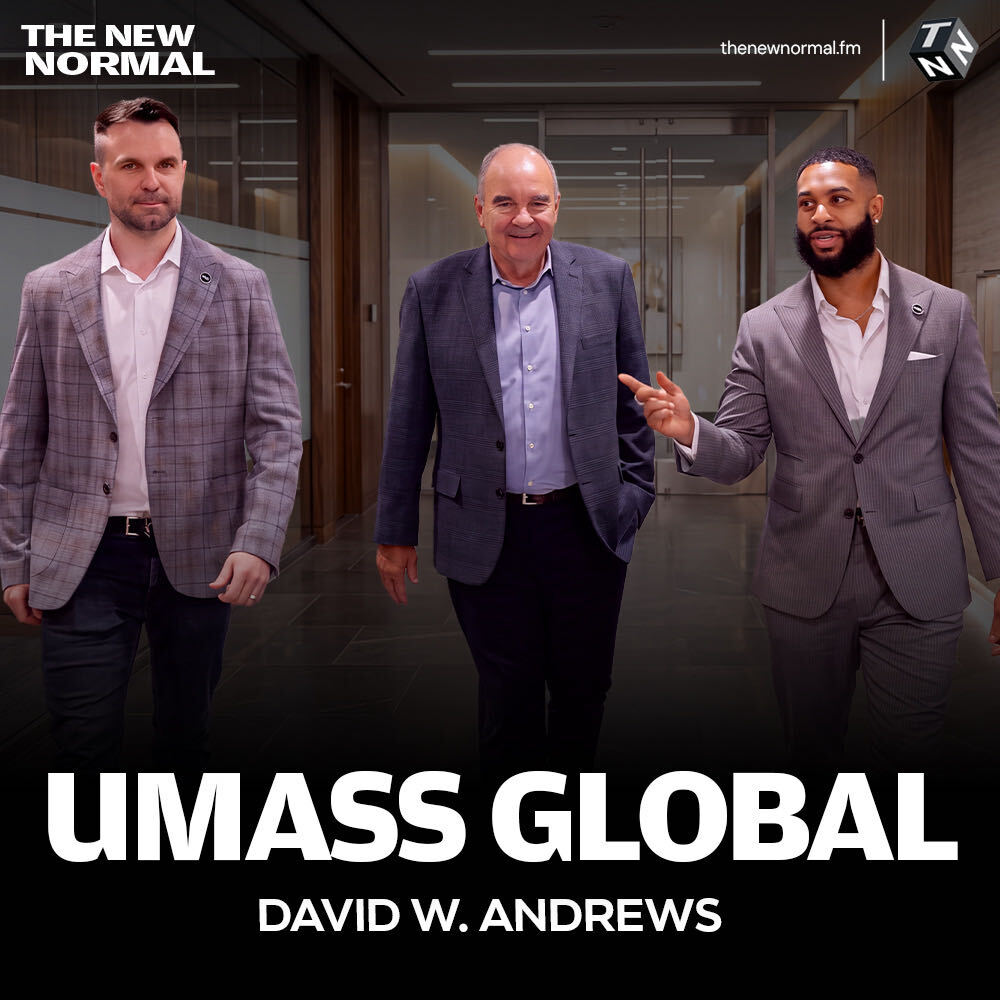

.png)









Dr. David Andrews is Chancellor of UMass Global, a fully online university serving 19,000 students across all 50 states and eight other countries. Ninety-seven percent of them are working adults, with an average age of 35 for undergraduates and 36 for graduate students. Before UMass Global he served as President of National University and as Dean of the School of Education at Johns Hopkins, where the school was ranked number one in the country two years running.
He has been making the case for proactive, data-driven student support since long before AI made it fashionable. He wrote the first dissertation at Florida State University on a word processor, and his committee accused him of cheating because it wasn't a typewriter. Today roughly 60% of UMass Global's efforts are engaged with or exploring AI, from marketing and enrollment through scheduling and grading, and Andrews is pushing toward fully student-facing AI with no human intervention: "Are we waiting for the technology? No. We're waiting for the fear to reduce."
UMass Global is a fully online university built for people who are already working. It serves 19,000 students across all 50 states and eight other countries, and 97% of them are working adults with an average age of 35. Dr. David Andrews has led it as Chancellor after serving as President of National University and as Dean of the School of Education at Johns Hopkins, where the school ranked number one in the country two years running.
Recorded at the university's Southern California headquarters, the conversation with OutRival co-founders Rubén Harris and Timur Meyster covers why roughly 60% of UMass Global's efforts now involve AI, the split between reactive AI that has become impossible to opt out of and the proactive outreach most universities still aren't doing, and how detailed rubrics took paper grading from 48 hours to 48 seconds and turned faculty into rubric builders. Andrews also makes the case that gets him the most visceral pushback: higher education should be faster, cheaper, and easier.