[00:00:00] Chancellor Dr. Justin Lonon: Higher education is built on an old, broken, dated, antiquated model-
[00:00:04] Rubén Harris: Yep ...
[00:00:05] Chancellor Dr. Justin Lonon: that has to change. So we're reimagining higher education, and doing so [00:00:10] at scale here at Dallas College. You know, what if students had their own personalized, um, AI agent? When they come to Dallas College, they, they get an email, they get [00:00:20] a public transit pass.
[00:00:21] Chancellor Dr. Justin Lonon: What if they got that, too? And so that's something that we're testing, um, right now. There are smart, talented people that have spent their entire career in, [00:00:30] um, higher ed that are innovative, um, are forward-thinking, and are focused on the future.
[00:00:36] Rubén Harris: Yeah.
[00:00:37] Chancellor Dr. Justin Lonon: That's not everybody. Um, um, [00:00:40] and then there are people that have never been part of higher ed at all, but they understand, um, the speed at which the world is changing-
[00:00:48] Rubén Harris: Yeah
[00:00:48] Chancellor Dr. Justin Lonon: that higher ed maybe sometimes [00:00:50] struggles with. Yeah. And so we're blending, um, blending the best of all of that.
[00:00:54] Rubén Harris: Happy Tuesday. My name's Ruben Harris, and this is The New Normal. The New Normal is a [00:01:00] show where we go inside of organizations that are actually using AI in production at scale in a way that's making a meaningful impact in their organizations.
[00:01:09] Rubén Harris: This is not a show [00:01:10] about hype. It's a show where we interview leaders who have made decisions to reimagine their organizations with AI at its core. Today, we're in [00:01:20] Dallas, Texas, at the Dallas College campus. And not just any campus, we are in their virtual studio, and I'm very excited to [00:01:30] introduce you to our guest, Chancellor Justin Lonon.
[00:01:33] Rubén Harris: Welcome.
[00:01:34] Chancellor Dr. Justin Lonon: Great to be here. Great to have you in Dallas. Look forward to the conversation.
[00:01:38] Rubén Harris: Feels good. So for the [00:01:40] people that don't know- Who is Justin Lonon?
[00:01:44] Chancellor Dr. Justin Lonon: Well, I'll start with, um, who's Dallas College, and then I'll connect from there. So Dallas [00:01:50] College is a, a system of seven campuses across the Dallas County region, five community campuses, a number of workforce training centers, um, with [00:02:00] over 130,000 students- Mm-hmm
[00:02:02] Chancellor Dr. Justin Lonon: from all walks of life, all ages, all stages. Um, we have 30,000 high school students-
[00:02:08] Rubén Harris: Wow ...
[00:02:08] Chancellor Dr. Justin Lonon: part of our K through [00:02:10] 12 early college high school P-TECH programs. So, uh, we, we, we serve the entire community. We offer a little bit of everything that I'll be happy to get into. Um, [00:02:20] and I'm privileged enough to serve as chancellor of this institution, and I have been here at Dallas College for over 20 years- Wow
[00:02:26] Chancellor Dr. Justin Lonon: um, in a bunch of different roles, uh, along the way. And, [00:02:30] uh, we, we have amazing faculty and staff and incredible students, so, uh, so it's great to have you here at one of our campuses and, and get to talk a little bit about what we do.
[00:02:38] Rubén Harris: So 130,000 [00:02:40] students. Uh, when you're serving that many people, everybody has a different kind of need, and you've said that you're in the barrier-busting business.
[00:02:47] Rubén Harris: What is that?
[00:02:49] Chancellor Dr. Justin Lonon: So for the... [00:02:50] For, for us, the barrier-busting business is very simple. We recognize that for so many students-
[00:02:56] Rubén Harris: Mm-hmm ...
[00:02:57] Chancellor Dr. Justin Lonon: it's not always about what happens in the classroom-
[00:02:59] Rubén Harris: Mm-hmm ...
[00:02:59] Chancellor Dr. Justin Lonon: that [00:03:00] gets in the way. It's not always about academics that gets in the way. It's life. Okay. And the life can do a lot of lifing.
[00:03:05] Chancellor Dr. Justin Lonon: Mm-hmm. So the barrier-busting business as part of our student care network is supporting the [00:03:10] whole student. Mm-hmm. So when a student enrolls at Dallas College for $99 a credit hour, all their textbooks and, and learning materials are included in that. And so that [00:03:20] saves students money. Mm-hmm. Uh, we save them about $12 million a year.
[00:03:23] Chancellor Dr. Justin Lonon: Wow. So that's one barrier to remove, but more importantly, they have their textbooks on day one of class. Mm-hmm. So they're better prepared. [00:03:30] There's no more of this waiting three weeks into class, "And now I got my paycheck." Mm-hmm. "So do I buy that chemistry book, or do I pay the light bill?" Mm-hmm. Uh, [00:03:40] you get a free DART pass, public transit pass.
[00:03:42] Chancellor Dr. Justin Lonon: We can help remove the transportation barrier. Um, the North Texas Food Bank, we have pantries at all of our locations. Mm-hmm. So, [00:03:50] uh, hard to take a test if your stomach is growling. Yeah. So we remove that barrier. Uh, we work with a mental health service provider that has staff on campus, that provides, um, free services to [00:04:00] students that need mental health services, um, so we can remove, um, some of those barriers.
[00:04:05] Chancellor Dr. Justin Lonon: Um, we were the first in the state to partner with the Bezos Foundation to launch the Bezos [00:04:10] Academy, which is free childcare and Montessori- Wow ... uh, school at, um, several of our campuses. And then we also partner with the YMCA for drop-in childcare. [00:04:20] So, and I could go on and on and on, but the, the point is, is that w- we know that those are things that get in the way of student success.
[00:04:27] Chancellor Dr. Justin Lonon: Yeah. And so look, we [00:04:30] can't Pick everyone up for class. Mm-hmm. We can't feed and clothe everyone. We can't pay for everything. But what we can do is work with those organizations that have expertise in [00:04:40] the, in those spaces, and put the individual at the center- Yeah ... of that and remove those barriers for 'em along the way.
[00:04:47] Chancellor Dr. Justin Lonon: Or, you know, a, a student that, [00:04:50] you know, um, something happens, uh, they, they start their car and they bust a fan belt on the car and, um, they can't afford to get it fixed.
[00:04:58] Rubén Harris: Yeah.
[00:04:59] Chancellor Dr. Justin Lonon: If that happens to you or [00:05:00] I today, that'll be frustrating. That'll be irritating. Um, we'll take it to the shop, we'll get it fixed, and we'll go on about our day.
[00:05:07] Chancellor Dr. Justin Lonon: But for our students, the cascade effect of that, [00:05:10] that I can't get to class, I can't get my kid to childcare, I'm gonna have to pick up an extra shift to, um, earn a little more money so I can get my car fixed, and something's gotta [00:05:20] give. Well, oftentimes what gives is, well, I'm just gonna drop outta class for a little while.
[00:05:24] Rubén Harris: Yeah.
[00:05:24] Chancellor Dr. Justin Lonon: They can come to the Dallas College Foundation and our emergency aid program, and that few hundred dollars can [00:05:30] literally get them back on the road to success. So that's really what the barrier busting business is about. Every student gets, um, assigned a student success coach that can help them on their academic [00:05:40] journey, on their pathways journey, um, but also help connect them to those, um, social service and other- Mm-hmm
[00:05:48] Chancellor Dr. Justin Lonon: um, uh, agencies [00:05:50] and, and groups, uh, and services that they may need.
[00:05:53] Rubén Harris: Yeah, no, and we'll get into how students find those different resources through the coaches- Yeah ... um, and how you're thinking about that evolution. But [00:06:00] before doing that, when you introduced yourself, you mentioned the seven campuses.
[00:06:03] Chancellor Dr. Justin Lonon: Mm-hmm.
[00:06:04] Rubén Harris: And you mentioned a barrier of transportation.
[00:06:06] Chancellor Dr. Justin Lonon: Mm-hmm.
[00:06:06] Rubén Harris: Dallas College has obviously been a early leader [00:06:10] in distance learning. Mm-hmm. Um, but you also made a decision during the pandemic to change the seven campuses to a, a one campus model when the rest of the world was [00:06:20] trying to figure out how to go online.
[00:06:21] Rubén Harris: So can you walk us through that evolution and why you did that?
[00:06:23] Chancellor Dr. Justin Lonon: Sure. So, um, our, s- um, w- we're celebrating 60 years as an institution-
[00:06:29] Rubén Harris: [00:06:30] Congrats ...
[00:06:30] Chancellor Dr. Justin Lonon: um, this year. The first 55 or so of those years, we were the Dallas County Community College District- Mm-hmm ... comprised of seven separately accredited colleges.
[00:06:38] Chancellor Dr. Justin Lonon: Mm-hmm. And, [00:06:40] um, those colleges had different programs. Different experiences for students. Sometimes those programs were competing with each [00:06:50] other even within the same umbrella, same system. And so part of the barrier-busting business was we took a l- a hard look in the mirror-
[00:06:57] Rubén Harris: Mm-hmm ...
[00:06:58] Chancellor Dr. Justin Lonon: and said, "Are we [00:07:00] serving students the way we need to?
[00:07:01] Chancellor Dr. Justin Lonon: Are we organized and structured to serve students in the way we need to?" We did a student experience study and found, um, the impact of those differences. [00:07:10] We had over 21,000 of our students- Mm ... that went to more than one of our then colleges. So maybe you work close to our Cedar Valley campus, [00:07:20] um, in the southern part of our service area, but you work up north close to Brookhaven or Richland, and you would take classes- Mm
[00:07:27] Chancellor Dr. Justin Lonon: at both of those, um, or all of [00:07:30] those. And, um, so we decided we need to bust that barrier too- Yeah ... and, and, and tackle that with our structure. Um, so, you know, [00:07:40] to take a, uh, amazing history and legacy of a 55-year-old institution and to build on it, but also to do something that's, you know, rarely done in higher ed, it's say, "You know what?[00:07:50]
[00:07:50] Chancellor Dr. Justin Lonon: We need to, we need to bust it apart- Yeah ... and put it back together differently." So, um, not an easy thing to do.
[00:07:56] Rubén Harris: Yeah.
[00:07:57] Chancellor Dr. Justin Lonon: Uh, um, but done, um, [00:08:00] all focused on how do we be more student-centric. Yep. And so, um, you know, i- i- uh, we are, we are still building the Dallas College [00:08:10] model. We're still building the Dallas College culture- Mm-hmm
[00:08:12] Chancellor Dr. Justin Lonon: um, out of all of those things. Um, but the, the measures that matter, the things that [00:08:20] this was designed to do, um, we're seeing the results of that. So, um, credential attainment is the highest that it's ever been. Um, persistence is, uh, amongst the highest [00:08:30] it's ever been. Um, the, the state outcomes-based funding, the House Bill 8, um- Mm-hmm
[00:08:36] Chancellor Dr. Justin Lonon: uh, funding, uh, we're exceeding the coordinating board's projections by [00:08:40] about 54%. Um, so outcomes are up. And so, um, that's also part of the barrier-busting business is, you know, what are we doing that's getting in the way? Yeah. And we're [00:08:50] still, uh, we're still focusing on those things as an institution focused on continuous improvement.
[00:08:54] Chancellor Dr. Justin Lonon: What are the processes? What are the structures? What are the, what are the barriers that we need to continue to [00:09:00] address?
[00:09:00] Rubén Harris: Yeah. And before talking about not just barriers that you're busting, but- How you're changing the structure of how you're [00:09:10] built in general, and this whole notion of what a 20th century institution is.
[00:09:15] Rubén Harris: I wanna talk about your current scale, right? You're currently at [00:09:20] 130,000 plus students. By 2030, you wanna be at 180,000. Mm-hmm. And by 2035, you wanna be at 200,000 plus.
[00:09:27] Chancellor Dr. Justin Lonon: True.
[00:09:28] Rubén Harris: You currently have about [00:09:30] 6,500 people that are humans that are serving- Mm-hmm ... this organization. How do you think about 6,500, let's call it [00:09:40] 10,000 plus people in 2035- Yeah
[00:09:41] Rubén Harris: serving 200,000 plus people?
[00:09:44] Chancellor Dr. Justin Lonon: Yeah. Well, I mean clearly, um, you know, I'll start with our focus on [00:09:50] getting to an institution that's serving that number of students, um, certainly gets back to your question around distance and online. Mm-hmm. That we've been in, um... We've been active in that space for a [00:10:00] long time.
[00:10:00] Chancellor Dr. Justin Lonon: Yeah. But we have to think about it differently. Yeah. Um, not just a collection of courses that meets the needs, um, of students in the flexible way in which they may need courses, [00:10:10] but what are the complete online programs that we have that are of interest, um, to students, prospective students here locally- Mm-hmm
[00:10:17] Chancellor Dr. Justin Lonon: um, in the region, around the state, and then [00:10:20] globally. And so we have developed those programs, both associate degrees and bachelor's degrees, that are completely online. Um, and then [00:10:30] on our student services side, obviously it takes a lot, those success coaches and other things, to support students, support students on their journey.
[00:10:37] Chancellor Dr. Justin Lonon: But to get your question of, of, you know, how do [00:10:40] we grow the number of those that we serve, and then how do we have enough people to be able to, to serve them, clearly technology- Mm-hmm ... clearly AI is a big part of [00:10:50] our strategy as we look at emerging, emerging technology, um, that helps us, um, do what we need to do, but do it more efficiently, more effectively, [00:11:00] um, and in some instances maybe even better- Yeah
[00:11:03] Chancellor Dr. Justin Lonon: than, than what we do, and that's certainly true on the student services side. Um, certainly, you know, as we talk about the [00:11:10] academic side- Mm-hmm ... how do we, um, expand, uh, what we do there? But from an operational- Yeah ... standpoint, the, the stresses that it puts on an [00:11:20] institution with that kind of growth, um, and identifying the kind of talent that we need.
[00:11:27] Chancellor Dr. Justin Lonon: And so, you know, we certainly are, [00:11:30] um, using different technologies now- Mm-hmm ... using different, um, um, AI platforms that are helping amongst all of those things. Mm-hmm. [00:11:40] So if it's in, um, if it's in HR-
[00:11:42] Rubén Harris: Mm-hmm ...
[00:11:42] Chancellor Dr. Justin Lonon: um, that we're using, uh, Phenom to help be able to connect, um, talent with opportunity allows [00:11:50] our HR team then to spend time on the higher touch things where they need to.
[00:11:53] Chancellor Dr. Justin Lonon: Mm-hmm. If it's in our advancement team, um, side, then using AI tools [00:12:00] that can help with grant writing and other things- Mm-hmm ... that allows the humans involved to do the higher level, um, things. If it's on the student services side, um, we're, [00:12:10] we're piloting and testing and, and using some, uh, new things between, um, EdSights, between Axio, um, and other things that, um, help [00:12:20] simplify how that work gets done, and then again, allows the student services folks, um, to, to take care of some of the greatest needs that- Yeah
[00:12:29] Chancellor Dr. Justin Lonon: that our students [00:12:30] may have. So, you know, those are some of the, you know, quick, quick kind of touch points as we're looking at it holistically of, of how technology and AI is gonna help us get there.
[00:12:39] Rubén Harris: Yeah. [00:12:40] And before getting into some of those emerging technologies, something that I appreciate from leaders is when they [00:12:50] say they don't know something, 'cause a lot of people speak with a lot of certainty, and that's okay if when I ask this question, you say what you know it [00:13:00] is.
[00:13:00] Rubén Harris: Mm-hmm. Mm-hmm. What it is. So I'm gonna ask you, what is a 20th century institution?
[00:13:05] Chancellor Dr. Justin Lonon: Yeah. The great thing... So about two years ago, I began to challenge us that we need to build a 22nd [00:13:10] century college.
[00:13:10] Rubén Harris: Mm-hmm.
[00:13:11] Chancellor Dr. Justin Lonon: The great thing about that is no one knows exactly- Yeah ... what that looks like. It's too far off.
[00:13:15] Rubén Harris: Yeah.
[00:13:15] Chancellor Dr. Justin Lonon: But we know what it doesn't look like. Yeah. It doesn't look like today. It doesn't look like the rear view [00:13:20] mirror. Mm-hmm. And so we are, um, intently focused on How do we evolve and how we change- Yeah ... as an institution? Now again, I [00:13:30] get in trouble sometimes when I say this, um, but higher education is built on an old, broken, dated, antiquated model-
[00:13:37] Rubén Harris: Yep
[00:13:37] Chancellor Dr. Justin Lonon: that has to change. [00:13:40] So we're reimagining higher education and doing so at scale here at Dallas College because when done right, it's, it's a game changer for [00:13:50] individuals, for business employers, and for communities. Yeah. So we have a, we have a heavy lift as an institution [00:14:00] to be the institution that people need us to be moving forward.
[00:14:03] Rubén Harris: Mm-hmm.
[00:14:03] Chancellor Dr. Justin Lonon: You know, you- you're in an area right now in Dallas where there's about 500 people a day [00:14:10] that are moving to North Texas. Wow. The economy is growing, but that means we're also importing jobs. We're importing talent in many [00:14:20] respects. This is also a region that about 42% of the adult working age population doesn't have a post-secondary credential.
[00:14:27] Chancellor Dr. Justin Lonon: They're one of the 42, 43 million Americans. [00:14:30] Mm-hmm. That's about 900,000 of our neighbors here in North Texas that need the opportunity that, that we can provide. [00:14:40] But, and if we don't get it right, then the divide between the have and the have-nots- Mm-hmm ... is gonna get wider. So we have a responsibility, um, to be that [00:14:50] bridge-
[00:14:50] Rubén Harris: Mm-hmm
[00:14:50] Chancellor Dr. Justin Lonon: for, um, to create economic mobility and prosperity- Yep ... as an open door access institution, um, here to serve everyone. And then for business employers seeking to build [00:15:00] their workforce pipeline, we are right at that intersection. And so that's part of what building a 22nd century college is about, is how to evolve, how to adapt.[00:15:10]
[00:15:10] Chancellor Dr. Justin Lonon: I mean, what, year before last, there were 99 colleges- Mm-hmm ... that closed or merged. Sad. Last year, there was about 84. Um, and [00:15:20] so I think there are a lot of college and universities that may be shrinking their way to greatness and may not even have awareness of it. That is not gonna be the case here at Dallas [00:15:30] College.
[00:15:30] Rubén Harris: Yeah. No, I really love that you did not just articulate what was broken about higher ed, but why it's important to change because there's people [00:15:40] that are seeking what you have going on. Mm-hmm, mm-hmm. In our breakfast this morning with Pamela, Russ, and Brad, um, something came up that stood out to me that I've have [00:15:50] not heard other higher ed leaders articulate unless we have a deep conversation, and you started talking about FTEs.
[00:15:58] Rubén Harris: Mm-hmm. Um, [00:16:00] for the people that don't know what FTEs are, they're full-time employees. Um, and you started thinking about, uh, not just transformation from a technology [00:16:10] perspective, but from a collaboration between human labor and digital labor. Can you unpack that for us a little bit?
[00:16:19] Chancellor Dr. Justin Lonon: Yeah. You [00:16:20] know, this is something that, um, struck me a couple years ago when, when I was, you know, interviewing one of our, our senior executives, and in the interview I asked [00:16:30] him, "If you come to this role, how many AI agents do you bring with you- Mm-hmm
[00:16:34] Chancellor Dr. Justin Lonon: into this?" And so we got into a great conversation around that, and it really struck me of, okay, [00:16:40] well, this, this is the future of the workforce.
[00:16:42] Rubén Harris: Mm-hmm.
[00:16:43] Chancellor Dr. Justin Lonon: We're gonna, we're gonna hire the best talent that we can find, um, and they're gonna bring [00:16:50] talent with them Mm-hmm , um, with some of these, um, agents and digital employees with them.
[00:16:55] Chancellor Dr. Justin Lonon: And then I thought, you know, our students deserve that as [00:17:00] well. Our students need that as well, which, you know, led to kind of one of those, um, cocktail conversations with, uh, with an emerging tech [00:17:10] company and an entrepreneur, um, about here's a problem that we need to think about to, to solve. You know, what if students had their own personalized, um, AI agent [00:17:20] that, um, digital employee support that When they come to Dallas College, they, they get an email, they get a public transit pass.[00:17:30]
[00:17:30] Chancellor Dr. Justin Lonon: What if they got that too? And so that's something that we're testing, um, right now, um, engaging with, um, students who are helping us as we kind of co-develop this. Um, [00:17:40] but when I think about how, again, how we grow as an institution and how we have the right talent aligned of where we need to grow, [00:17:50] um, not all of that talent may be traditional talent-
[00:17:54] Rubén Harris: Yeah
[00:17:54] Chancellor Dr. Justin Lonon: that is sitting across from the table- Yeah ... uh, as you and I are each, you know, from each other right [00:18:00] now. Um, it may be, um, digital talent. Yeah. And so, so we're r- so we've, we've really thought about that, um, within our workforce right [00:18:10] now of how, how can, how can this augment the work you do?
[00:18:15] Rubén Harris: Yeah.
[00:18:15] Chancellor Dr. Justin Lonon: Um, how can this make you more efficient, um, [00:18:20] and how can that help us as we plan the number of FTEs, plan the number of employees where we need to grow?
[00:18:25] Chancellor Dr. Justin Lonon: Um, the reality is, as I described earlier, we've gotta have [00:18:30] humans-
[00:18:31] Rubén Harris: Yeah ...
[00:18:31] Chancellor Dr. Justin Lonon: um, uh, doing this high-level, um, work, uh, to support our students, but that doesn't mean they have to do all the things they've been [00:18:40] doing.
[00:18:40] Rubén Harris: Yeah.
[00:18:40] Chancellor Dr. Justin Lonon: Uh, that there are other ways that, um, can augment and support that work. Yeah. And so we're really leaning into that side as well.
[00:18:47] Rubén Harris: Yeah. And before going deeper into [00:18:50] digital talent and digital labor, let's keep talking about talent in general. And I, I really like this because, um, before we started doing [00:19:00] these types of interviews, I told you over breakfast we had an organization called Career Karma, where we were working with adults that were signing up for alternative forms of education, like boot camps and [00:19:10] micro-credentials.
[00:19:11] Rubén Harris: And usually when you say a non-traditional background, you're talking about entry-level or mid-level talent. You [00:19:20] have taken that to the next level where you're bringing in non-traditional talent on the executive level- Mm-hmm ... to your leadership team to reimagine and [00:19:30] build this 22nd century institution. Can you talk about that?
[00:19:32] Chancellor Dr. Justin Lonon: Yeah. Well, um, again, I think that is part of challenging the norm- Mm-hmm ... within the work that we do. You've gotta have different, [00:19:40] um, different types of talent- Mm-hmm ... uh, around the table. So look, we have incredible faculty and staff, um, here at Dallas College. Um, we offer an [00:19:50] amazing, uh, instructional product, um, with the work that our faculty do and our instructional leadership, um, does.
[00:19:57] Chancellor Dr. Justin Lonon: Um- [00:20:00] And, but as I described earlier, people have to get to the classroom. Sure. So there's a whole bunch of support systems that have to happen around that, um, and different ways that we [00:20:10] have to evolve and change as an institution. So yeah, so we have brought in, um, you know, our HR chief. Um, this is his first gig in higher [00:20:20] ed- Mm-hmm
[00:20:20] Chancellor Dr. Justin Lonon: after being at Boeing and PepsiCo- Mm-hmm ... and GE. Um, but we were br- I wanted to bring in things like, um, performance and merit-
[00:20:29] Rubén Harris: Mm-hmm ...
[00:20:29] Chancellor Dr. Justin Lonon: um, [00:20:30] component.
[00:20:30] Rubén Harris: Mm-hmm.
[00:20:30] Chancellor Dr. Justin Lonon: Um, that's just typically not done much within, um, higher ed. Mm-hmm. Um, so I needed talent that knew how to build those things. Mm-hmm. [00:20:40] Um, you know, our, our external relations lead, um, worked for Citibank, uh, acro- you know, and led public affairs across 20 different countries.[00:20:50]
[00:20:50] Chancellor Dr. Justin Lonon: Um, members of our tech team, um, came from, um, Toyota and other, um, um, corporations and had a little bit of higher ed experience as [00:21:00] well. And so there are smart, talented people that have spent their entire career in, um, higher ed that are innovative, um, are [00:21:10] forward-thinking, and are focused on the future.
[00:21:12] Rubén Harris: Yeah.
[00:21:13] Chancellor Dr. Justin Lonon: That's not everybody. Um, um, and then there are people that have never been part of higher ed at all, but [00:21:20] they understand, um, the speed at the which the world is changing-
[00:21:24] Rubén Harris: Yeah ...
[00:21:24] Chancellor Dr. Justin Lonon: that higher ed maybe sometimes struggles with. Yeah. And so we're blending, um, blending the best of all of them.
[00:21:29] Rubén Harris: Yeah. [00:21:30] I wanna unpack merit and performance, and the reason why is, um, I told you earlier, like, at OutRival, we spent eight years in Silicon Valley.
[00:21:38] Rubén Harris: Uh, you talk to [00:21:40] our peers and our colleagues that are also technology builders, and when you tell them about performance, it might be related to [00:21:50] latency or no background noise and s- uh, the, the quality of the voice- Mm-hmm ... and can you tell whether it's a human or not? All those things about compliance.
[00:21:59] Rubén Harris: Yeah. Mm-hmm. All that [00:22:00] matters. Um, but the way we think about performance is all of those things, but also is it moving a metric?
[00:22:08] Chancellor Dr. Justin Lonon: Mm-hmm.
[00:22:09] Rubén Harris: And obviously, when you [00:22:10] hire a human, they have an objective. So for us, when performance comes to being something, we- you have to drive an outcome. How do you think about performance?[00:22:20]
[00:22:20] Chancellor Dr. Justin Lonon: Well, so, I mean, you referenced earlier some of our big am- ambitious goals- Mm-hmm ... that, um, in 2022, we launched the Dallas College [00:22:30] 2030 plan- Mm-hmm ... um, with, you know, planted the flag of some aspirational goals. Mm-hmm. Um, over the last few months, I be- I've m- moved that and said let's talk about Dallas College [00:22:40] 2035- Mm-hmm
[00:22:41] Chancellor Dr. Justin Lonon: because we're exceeding some of those 2030 goals already. Mm-hmm. 2030 is not that far off. It's not. So we really need to, to look, um, look ahead at where we wanna be, [00:22:50] and, and, and so much of that is, um, when I talk about by 2035, over 200,000 students-
[00:22:58] Rubén Harris: Mm-hmm ...
[00:22:58] Chancellor Dr. Justin Lonon: well, that [00:23:00] means that we need to be, um, measuring and paying attention to where we are on an annual basis- Mm-hmm
[00:23:05] Chancellor Dr. Justin Lonon: and planning for that sort of enrollment growth. Mm-hmm. When I talk about by 2035 [00:23:10] that we will have generated 325,000 additional credentials- Awesome ... we need to see are we on target? Are we not on target? Where do we need to deploy resources differently? [00:23:20] And so doing the regular check-ins and reviews on those sort of things as an institution driving- Mm-hmm
[00:23:25] Chancellor Dr. Justin Lonon: the institutional direction, that then a- around the outcomes that we're trying to get [00:23:30] to, then also drills down, you know, to, um, the operational, departmental, and then the individual level- Mm-hmm ... as well. So individual [00:23:40] contributors at every level of the institution can say, "Well, how is what I'm doing every year and how I'm being evaluated every year tied- Mm-hmm
[00:23:49] Chancellor Dr. Justin Lonon: to these [00:23:50] larger goals?" And so it helps us as an organization that we're all focused, um, on the s- in the same direction, and that, um, it also [00:24:00] rewards high performers.
[00:24:01] Rubén Harris: Yeah.
[00:24:01] Chancellor Dr. Justin Lonon: Um, and so those that are stretching, those that, um, are, um, really contributing to that in a significant [00:24:10] way, then there's a performance merit component from a financial standpoint, um, that, uh, that they can see the benefits, uh, of that.
[00:24:19] Chancellor Dr. Justin Lonon: And [00:24:20] so part of the account- part of the outcomes focus for me, from an institutional and individual perspective, is a broader accountability-
[00:24:29] Rubén Harris: Mm-hmm ...
[00:24:29] Chancellor Dr. Justin Lonon: uh, [00:24:30] um, view as well. How are we doing as an institution? So an accountability standpoint of those that we serve, um, and then as a, [00:24:40] you know, an individual, uh, member of the team, you know, how are we, um, holding you accountable for, for those goals and outcomes that, that, um, you were tasked [00:24:50] with and your group is tasked with, uh, that contribute to obviously the, the over- uh, overarching goals.
[00:24:56] Rubén Harris: Yeah. Makes sense. And we've touched on [00:25:00] labor, how you think about agents as digital labor. We talked about performance. Um, I think you beautifully articulated not just the package that you [00:25:10] wanna provide for students to bust barriers, but also that you also wanna provide an agent for every student- Mm-hmm
[00:25:19] Rubén Harris: and potentially [00:25:20] every employee as well. How do you think about back office versus front office operations? That's the corporate enterprise [00:25:30] language- Mm-hmm ... right? For the people that aren't corporate enterprise, they might be bristling at me saying something like that, or a quota for a worker driving the number, I would say [00:25:40] non-student facing versus student facing- Mm
[00:25:41] Rubén Harris: or administrative versus non-administrative. How do you think about the breakdown between what kind of work a digital, uh, worker would [00:25:50] provide for you?
[00:25:50] Chancellor Dr. Justin Lonon: Well, I mean, I think, again, where we started, um, in this conversation about five years ago- Mm-hmm ... was, um, you know, one of the examples I, I [00:26:00] mentioned earlier on the advancement side.
[00:26:01] Rubén Harris: Mm-hmm.
[00:26:02] Chancellor Dr. Justin Lonon: Um, you know, trying to figure out different ways to generate revenue- Mm-hmm ... and looking at different grants, um, and we're considering adding additional [00:26:10] FTEs, and we said, "Wait, let's use AI- Mm-hmm ... to help us with that." And so s- starting on that [00:26:20] side, um, on the back-end operations and then looking at, you know, okay, how does this connect to our tech stack?
[00:26:27] Chancellor Dr. Justin Lonon: How does this connect to our larger enterprise [00:26:30] systems, um, that, that is the behind the curtain stuff? Mm-hmm. The, the things that I referenced, like with Phenom and, and our HR team, [00:26:40] um, that, you know, that's not student facing, that's not direct student, um, interaction. Um, and so we've been able to test more, um, fully, [00:26:50] whereas on the front-end side, the student facing, um, engagement side, you know, we've been more strategic about how we lean into that, um, [00:27:00] how we, um, pilot those things, and, um, quite frankly, how, um, uh, how our students are [00:27:10] involved.
[00:27:10] Chancellor Dr. Justin Lonon: Um, and many of these instances I described that we're kind of co-development partners in this- Yeah ... um, that our students are actually informing us-
[00:27:17] Rubén Harris: Mm-hmm ...
[00:27:17] Chancellor Dr. Justin Lonon: what's working for them, what's not working for them, [00:27:20] and then in real time, you know, we get to make adjustments to that before then we expand it and, you know, take it to, uh, take it to everyone.
[00:27:28] Chancellor Dr. Justin Lonon: Yeah. So I think, you know, th- [00:27:30] that, looking at that intersection of, um, you know, risk versus reward- Mm-hmm ... um, that we'll take some bigger risks on the back-end operation [00:27:40] side- Yeah ... um, versus protecting the relationship based, um, connections that, um, that our students oftentimes need.
[00:27:49] Rubén Harris: Yeah. And to, to [00:27:50] your point, um, Dallas College, in addition to many organizations, they would argue that they're mission driven- Mm-hmm
[00:27:56] Rubén Harris: institutions. So you have to handle those student [00:28:00] interactions with care, and you do have to be strategic about what is the, the low risk things, what is the higher risk things- Mm-hmm ... how do we do it, be mindful of PER- FERPA, TCPA, [00:28:10] all these other things. Um, and let's say that you have decided to co-develop something with a vendor or internally or with [00:28:20] the students.
[00:28:21] Rubén Harris: Um- How would you define the difference between something that's spammy versus [00:28:30] warm outbound? And the reason why I bring this up is because it's shocking to me that out of the 4,000 schools, there's almost zero [00:28:40] outbound call or text motion, and everything is just reliant on the brand coming in. Mm-hmm. But as we think about modernizing [00:28:50] and reaching students where they are, a big question people ask before they implement something is nothing about AI.
[00:28:55] Rubén Harris: It's will people pick up the phone?
[00:28:57] Chancellor Dr. Justin Lonon: Yeah. Mm-hmm. What
[00:28:58] Rubén Harris: do you think?
[00:28:59] Chancellor Dr. Justin Lonon: So, [00:29:00] um, I think people react to different things, right? Mm-hmm. So to your point, all colleges, universities, institutions- Mm-hmm ... um, they're gonna have all the [00:29:10] things, the, uh, the, the billboards- Mm-hmm ... the bus boards- Mm-hmm ... the things at the airport.
[00:29:16] Chancellor Dr. Justin Lonon: Mm-hmm. Um, all, all of those things that [00:29:20] maybe someone pays attention to.
[00:29:21] Rubén Harris: Mm-hmm.
[00:29:21] Chancellor Dr. Justin Lonon: Maybe they don't pay attention to. Um- But, you know, we're, we're focused on, um, and [00:29:30] recognize that people need us when they need us.
[00:29:33] Rubén Harris: Mm-hmm.
[00:29:34] Chancellor Dr. Justin Lonon: So they may see all of those things all day long, Dallas College this, Dallas College that.
[00:29:39] Rubén Harris: Mm-hmm.
[00:29:39] Chancellor Dr. Justin Lonon: But [00:29:40] that's not, that's not part of their reality-
[00:29:43] Rubén Harris: Mm-hmm ...
[00:29:43] Chancellor Dr. Justin Lonon: um, a- until they go, "You know what? I need to do this next thing." [00:29:50] And so then we certainly need to have awareness that D- you know, that's back to the brand and everything else, that Dallas College is an option for them as they consider that. But I do want us [00:30:00] to be focused on changing people's minds, um, those that, um, aren't even necessarily contemplating this.
[00:30:08] Chancellor Dr. Justin Lonon: Like, "Okay, I'm, [00:30:10] I'm, I'm good. I'm, um, I, I'm doing what I need to do to support my family." And then all of a sudden, maybe they [00:30:20] do get something, um, that is an outbound something that reaches them, touches them, and they go, [00:30:30] "I've never considered video production- Mm-hmm ... as a thing, but look at this cool thing- Yeah
[00:30:33] Chancellor Dr. Justin Lonon: that exists here at Dallas College, and I wanna know more about that." So my point is, is that, [00:30:40] um, we all get spam all day long, um, calls, texts that we generally just disregard. And I [00:30:50] think that ultimately the success of higher education is gonna come down to personalization. Mm-hmm. So it is that w- [00:31:00] um, if it's just a broad spam thing of, "Hey, we got, we've got this cool program," um, versus it's going, "Hey, [00:31:10] Justin, we have this cool program, and we understand that you..."
[00:31:14] Chancellor Dr. Justin Lonon: dot, dot, dot. Mm-hmm. Um, uh, and so try to personalize it and make it relevant, [00:31:20] um, for them because it's, it's overwhelming. Mm-hmm. Uh, I run into students almost daily that, um, recognize this billboard on my [00:31:30] lapel pin here- Mm-hmm ... and say, "Oh, yeah, I was a Dallas College student," or, um, "My sister, my cousin, my mother, my father, my grandma."
[00:31:39] Chancellor Dr. Justin Lonon: [00:31:40] Um, and so there's high degree of brand awareness, but they don't know the multitude of all the things we offer-
[00:31:47] Rubén Harris: Yeah ...
[00:31:47] Chancellor Dr. Justin Lonon: um, both in way of programs or [00:31:50] certainly in the way of services, that even if they go, "Hey, I'd like to do that cool video production thing, but, um, you know, I, I need childcare"- Yeah ... well, they m- they might not have [00:32:00] awareness, uh, of that.
[00:32:01] Chancellor Dr. Justin Lonon: That it exists. So I think technology, I think the outbound, um, pieces that as, as we can get more highly personalized- Mm-hmm ... um, around that, and I [00:32:10] know it starts freaking people out- Mm-hmm ... about what does that mean that, what do they know about me? Mm-hmm. Um, and what data points are they looking at? Um, [00:32:20] and when it starts talking about personalization slash what does that mean in the way of targeting- Mm-hmm
[00:32:25] Chancellor Dr. Justin Lonon: and whatever else, um, I think that in a [00:32:30] world, um, that attention span is short-
[00:32:33] Rubén Harris: Mm-hmm ...
[00:32:34] Chancellor Dr. Justin Lonon: um, that people have to feel that it's relevant to them. Mm. And that's why those billboards, those [00:32:40] bus boards may not feel relevant, um, to them, um, again, until they're ready. But I think technology can help bust through and make it relevant, um, as we all figure out how [00:32:50] to get better at it.
[00:32:50] Rubén Harris: Yeah. As you talked about mom, dad, sister, brother, cousin, grandma, it made me think about what we talked about [00:33:00] earlier, 'cause Russ brought up you guys are investing in AI in four areas, academic, student, operations-
[00:33:06] Chancellor Dr. Justin Lonon: Mm-hmm ...
[00:33:06] Rubén Harris: data governance. Mm-hmm. So it made me think about the data side-
[00:33:09] Chancellor Dr. Justin Lonon: [00:33:10] Mm-hmm ...
[00:33:10] Rubén Harris: right, where if I am a student, and I filled out dallascollege.edu, I don't know if that's the right website-
[00:33:17] Chancellor Dr. Justin Lonon: Mm-hmm.
[00:33:17] Chancellor Dr. Justin Lonon: You got it ...
[00:33:17] Rubén Harris: slash apply- ... and [00:33:20] an AI agent or a human reaches out to me, say, "Hey, Ruben, I see that you are interested..." Like, uh, uh, "Welcome to Dallas College." Mm-hmm. Um, [00:33:30] "I see you come from a line of physicians," right, "and yet you're interested in pursuing the same career," right? There's a, a tie already- Mm-hmm ... that, like, they know the history- Mm-hmm
[00:33:39] Rubén Harris: of [00:33:40] everyone else, and, and the memory of not just what's in the CRM-
[00:33:44] Chancellor Dr. Justin Lonon: Mm-hmm ...
[00:33:45] Rubén Harris: but also of the other people that serve them. I want you to know [00:33:50] that the same person that enrolled your mother and your father still works here.
[00:33:53] Chancellor Dr. Justin Lonon: Mm-hmm.
[00:33:53] Rubén Harris: Did you know that? Would you like to speak with them- Mm-hmm ... to learn a little bit more about that?
[00:33:57] Rubén Harris: Mm-hmm. So how do you, how do you- Yeah ... think about that data and that [00:34:00] memory-
[00:34:00] Chancellor Dr. Justin Lonon: Yeah ...
[00:34:00] Rubén Harris: throughout the experience?
[00:34:01] Chancellor Dr. Justin Lonon: Well, so I mean, look, in, in our 60-year history, we've served over three and a half million, uh, students.
[00:34:07] Rubén Harris: Yeah.
[00:34:07] Chancellor Dr. Justin Lonon: Um, and so we have served [00:34:10] generations-
[00:34:10] Rubén Harris: Mm-hmm ...
[00:34:11] Chancellor Dr. Justin Lonon: um, of students. So I think that- That's, um, that's the personala- personalization that I'm talking [00:34:20] about.
[00:34:20] Chancellor Dr. Justin Lonon: Mm-hmm. That it gets down to that level, that level of, um, connection, and realizing that that outbound, um, uh, [00:34:30] initiation in whatever form or fashion that it is also, you know, it's not one and done. Mm-hmm. Right? Um, so how does it, um, [00:34:40] uh, you know, how, how does it continue to try to engage you in a way that is not pestering and overwhelming and, and turns you off and all the other things that, uh, uh, that can [00:34:50] happen?
[00:34:51] Chancellor Dr. Justin Lonon: But the data part, um, is critical. Getting the data infrastructure, um, the data governance in, in all that we're talking about in emerging [00:35:00] technology is, is critical. And so we as an institution clearly have been building that, um, and building the, the resources that we need to build [00:35:10] so then as we partner with, uh, with companies to be able to do the sort of thing that you described, that we've got it together.
[00:35:17] Chancellor Dr. Justin Lonon: Yeah. Um, that feels, um, [00:35:20] personal in a responsible sort of way, uh, to the receiver.
[00:35:23] Rubén Harris: Yeah. And before going into how you've established those partnerships with companies and, and [00:35:30] empathizing on how hard that is, um, as you talk about all these resources that you provide to Bust Barriers- Some [00:35:40] people provide the insight into where those resources exist with phone me-menus and, like, pressing one, press two.
[00:35:47] Rubén Harris: Mm-hmm. But given the vast list- Mm-hmm ... you can't, you [00:35:50] probably got more- Mm-hmm ... more resources than numbers on, on a, on a dial pad, obviously. And so how would you imagine the res- the, the interaction [00:36:00] looks like with a student at a 21st century institution that- Yeah ... has the agent and the, and the memory, and the human to find what they need or to be [00:36:10] served what they need before they ask, like when we were having breakfast?
[00:36:12] Chancellor Dr. Justin Lonon: Yeah. So I mean, part of the 22nd century model, um... I mean, I'll just start kind of from the where we are. Mm-hmm. So, [00:36:20] uh, about three years ago, we looked at some data, um, and showed that in one of our, our public, um, board meetings presentations, that it was [00:36:30] 131,000 students- Mm-hmm ... that had been part of Dallas College in fall of 2019, but by spring of 2023, they weren't any longer.
[00:36:38] Chancellor Dr. Justin Lonon: Mm-hmm. 131,000 students. That's a lot of [00:36:40] people. A lot of people. And so there can be a lot of reasons why those people aren't, um, weren't with us any longer. But we wanted to engage in a, you know, in a [00:36:50] win-back campaign. Mm-hmm. Um, and so, you know, we engaged a company to be able to, to do that, to do the, the outbound engagement, um, side.
[00:36:58] Chancellor Dr. Justin Lonon: And, you know, at that point, [00:37:00] um, it took a lot of direct interaction and intervention to go, "Okay, um, y- you know, okay, cool. Ruben, you, you were here [00:37:10] in fall of 2019, but during the pandemic, your neighborhood childcare center closed and hasn't reopened, and so you think you can't- Mm-hmm ... but you can- Mm-hmm
[00:37:18] Chancellor Dr. Justin Lonon: because we have [00:37:20] childcare options now." And so that was a direct sort of engagement, um, that, you know, some of that was by phone, some was t-text, some was by [00:37:30] email, and we could get, you know, uh, snippets of information- Mm-hmm ... if people would engage with us, that would help us guide them, um, how we could help support and serve them.
[00:37:39] Chancellor Dr. Justin Lonon: I think in the [00:37:40] 22nd century model, um, the whole, whole of the data is being scraped, all the information that can be gathered, um, [00:37:50] to determine what might be the contributing factors that cause you to stop out. What might be the contributing factors for you [00:38:00] to be one of those 900,000 of our neighbors that might have some college, um, but no degree?
[00:38:07] Chancellor Dr. Justin Lonon: Um, and so [00:38:10] between the, the human and the, the digital, um, employee, one augments the other. The data informs, um, everything along the way. Um, [00:38:20] at the end of the day, you know- This is still relationship based. Yeah. And to your point about what you were talking earlier, um, about what [00:38:30] outcomes look like and- Mm-hmm
[00:38:30] Chancellor Dr. Justin Lonon: as, as companies are trying to, um, make the interactions feel more, quote, real, more human, um, that is crit- certainly critically [00:38:40] important. At the end of the day, people wanna make sure they get what they need-
[00:38:45] Rubén Harris: Yeah ...
[00:38:45] Chancellor Dr. Justin Lonon: however they need to get it.
[00:38:47] Rubén Harris: Yeah.
[00:38:47] Chancellor Dr. Justin Lonon: Um, and so if that [00:38:50] first half of their engagement, um, is, is digital focused, getting them to where they need to get to, then great.
[00:38:57] Rubén Harris: Yeah.
[00:38:57] Chancellor Dr. Justin Lonon: Uh, it gets them where they need to get to, and then if they [00:39:00] need higher level, um, support and services, then we're gonna make sure that we've got the, the human side to do just that.
[00:39:05] Rubén Harris: Yeah, I mean, what you just said after what might be reminds me of my [00:39:10] conversation with President, uh, Ryerson last week- Mm-hmm
[00:39:12] Rubén Harris: where she was like, "To what end?"
[00:39:15] Chancellor Dr. Justin Lonon: Mm-hmm.
[00:39:15] Rubén Harris: Right? If we're investing 88 million and all this other money into serving [00:39:20] students- Mm-hmm ... and technology, but you don't know what end is driving, you're just investing in stuff just to say you're investing in stuff, right?
[00:39:28] Chancellor Dr. Justin Lonon: Well, well I think, I mean again, [00:39:30] absolutely, and, and, and, um, she's great, and they're, they're a great institution.
[00:39:34] Chancellor Dr. Justin Lonon: Um, a- you know, so I go back to what I was talking about earlier, some of the challenges within [00:39:40] higher ed that can be very insular. We've offered these things these ways for a long time, um, and, um, uh, [00:39:50] that is not going to, that is not gonna be the future. So I think, um, trying to flip that paradigm... I mean, look, and take a step back.
[00:39:57] Chancellor Dr. Justin Lonon: I'll, I'll... I mean, again, just use the Dallas College [00:40:00] example. We exist for one reason. We exist to solve problems for individuals, solve problems for [00:40:10] business and industry, and for the community. We're not here just to offer programs and keep the lights on and employ people. That's not why we're here. Um, again, we [00:40:20] are to be a bridge to economic mobility and prosperity.
[00:40:23] Chancellor Dr. Justin Lonon: Mm-hmm. And so when institutions are talking about making these levels of investments, it [00:40:30] has to be with purpose. Yep. It has to be with intent. It has to be mission-aligned, um, and not just because, yeah, it sounds cool and it's, it's hip and it's [00:40:40] what, um, people are doing these days. Mm-hmm. Um, it absolutely has to be with purpose.
[00:40:44] Chancellor Dr. Justin Lonon: And even institutions that may have historically had resources-
[00:40:49] Rubén Harris: Mm-hmm ...
[00:40:49] Chancellor Dr. Justin Lonon: [00:40:50] resources are changing.
[00:40:51] Rubén Harris: Yeah.
[00:40:51] Chancellor Dr. Justin Lonon: Revenue streams are changing. Yeah. And I think that is a- another reason, quite frankly, to be innovative- Yeah ... um, uh, to, [00:41:00] to think about those resources, uh, those resource challenges differently. Yeah. Um, you know, one of the things that we, we talked about at breakfast this morning, last year we launched the Dallas [00:41:10] College Enterprise Ventures.
[00:41:10] Chancellor Dr. Justin Lonon: Yep. Um, you know, spun off from the Dallas College Foundation- Mm-hmm ... um, to be a separate institution, obviously affiliated with the college- Mm-hmm ... that, um, [00:41:20] is supporting what the college may need in the way, in, in our first example of emerging technology as we're a co-development partner with, with [00:41:30] Axio around personal AI agent, um, for students and, um, and also a, a course modernizer for faculty.
[00:41:37] Chancellor Dr. Justin Lonon: Mm-hmm. Um, but Dallas College Enterprises [00:41:40] Ventures also has an equity stake in that. So at the bare minimum, we are designing something that works for our students and for our [00:41:50] faculty, and it serves us as an institution. And if that's all it ever does, that's great. We've designed the best product for us.
[00:41:56] Chancellor Dr. Justin Lonon: Yeah. If it, um, grows and expands and has value [00:42:00] in the marketplace, um, then there's a revenue opportunity, um, for us. And more
[00:42:04] Rubén Harris: resources to serve students.
[00:42:05] Chancellor Dr. Justin Lonon: Yeah, that's exactly right.
[00:42:06] Rubén Harris: Yeah. I think that's a great segue [00:42:10] into relationships with companies, right? Because- People that are listening to this, whether they know about Dallas College or not, are inspired by your [00:42:20] historical mission and what you plan on doing, uh, now and into the future.
[00:42:24] Rubén Harris: So everybody wants to work with you guys, right? So there's the Dallas Enterprise Ventures, [00:42:30] there's going through Pamela Luckett, there's RFPs. Mm-hmm. There's conferences like ASU+GSV that we talked about. Mm-hmm. And, um, shout out to [00:42:40] Michael Moe, who now lives in Dallas as well. He's,
[00:42:42] Chancellor Dr. Justin Lonon: he's
[00:42:42] Rubén Harris: one of my,
[00:42:42] Chancellor Dr. Justin Lonon: one of my best thought partners here.
[00:42:43] Rubén Harris: Yeah. Um,
[00:42:43] Chancellor Dr. Justin Lonon: help
[00:42:44] Rubén Harris: me think about- Mm-hmm ... how do we establish the relationship with the university, um, that eventually [00:42:50] gets to scale- Mm-hmm ... but might start small. So help us empathize with you all first to understand what it's like to be pitched by everybody. Sure. But then [00:43:00] there's really people that wanna try that aren't Salesforce or whatever- Yeah
[00:43:03] Rubén Harris: that wanna work with you, that don't know how to break through and break through that barrier.
[00:43:06] Chancellor Dr. Justin Lonon: Yeah. So I mean, look, I, I love engaging in the conversations with, [00:43:10] with smart entrepreneurs that have an incredible idea that they're trying to figure out how to take it to the next step. Mm-hmm. It's, it's fun to talk to smart people, right?
[00:43:19] Chancellor Dr. Justin Lonon: [00:43:20] Yeah. Um, and, um, but they gotta have all the things- Mm-hmm ... be able to, to get there to make it successful. So what makes [00:43:30] Dallas College, um, of interest to, to vendors and others clearly is our size. Mm-hmm. Um, and, [00:43:40] um, so what that can mean from them, you know, from a, from a, a revenue opportunity. What makes us a great partner-
[00:43:48] Rubén Harris: Mm-hmm
[00:43:48] Chancellor Dr. Justin Lonon: and a great test [00:43:50] partner is the different segments of students in which we have.
[00:43:56] Rubén Harris: Mm-hmm.
[00:43:57] Chancellor Dr. Justin Lonon: So let's start with that. Who do we serve? [00:44:00]
[00:44:00] Rubén Harris: Mm-hmm.
[00:44:00] Chancellor Dr. Justin Lonon: Well, walk into one of our classrooms and what are you gonna see? You're gonna see that 17-year-old dual credit student who's getting college credit and an associate's degree while still in high school.
[00:44:09] Rubén Harris: [00:44:10] Mm-hmm.
[00:44:10] Chancellor Dr. Justin Lonon: At zero cost, by the way, 'cause we waive the cost of dual credit.
[00:44:13] Rubén Harris: Amazing.
[00:44:13] Chancellor Dr. Justin Lonon: And then you're gonna see that traditional student who just graduated high school and came straight to us, whether we were their first choice, [00:44:20] last choice, only choice, we represent the path of opportunity for them. You're gonna see the student that she was the valedictorian of her class, um, had amazing opportunity to go to [00:44:30] fancy name universities around the country.
[00:44:31] Chancellor Dr. Justin Lonon: For whatever reason, she needs to stay close to home and family- Mm-hmm ... and so she's in our classroom setting the curve, um, in there. You can see the mid-career student [00:44:40] who's trying to retool, retrain, um, learn something new to stay competitive in the job market. We have thousands of students who already have advanced degrees.
[00:44:47] Rubén Harris: Mm-hmm.
[00:44:47] Chancellor Dr. Justin Lonon: Mm-hmm. But they've come back for that additional [00:44:50] credential and certification somewhere along the way. Again, on and on and on to the gray-haired grandmother that's in our lifelong learning emeritus courses trying to keep her mind fresh and learn something new.
[00:44:58] Rubén Harris: Mm-hmm.
[00:44:59] Chancellor Dr. Justin Lonon: So you [00:45:00] think about, you think about the mix of our classroom and you think about if you have, um, if you have a [00:45:10] product- Mm
[00:45:10] Chancellor Dr. Justin Lonon: that needs to be challenged, needs to be tested, look at all of those different segments that can do that- Mm-hmm ... of students from all walks of life. And so that's one of the things that makes [00:45:20] us attractive as a partner, is that we want to get creative with you. We wanna be innovative, um, to figure out how do we serve those populations of [00:45:30] students, um, better.
[00:45:31] Chancellor Dr. Justin Lonon: Because again, if we get it right together here-
[00:45:34] Rubén Harris: Yeah ...
[00:45:35] Chancellor Dr. Justin Lonon: then there's gonna be an upside in the marketplace- Yeah ... um, because all of those, um, [00:45:40] verticals I described, those different segments of students, they represent society.
[00:45:44] Rubén Harris: Yeah.
[00:45:44] Chancellor Dr. Justin Lonon: So, um, so... But for us, we start the conversations, [00:45:50] um, I always start with what problem are we trying to solve?
[00:45:53] Rubén Harris: Yep.
[00:45:53] Chancellor Dr. Justin Lonon: Here's the problems we're trying to solve at Dallas College. Here's the, the challenges that we wanna try to figure out. Can you help be a solution- Mm-hmm ... um, in [00:46:00] that? Um, and so we've certainly found partners- Mm-hmm ... that, um, that have engaged in those conversations with us, that have said, "Yeah. [00:46:10] We were kinda going down one road, but this might be an interesting road for us to explore, and let's think about how to do it together."
[00:46:16] Chancellor Dr. Justin Lonon: And so, um, and so we're, we're doing [00:46:20] that, um, with a, with a few different companies. And so I am, um... So yeah, we get bombarded. Yeah. We, we... And my inbox stays full. Um, people, people are [00:46:30] interested in catching up. And so yep, we have Dr. Lockett as our digital engagement officer- Mm-hmm ... that will sometimes take some of those incoming.
[00:46:36] Chancellor Dr. Justin Lonon: I'll take some of the incoming that looks interesting, as will, um, Russ and other [00:46:40] members of our, uh, team, um, our, our, our, our CIO. Um, but I also have empathy for- Uh, those, like I said, that [00:46:50] have the great ideas and they just wanna try to figure out how to get to the next level, that they're trying to pierce through the institutional barriers of how to get to the right people.
[00:46:59] Chancellor Dr. Justin Lonon: Um, [00:47:00] and so, you know, my view o- on that is, is first of all, it's a fairly small ecosystem- Mm-hmm ... um, of [00:47:10] college leaders- Mm-hmm ... tech leaders that are doing innovative things. And so oftentimes it's a, it's a warm handoff that happens in some relationship. Yeah. [00:47:20] So if it's a Michael Mo from GSV- Mm-hmm ... that says, "Hey Justin- Check this out
[00:47:23] Chancellor Dr. Justin Lonon: this, this is something, this is something that seems like it might be kind of interest," um, then, uh, then, you know, we'll dive in [00:47:30] further. But, um, yeah, if s- if someone's just coming to, um, pitch, um, the perfect thing that's already been created, maybe it's the perfect [00:47:40] thing. Yeah. Maybe it's something that's of interest to us, but I'm really not looking for perfect for today.
[00:47:46] Rubén Harris: Yeah.
[00:47:46] Chancellor Dr. Justin Lonon: I'm really looking for perfect for tomorrow and later on. [00:47:50] And so let's think about that together. Let's challenge, uh, around that together.
[00:47:54] Rubén Harris: I wish I had a DJ while I was talking about doo, doo, doo,
[00:47:57] Chancellor Dr. Justin Lonon: doo, doo, doo. That's a
[00:47:57] Rubén Harris: good one. Yeah. Um, something that [00:48:00] Pamela brought up earlier is, um- Bologna sandwiches
[00:48:05] Chancellor Dr. Justin Lonon: Mm.
[00:48:05] Chancellor Dr. Justin Lonon: Yes
[00:48:05] Rubén Harris: Right?
[00:48:06] Chancellor Dr. Justin Lonon: Yeah. Mm-hmm
[00:48:06] Rubén Harris: How can you tell what a bologna sandwich [00:48:10] is, and what makes you say no to someone that wants to partner with the college?
[00:48:13] Chancellor Dr. Justin Lonon: Yeah. Well, um, I, I, I think having a pretty good filter of, um, do they [00:48:20] understand our mission?
[00:48:20] Rubén Harris: Mm-hmm.
[00:48:21] Chancellor Dr. Justin Lonon: Do they understand the problems we're trying to solve? Mm-hmm. Do they understand those that we serve- Mm-hmm
[00:48:28] Chancellor Dr. Justin Lonon: and those that we endeavor to serve? Mm-hmm. [00:48:30] And if they are just focused on what they offer- Mm-hmm ... um, then yeah, it's gonna smell like a bologna sandwich might. [00:48:40] Um, and, um, so yeah, we'll be pretty quick to say, "That's probably not a solution for us," um, and say, "Bye, Felicia."
[00:48:48] Rubén Harris: Yeah.
[00:48:49] Chancellor Dr. Justin Lonon: And, uh, [00:48:50] and, and, you know, try to look for a partner that is more focused on the partnership side- Yeah
[00:48:55] Chancellor Dr. Justin Lonon: rather than just the sales side.
[00:48:57] Rubén Harris: Yeah. And so when we, when you have found someone, [00:49:00] uh, we talked a little bit about pilots.
[00:49:03] Chancellor Dr. Justin Lonon: Mm-hmm.
[00:49:03] Rubén Harris: And we know the opportunity, not just economically, but who you're serving. How do you structure [00:49:10] a pilot to know whether it's serving your mission or not? Um, is it economic? Is it mission?
[00:49:18] Rubén Harris: Is it both? [00:49:20] Um, and then how does it evolve from something commercial to a true relationship?
[00:49:25] Chancellor Dr. Justin Lonon: Yeah. So, I mean, it's always gonna start, it, does it serve our mission, [00:49:30] um, and primarily around the, the student, um, focused side. Mm-hmm. Um, is, is this going to, um, you know, from an operational side, allow us [00:49:40] to serve students better?
[00:49:40] Chancellor Dr. Justin Lonon: Mm-hmm. Is this gonna support students, um- Mm-hmm ... better and in a different sort of way? Um, certainly there are, um, considerations arou- that may be [00:49:50] more on f- the financial side around efficiencies or other things, like we were talking about earlier, as we do our, our personnel planning and- Mm-hmm ... growth projections.
[00:49:58] Chancellor Dr. Justin Lonon: Um, is that gonna help support [00:50:00] the, the bottom line side? But if it's not mission aligned, then it's really not gonna be something that we're interested in. And so if we start- [00:50:10] With, um, trying to identify what's the scope and scale in which we need to do this. And so, you know, is it a pilot of 1,000? Is it [00:50:20] 5,000?
[00:50:20] Chancellor Dr. Justin Lonon: Is it 10,000? Um, uh, depends on, again, what's, what's the challenge that we're trying to address and, uh, and how quickly do we think this thing can get us there? Because I [00:50:30] wanna make sure that we have it right. Mm-hmm. And that's part of, that's part of the thing is there's, there's a lot of great off-the-shelf products that may fit for 75% [00:50:40] of what we need, um, but I'd rather have 110% of what we need.
[00:50:45] Chancellor Dr. Justin Lonon: Yeah. And so, um, you know, pilots allow us to [00:50:50] do some trial and error, do some testing together in, again, in real time with, um, with real members of the Dallas College team and family and students, [00:51:00] um, that helps inform us of what do we really need, what are we really looking for. Um, and then, um, then let's grow.
[00:51:09] Chancellor Dr. Justin Lonon: Let's [00:51:10] expand the pilots. Let's, let's go, um, let's go full on, go 100%, um, and, and run with it. Because I also, you know, tend to get a little impatient like, [00:51:20] like, okay, I mean, if it's, if it's good, then let's let it be good for everybody.
[00:51:24] Rubén Harris: Mm-hmm.
[00:51:25] Chancellor Dr. Justin Lonon: Um, but I wanna make sure that it's, it's ready for prime time when we do that.
[00:51:29] Rubén Harris: Yeah. [00:51:30] Um, I know that we talked about ASU+GSV. Mm-hmm. But you're organizing your own conference in October. Mm-hmm. I don't know if that's internal or external. If it's internal, we don't [00:51:40] have to talk about it, but if it's external- Yeah,
[00:51:42] Chancellor Dr. Justin Lonon: no, it's
[00:51:42] Rubén Harris: external.
[00:51:43] Chancellor Dr. Justin Lonon: Yeah ...
[00:51:43] Rubén Harris: uh, talk about that.
[00:51:44] Chancellor Dr. Justin Lonon: Certainly. So, um, uh, I mean, ASU+GSV is amazing, you know, with, [00:51:50] um, with, uh, you know, innovators coming together.
[00:51:52] Chancellor Dr. Justin Lonon: And so certainly I've had the opportunity to speak out there, uh, several times over the last several years, and I will a- again this next year. [00:52:00] Um, but it's really started with a conversation with Michael Moe and I- Mm-hmm ... um, around what they built with, um, ASU over that [00:52:10] period of time and what that has grown into.
[00:52:12] Chancellor Dr. Justin Lonon: Um- And really the mission of Dallas College, um, that we, again, we are, we are [00:52:20] deeply mission-focused, deeply mission-aligned, and that led to a conversation about creating the Global Mission Summit. So, uh, me and Michael Moe and, and one other, other partner here in Dallas, the last year [00:52:30] was our first year at this, that, um, that yeah, we brought people together from, um, from around the country and around the world that are focused [00:52:40] on not just profit- Mm-hmm
[00:52:42] Chancellor Dr. Justin Lonon: but purpose. Mm-hmm. And so also brought, um, emerging, um, entrepreneurs [00:52:50] together- Mm-hmm ... um, innovators together. Um, there's a Pitch Cup, um, competition, um- Mm ... that's part of it, um, as well, that, um, you [00:53:00] know, through, um, the work we do with Dallas College Enterprise Ventures and our small business launch pad is gonna provide a, an array of support services- Mm-hmm
[00:53:08] Chancellor Dr. Justin Lonon: to, um, [00:53:10] to the Pitch Cup, um, um, winners. And so we're gonna have students- Yeah ... um, that are part of that, um, students, faculty, as are other colleges and universities. [00:53:20] Um, so we can support those that may have the next great idea. But this really is around mission and- Yeah ... how do we align, how do we connect, [00:53:30] um, um, the future of, um, of, of business, the future of higher education, um, around, [00:53:40] you know, more of the barrier-busting business type thing that, um, certainly companies are in business for [00:53:50] business- Mm
[00:53:50] Chancellor Dr. Justin Lonon: and to make a profit, and they've got, um, expectations that they have to shareholders and others. Um, but we know that, um, there's a lot of [00:54:00] good that needs to be done. Mm-hmm. And I always say that, you know, we're a public institution to do the public good.
[00:54:04] Rubén Harris: Mm-hmm.
[00:54:04] Chancellor Dr. Justin Lonon: We're gonna do our part, um, and we wanna partner with those that, um, wanna be a part of, um, be part of those [00:54:10] type, type activities.
[00:54:11] Rubén Harris: Yeah. Staying there, right? You know I have a, um... Before being in technology, I was in investment banking for three years [00:54:20] What does purpose-driven economics look like?
[00:54:22] Chancellor Dr. Justin Lonon: Mm-hmm.
[00:54:22] Rubén Harris: Right? So this doesn't necessarily have to be a Dallas College question.
[00:54:27] Chancellor Dr. Justin Lonon: Sure.
[00:54:27] Rubén Harris: But if I'm thinking about [00:54:30] open access institutions that provide things for free for people, that employ thousands of people to serve hundreds of thousands or millions of people, [00:54:40] where does the money come from?
[00:54:41] Rubén Harris: So how- Mm. Mm ... how does money get created? How are you able to provide equity stakes
[00:54:47] Chancellor Dr. Justin Lonon: into things? Talk about that. Yeah. So I mean, a couple things. Um, first of all, you know, [00:54:50] I think, again, back to the Global Mission Summit side of things, um, you know, there are companies that are, that are using part of their profits to do good.
[00:54:58] Chancellor Dr. Justin Lonon: Yeah. Right? In, in all [00:55:00] kinds of different ways. Mm-hmm. That may be investing in the community in different ways. Mm-hmm. That may mean that, you know, for every pair of socks that you buy, they donate a pair of socks. You know, um, those, um, type things [00:55:10] exist. For a public institution that, um... f- for us, uh, you know, our, our revenue, [00:55:20] um, comes from three different buckets.
[00:55:23] Rubén Harris: Mm-hmm.
[00:55:24] Chancellor Dr. Justin Lonon: So we're supported by the community-
[00:55:27] Rubén Harris: Yep ...
[00:55:27] Chancellor Dr. Justin Lonon: through local property taxes. Mm-hmm. We're the [00:55:30] smallest portion of your tax bill- Mm-hmm ... as a Dallas County taxpayer. Mm-hmm. Um, and then from tuition, which accounts for about 20%. Mm-hmm. And then for outcomes-based funding from the state- Mm-hmm ... which is [00:55:40] around 20%, um, as well.
[00:55:42] Chancellor Dr. Justin Lonon: And those are finite and defined and m- may have some variation here and there, um, [00:55:50] but that's why we've done things like create the Dallas College Enterprise Ventures, um, to think about revenue, um, streams in different sort of way. Um, [00:56:00] and so I start, back to the core of your question, around individuals and companies make decisions every day-
[00:56:08] Rubén Harris: Mm-hmm
[00:56:09] Chancellor Dr. Justin Lonon: [00:56:10] of how do they wanna invest? Mm-hmm. Where do they wanna invest? Where do they see a good return on their investment? Mm-hmm. From, on the philanthropic [00:56:20] side-
[00:56:20] Rubén Harris: Mm-hmm ...
[00:56:20] Chancellor Dr. Justin Lonon: we've been very successful- Mm-hmm ... um, over the last, um, two and a half years, um, of engaging the philanthropic community in a very different way.
[00:56:28] Chancellor Dr. Justin Lonon: Mm-hmm. So in [00:56:30] the first 50 years, five zero years, of the Dallas College, um, Foundation's existence, uh, we'd raised about $100 million. Um, we were really focused on [00:56:40] scholarships and, um, uh, and so that's what we did and, and did that very well. Um, I challenged us as part of Dallas College 2030, um, you [00:56:50] know, let's, um, raise more money than any community college in the country over the next, um, five years, um, eight years at that time.
[00:56:57] Chancellor Dr. Justin Lonon: And, um, what I can tell you [00:57:00] is, is that in the last two and a half years, we've, um, exceeded what it took us 50 years to do by about 150%.
[00:57:07] Rubén Harris: Wow.
[00:57:07] Chancellor Dr. Justin Lonon: And so we, um... [00:57:10] So the philanthropic community is seeing us differently, seeing, um, us as a worthy investment-
[00:57:19] Rubén Harris: Mm-hmm ...
[00:57:19] Chancellor Dr. Justin Lonon: differently.
[00:57:19] Rubén Harris: [00:57:20] Mm-hmm.
[00:57:20] Chancellor Dr. Justin Lonon: The same thing can be true for those that are looking to invest in things like the Dallas College Enterprise Ventures to, in funds [00:57:30] that, um, will support emerging technology, will support, um, uh, emerging programs in a different sort of way, sometimes [00:57:40] real estate- Mm-hmm
[00:57:40] Chancellor Dr. Justin Lonon: um, as well.
[00:57:41] Rubén Harris: Yeah.
[00:57:41] Chancellor Dr. Justin Lonon: Um, but ultimately-
[00:57:42] Rubén Harris: I
[00:57:42] Chancellor Dr. Justin Lonon: saw the big campus
[00:57:43] Rubén Harris: initiative that-
[00:57:44] Chancellor Dr. Justin Lonon: Yeah, absolutely. But ultimately what, what w- we're doing is we're leveraging public and private dollars. Yeah. So one [00:57:50] of the things that came out of, um, one of our philanthropic gifts from the O'Donnell Foundation- Mm-hmm ... um, was, uh, a transfer fund.
[00:57:58] Chancellor Dr. Justin Lonon: So without getting into the, [00:58:00] to the weeds on this, um, essentially, you know, um, uh, about a $50 million investment in Dallas College and then some of our university partners for students [00:58:10] that wanna transfer from us, and it provides students a, a financial stipend and some wraparound supports that they get here at Dallas College.
[00:58:16] Chancellor Dr. Justin Lonon: Mm-hmm. But it'll provide some of those wraparound supports to them, um, when they get [00:58:20] to our university partner. Um, and so that's great. Helps tackle a challenge around, um, some transfer barriers. It helps universities build [00:58:30] their enrollment pipeline. Helps our students get to where they need to get to. But it also does something else.
[00:58:35] Chancellor Dr. Justin Lonon: Those private dollars- Mm-hmm ... invested in this way, there's an [00:58:40] opportunity through the outcomes-based funding side- Mm-hmm ... then as those students transfer, students are eligible for a reverse transfer. Mm-hmm. So Dallas College, through- Mm-hmm ... [00:58:50] outcomes-based funding, public dollars- Mm-hmm ... come back to support- Mm-hmm
[00:58:54] Chancellor Dr. Justin Lonon: um, o- the work we're doing. So you think about that, if you're in the [00:59:00] philanthropic community of, "Okay, I can give this gift. But wait a minute, I can give this gift- Mm-hmm ... and it can grow- Mm-hmm ... and be leveraged and be supported, expanded by, [00:59:10] by public dollars." So I think looking for those kind of opportunities where public and private are coming together in creative sort of ways.
[00:59:17] Chancellor Dr. Justin Lonon: So y- so yeah, real estate, you, [00:59:20] you referenced some of our campus g- growth. Um, so we bought eight acres from Parkland Hospital- Mm-hmm ... and we're building a medical campus right in the heart of the medical district. Mm-hmm. And so [00:59:30] we're very excited about aligning our allied health programs- Mm-hmm ... um, to be able to serve Parkland and UT Southwestern and Children's Hospital- Mm-hmm
[00:59:38] Chancellor Dr. Justin Lonon: um, with our allied health [00:59:40] programs.
[00:59:40] Rubén Harris: Mm-hmm.
[00:59:41] Chancellor Dr. Justin Lonon: But not just our, uh, allied health programs. They run small cities over there.
[00:59:44] Rubén Harris: Mm-hmm.
[00:59:45] Chancellor Dr. Justin Lonon: And so they've got to... They gotta feed people.
[00:59:49] Rubén Harris: [00:59:50] Mm-hmm.
[00:59:50] Chancellor Dr. Justin Lonon: They gotta take care of people. Well, we have culinary programs. Mm-hmm. We have hospitality programs that can help their workforce pipeline.
[00:59:56] Chancellor Dr. Justin Lonon: Maybe you're an accounting tech working in one of those places, and you [01:00:00] wanna be an accountant. Well, you'll be able to go right across the street, take classes, um, and continue, um, your career growth. We're building a new [01:00:10] downtown campus. Mm-hmm. Our very first campus, um, El Centro, has been at that same corner of Main Street- Mm-hmm
[01:00:17] Chancellor Dr. Justin Lonon: and Lamar for 60 years.
[01:00:19] Rubén Harris: Mm-hmm. [01:00:20]
[01:00:20] Chancellor Dr. Justin Lonon: And we get to totally reimagine that campus, build the campus of the future. Mm-hmm. Um, and, um, that's thanks to the support of [01:00:30] voters that supported a $1.1 billion bond initiative. Wow. Um, so that'll support the construction of that. But W- we challenged our development partners- [01:00:40] Mm-hmm
[01:00:42] Chancellor Dr. Justin Lonon: to think about P3 opportunities- Mm ... public-private partnerships in this. H- how can we leverage the public dollars that we're gonna put into this [01:00:50] modern campus of the future? And then what are your private investments, your private dollars that you can bring into some of these things that also may be shared revenue opportunities- Yeah[01:01:00]
[01:01:00] Chancellor Dr. Justin Lonon: um, for, um, for us? And so there are incentives, um, for companies, um, for individuals as they think about, where do I invest? [01:01:10] There's incentives that they can look at in a very different way by partnering with a Dallas College, um, that goes, "Wait a minute. I can, I can leverage and grow and, [01:01:20] um, do something additive-
[01:01:21] Rubén Harris: Yeah
[01:01:22] Chancellor Dr. Justin Lonon: uh, because of where public dollars are gonna be spent."
[01:01:24] Rubén Harris: Yeah. I love how transparent you've been about this because [01:01:30] as someone that spent eight years in Silicon Valley, it's fascinating to me how tech historically doesn't wanna invest in ed tech [01:01:40] companies-
[01:01:40] Chancellor Dr. Justin Lonon: Mm-hmm ...
[01:01:41] Rubén Harris: because it moves too slow. Yeah. Higher ed moves too slow- Mm-hmm
[01:01:44] Rubén Harris: and startups are known for moving fast, right? That's why Palantir never wanted... Uh, but before Palantir, [01:01:50] nobody really wanted to invest in government, but now you got- Mm-hmm ... Palantir and all that other stuff that's happening. But what's interesting is venture capital firms raise money-
[01:01:59] Chancellor Dr. Justin Lonon: [01:02:00] Yeah. ...
[01:02:00] Rubén Harris: from university endowments.
[01:02:03] Rubén Harris: That money goes to startups. They make money and goes back to the- Yeah ... ecosystem. Yeah. So, like, that, that sustainable [01:02:10] thing exists, but something that you touched on that I thought was interesting as well is you have the government money, percentage of the tax, you have the tuition money, [01:02:20] and you have the outcomes, which is-
[01:02:22] Chancellor Dr. Justin Lonon: Mm-hmm
[01:02:22] Rubén Harris: where a lot of the money comes from for the s- for the school. Um, would you say purpose-driven economics is aligning [01:02:30] those outcomes that are your mission to-
[01:02:33] Chancellor Dr. Justin Lonon: Absolutely,
[01:02:33] Rubén Harris: yeah ... what you're trying to accomplish?
[01:02:35] Chancellor Dr. Justin Lonon: Yeah, a- a- absolutely. I, I think, yes, I think it is the alignment of all of those things- [01:02:40]
[01:02:40] Rubén Harris: Mm-hmm ...
[01:02:40] Chancellor Dr. Justin Lonon: um, that again are, are mission aligned- Mm-hmm
[01:02:43] Chancellor Dr. Justin Lonon: um, that, um, again makes us an interesting partner-
[01:02:48] Rubén Harris: Mm-hmm ...
[01:02:48] Chancellor Dr. Justin Lonon: for those that w- [01:02:50] that go, "Well, wait a minute." Dallas College, that's, that's not your grandfather's college. Uh, it's a very different approach and a [01:03:00] very different mindset, and trying to move at a very different rate of speed. Mm-hmm. Uh, again, that's part of what building a 22nd century college is all about as well.
[01:03:09] Chancellor Dr. Justin Lonon: How do [01:03:10] we move at the speed of the real world? And, um, and again, to your point, higher ed's not always been great about that, and doesn't have a great reputation, and with reason, um, around that. [01:03:20] That does not have to be the case. I mean, you know, I always tell our team, "Let's not let current reality stand in the way of a good idea."
[01:03:28] Rubén Harris: Mm-hmm.
[01:03:28] Chancellor Dr. Justin Lonon: We'll change reality. [01:03:30] And so, um, shame on us if we don't. Mm-hmm. Um, again, I think as a mission-driven institution, w- we have that responsibility. [01:03:40] Um, and, um, and that's why, uh, again, we're, we're building something that we can't fully point to it and go, "It's exactly like that." You [01:03:50] know, we, we, we've got good parts of things that we've seen, um, as we build this 22nd century college, as we build and reimagine what higher education is here at Dallas College.
[01:03:58] Rubén Harris: Yeah. No, that was [01:04:00] a, another sound bite. I was like, "Mike, the time we clip that." That's another great one, change reality. Um, last question before I go into rapid fire round. Sure. Um, when we were setting up everything in [01:04:10] this virtual studio, I was talking to Ian Loomer about the Nintendo Switch. And the reason why I was talking about it is because as we're evolving [01:04:20] technology, um, the CEO of Nintendo actually said something about how we're moving beyond just, like, a spec race, like realism, right?
[01:04:29] Rubén Harris: How [01:04:30] do we make something as realistic as possible? But it's kind of like the AI race, which is, like, creating the latest and greatest model. Today it's Claude, tomorrow it's Gemini, blah, blah, blah, right? It's all about creating [01:04:40] games that only we can play. So even if you gave a Zelda license to PlayStation, they can't make the game, 'cause it's not just about that.
[01:04:46] Rubén Harris: Mm. It's the, the experience. So as you [01:04:50] build this 22nd century institution with digitals, humans working together to drive outcomes, purpose-driven economics, what is the game only you can play [01:05:00] that you are, are building here?
[01:05:01] Chancellor Dr. Justin Lonon: So, I think it's the, the connection of all the things. When I talk about the, our new facilities-
[01:05:06] Rubén Harris: Mm-hmm
[01:05:08] Chancellor Dr. Justin Lonon: our students are always gonna need some sense of [01:05:10] place.
[01:05:10] Rubén Harris: Mm-hmm.
[01:05:11] Chancellor Dr. Justin Lonon: What place looks like-
[01:05:12] Rubén Harris: Mm-hmm ...
[01:05:12] Chancellor Dr. Justin Lonon: may look very different historically. Mm-hmm. Um, the interactions that students have from technology [01:05:20] is clearly gonna look very differently. Mm-hmm. The role of, um, our, the Dallas College team members, the humans, [01:05:30] the work is gonna look very differently.
[01:05:32] Chancellor Dr. Justin Lonon: The ecosystem around governance, the ecosystem around da- um, data, um, around the policy environment, uh, [01:05:40] around revenue, um, mix, all of those things come into play. The, the economic investment, um, comes into play, and- [01:05:50] Historically, you focus on the parts of those things that you have to focus on because you're being challenged on this one today.
[01:05:58] Chancellor Dr. Justin Lonon: Mm-hmm. [01:06:00] Um, and what we're trying to do is take a step back and try to identify what are all of the things, you know, uh, [01:06:10] for part of the Dallas College 2035 plan and beyond into tw- 22nd century, the decisions we make now, how does that pr- prepare them when they're celebrating [01:06:20] the next 60th anniversary- Mm-hmm
[01:06:22] Chancellor Dr. Justin Lonon: um, and are looking back. And so it really is what we have described as trying to have a founder's mindset.
[01:06:29] Rubén Harris: There you go. [01:06:30]
[01:06:30] Chancellor Dr. Justin Lonon: Is really saying if we were building Dallas College today, what should it look like in the next 60 years? [01:06:40] And so it's taking all of those parts, all of those things, looking at them together in totality, and we're not gonna get it all right.
[01:06:46] Chancellor Dr. Justin Lonon: Mm-hmm. We, we don't have it all figured out. Mm-hmm. Um, there are things we're gonna have to bob and weave [01:06:50] on, um, all along the way, but ultimately, I think who, I think who wins, I think who wins this game is, [01:07:00] um, ultimately gonna be the individuals that we all serve. Yeah. Right? Because- If, if you need to get to the next level in [01:07:10] your career-
[01:07:11] Rubén Harris: There you go
[01:07:11] Chancellor Dr. Justin Lonon: if you need the skills to get you, um, to that next step, um, do you really care who's doing it?
[01:07:19] Rubén Harris: Mm-hmm. [01:07:20]
[01:07:20] Chancellor Dr. Justin Lonon: Do you really care how it's done? Mm-hmm. Um, what you care about is that you get what you need. Mm-hmm. And so if we as an institution, as Dallas College, is trying to [01:07:30] figure out how to personalize that experience for you, that puts that game in, in your hand for your needs, for your purposes, all the things I [01:07:40] described, the barrier busting business, all of the other things, meet you where you need- Mm-hmm
[01:07:45] Chancellor Dr. Justin Lonon: then everybody wins. Um, and more importantly, um, we [01:07:50] grow the economic base of our region, our community. Um, society gets a more trained workforce. We are more competitive, um, as a society and as a [01:08:00] country, um, with skilled workforce. And so I think, you know, these are not binary choices between one thing and another.
[01:08:08] Chancellor Dr. Justin Lonon: Um, we've gotta think about all of the [01:08:10] things, um, and, and really, really be trying to look so far out in the future, um, that we, we can't quite see it, um, but we need to be [01:08:20] squinting really hard- Mm-hmm ... uh, to try to see what it looks like.
[01:08:22] Rubén Harris: Yeah. No, that's, that was a perfect way to end the, the interview. Um, the last piece is the rapid fire round- Sure
[01:08:29] Rubén Harris: where I'm [01:08:30] gonna ask you, call it three to five questions- Yep ... that need short answers. Brilliant. Yep. Um, first question is, you mentioned your favorite board. Um, what is that? [01:08:40]
[01:08:40] Chancellor Dr. Justin Lonon: Hmm. Presidents' Forum.
[01:08:41] Rubén Harris: Mm-hmm.
[01:08:42] Chancellor Dr. Justin Lonon: You know, a, a great ecosystem of college leaders, uh, college CEOs that we come together just [01:08:50] really focused on what problems are we trying to solve together- Mm-hmm
[01:08:52] Chancellor Dr. Justin Lonon: and how do we challenge the norm?
[01:08:54] Rubén Harris: Mm-hmm. It's my first time in Dallas. And if you had to recommend one place other than the [01:09:00] places w- you've already shown me, what would you recommend for someone that's visiting here to get a good Dallas, Texas feel?
[01:09:07] Chancellor Dr. Justin Lonon: Well, I mean, so look, I mean, I, you know, I, [01:09:10] I, I know your roots.
[01:09:10] Chancellor Dr. Justin Lonon: I know where you're from. Mm-hmm. Uh, we can get in, can get into debates about barbecue and other things. Ooh. But, um, but yeah, I mean, go to Deep Ellum in Downtown Dallas. Go to Terry [01:09:20] Black's. Um- I love Terry Black's ... have some barbecue and, uh, uh, and, uh, and yeah, you'll, you'll, you'll get a good Texas vibe.
[01:09:26] Rubén Harris: Love that. Love that. Um, how do you know [01:09:30] Eloy Oakley? For the people that don't know, I, I met Chancellor Lonon through Eloy, so how do you know Eloy?
[01:09:35] Chancellor Dr. Justin Lonon: Eloy is a huge slacker. You know, uh, you know, Eloy is [01:09:40] such a, um, such a leader, um, certainly in the community college sector and the higher ed sector. So, um, both of us having been around for a while- Mm-hmm
[01:09:48] Chancellor Dr. Justin Lonon: um, we've, we've just known each [01:09:50] other, um, through different groups, different associations. Um, and so I know him to be one of those smart innovators, so yeah, when he calls, I certainly listen.
[01:09:58] Rubén Harris: Yeah. The [01:10:00] last question I have is related to talent, right? So I've been able to have wonderful interactions with your whole team, uh, from Liz Cruz to Bernardo to [01:10:10] everybody here.
[01:10:10] Rubén Harris: So what is the number one quality you're looking for when it comes to hiring a human on your team?
[01:10:18] Chancellor Dr. Justin Lonon: Mission-driven.
[01:10:19] Rubén Harris: Mm-hmm.
[01:10:19] Chancellor Dr. Justin Lonon: [01:10:20] They know the Dallas College why, they know their why, um, and here to serve, and we are, we are blessed with amazing faculty and staff that, uh, that know [01:10:30] that and live that out every single day.
[01:10:32] Rubén Harris: Awesome. Well, Justin Chancelor Lonon, I really appreciate you being on the show. Everybody, thank you for watching, listening, and this is [01:10:40] The New Normal.
[01:10:41] Chancellor Dr. Justin Lonon: Great to be with you.
[01:10:42] Rubén Harris: Likewise.
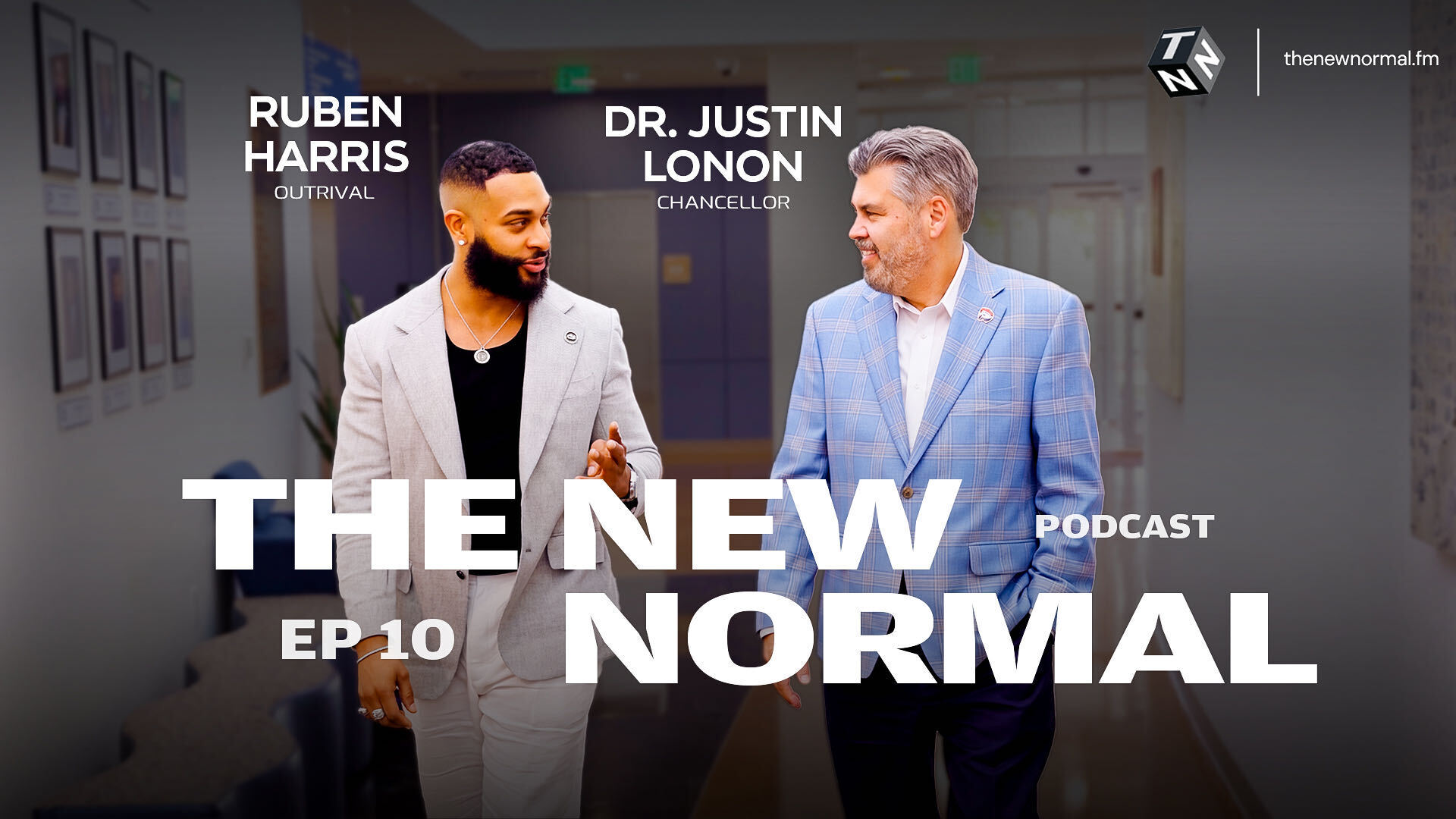











Dr. Justin H. Lonon is the eighth chancellor of Dallas College, one of the largest community colleges in the country, with seven campuses spread across Dallas County. Since taking office in March 2022, he has led the college into its 60th anniversary around a vision he calls the 22nd Century College: a model of higher education built on innovation, workforce alignment and a founder's mindset. Under his leadership Dallas College has kept adding four-year degrees beyond its first bachelor's programs in early childhood education and nursing, organized its campus presidents around nine regional industry sectors including aerospace, construction, health care and technology, and launched the Dallas Transfer Collaborative to smooth the path from an associate to a bachelor's degree across North Texas. The college describes him as its chief barrier buster.
Lonon joined the college in 2005 and has held nearly every senior role in it since, including vice chancellor of public and governmental affairs, executive vice chancellor from 2015, where he oversaw almost every operational and strategic area, and interim president of the Brookhaven campus. He was a driving force in merging the seven colleges of the Dallas County Community College District into a single Dallas College, and the Board of Trustees chose him unanimously as chancellor in 2021. Before joining the college he served as press secretary to Dallas Mayor Ron Kirk. He sits on the board of the Coalition of Urban and Metropolitan Universities and has served on the boards of the Presidents Forum, United Ways of Texas, the Dallas Regional Chamber, the Dallas Workforce Solutions Board and Rebuilding America's Middle Class. An Arkansas native, he holds a B.S. in public administration from Missouri State University, a Master of Public Administration from the University of North Texas and a Doctorate in Management from University of Maryland Global Campus.
This episode of The New Normal was recorded inside the virtual studio at Dallas College in Dallas, Texas. Justin Lonon is the college's eighth chancellor and has spent more than 20 years at the institution, which serves more than 130,000 students across seven campuses in Dallas County, including 30,000 high school students earning college credit at no cost. Dallas College is celebrating 60 years this year, and Lonon led its transformation from seven separately accredited colleges, which sometimes competed with each other, into one institution organized around how students actually move through it. Credential attainment is now the highest in the college's history, and its state outcomes-based funding is running about 54 percent ahead of the coordinating board's projections.
Ruben Harris asks what it means to be in the barrier-busting business. Lonon's answer is that life, far more often than academics, is what gets in the way of student success. Tuition is $99 a credit hour with every textbook included on day one, and students get a free transit pass, food pantries at every location, free childcare through the Bezos Academy, emergency aid when a broken fan belt threatens a whole semester, and a success coach from the start. AI is the next item on that list. The college is testing a personalized AI agent for every student, co-developed with the students who will use it, and Lonon now asks senior hires how many AI agents they bring with them. He takes bigger AI risks in back office work like HR and grant writing while protecting the relationships students depend on, and argues that the success of higher education will come down to personalization.
The conversation also covers how Dallas College chooses partners and structures pilots, a win-back effort aimed at 131,000 students who stepped away between 2019 and 2023, and the purpose-driven economics behind Dallas College Enterprise Ventures, a foundation that raised more in two and a half years than in its first 50, and new medical and downtown campuses. Lonon's rule for his team is not to let current reality stand in the way of a good idea.
Key ideas from the conversation
- Higher education is built on an old model that has to change, and Dallas College is setting out to build a 22nd century college. Nobody knows exactly what that looks like, but everyone knows it does not look like today.
- The barrier-busting business starts from the fact that life, not academics, is usually what stops a student: textbooks, transit, food, childcare, mental health and a few hundred dollars of emergency aid.
- Consolidating seven separately accredited colleges into one was a hard look in the mirror. More than 21,000 students had been taking classes at more than one of them.
- Every student already gets an email and a transit pass. Dallas College is testing a future where they also get a personalized AI agent, built with students as co-development partners.
- The interview question that changed his thinking on talent: how many AI agents does a senior executive bring with them into the role.
- Growth to 200,000 students by 2035 will not come from hiring alone. Digital talent augments the people doing the high-touch work.
- Take bigger risks on back office operations, and be more deliberate with anything that touches the student relationship.
- The difference between spam and outreach that helps is personalization and relevance, delivered in a way that engages without pestering.
- Good partners start with the college's mission and the problem it is trying to solve. Vendors focused only on what they offer smell like a bologna sandwich.
- Pilots are sized to the problem, whether 1,000 or 10,000 students, and an off-the-shelf fit for 75 percent of the need loses to building something that fits 110 percent.
- Purpose-driven economics means leveraging public and private dollars together, from a transfer fund that earns back outcomes-based funding to public-private partnerships on new campuses.
- The winners of this shift will be the individuals being served. They care that they get what they need, not who or what delivers it.


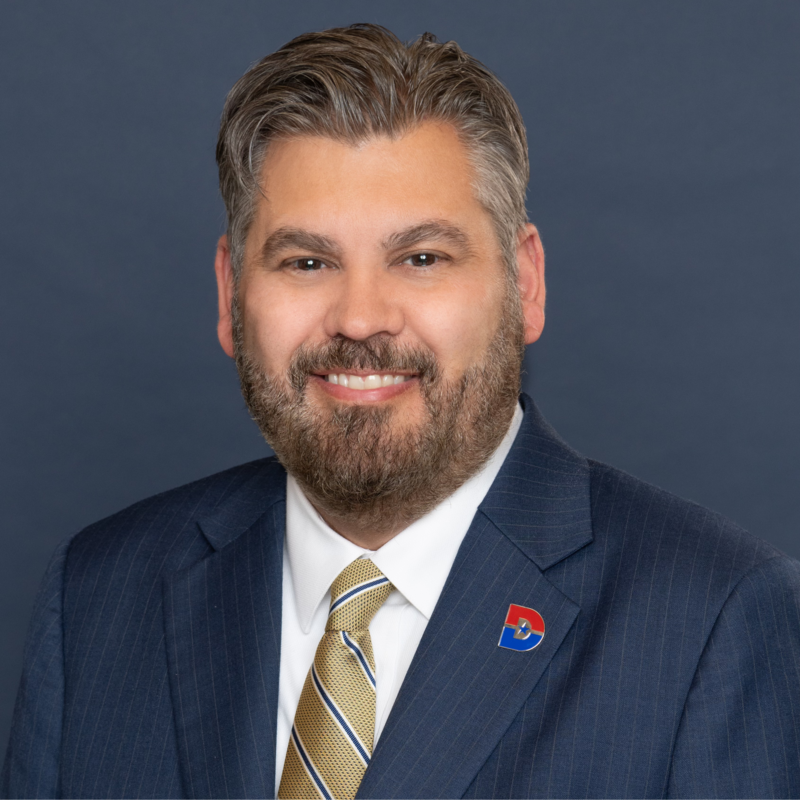











.png)