[00:00:00] Anne Kress: People will set aside weeks of their lives, right? I know people who are already talking about the release of um Grand Theft Auto. When it's going to be released, when should I start taking off work? When can I think about how to schedule my I'm sure we have students who are thinking about how this intersects with their exam schedule? Um, because it is something that they want. In a time when nobody stands in line or goes anywhere physically, they will stand outside a store to get it, to be the first to get it. So how can we create that same desire but channel it in a way that it is still about exceptional higher education? Had a fascinating experience where we brought a panel of students together to talk with some of the senior leaders from the Virginia Community College system. And what was fascinating is somebody else on the panel said, so what we really want is like an AI agent. So they're naming it, right? They're claiming it, and now it's our responsibility to provide it.
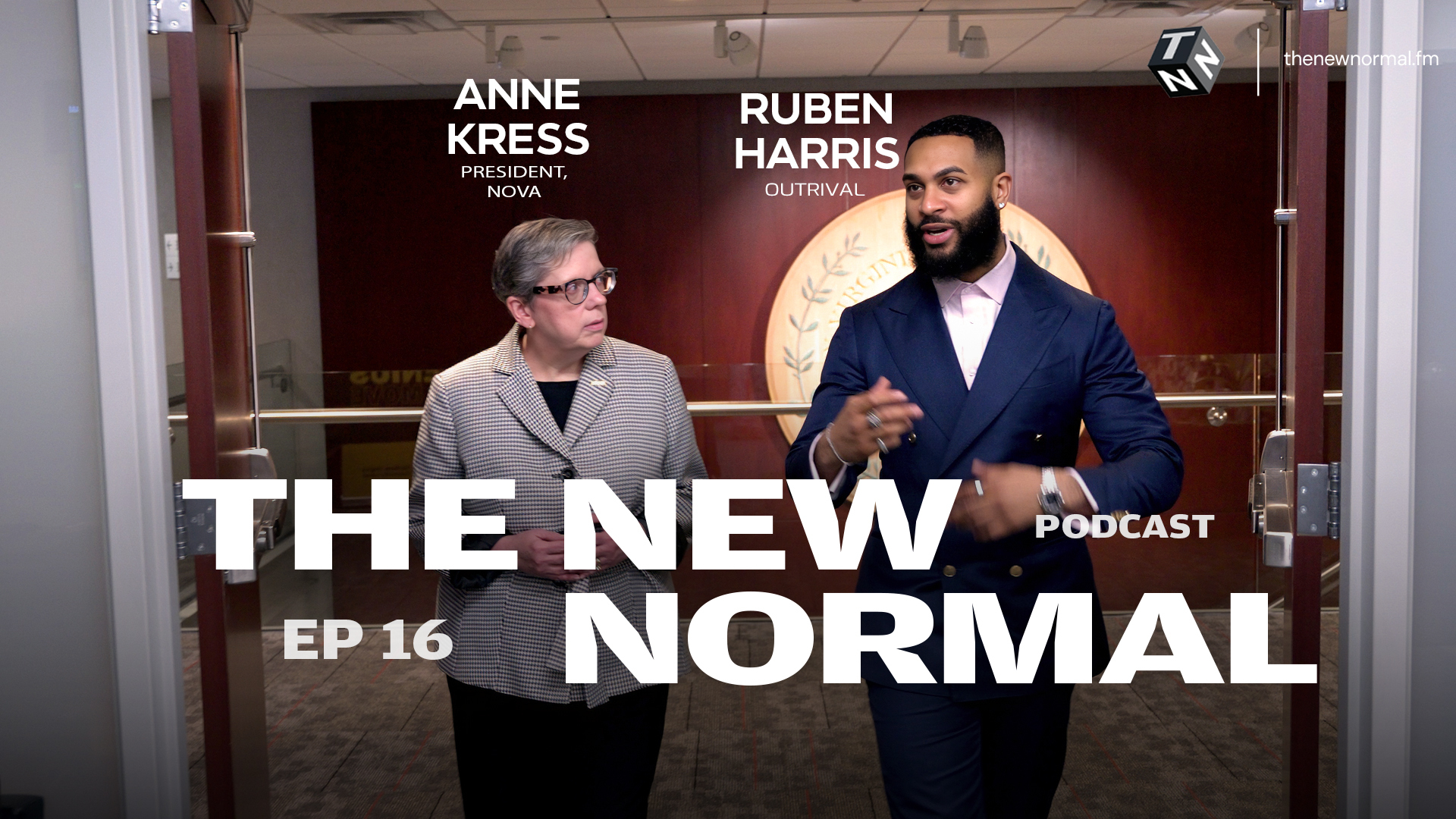
[00:00:54] Ruben Harris: Happy Friday. My name is Ruben Harris, and this is the New Normal. The New Normal is a show where we go inside of organizations that are actually using AI in production at scale in a way that's making a meaningful impact in their organizations. It's not a show about hype, it's a show where we interview leaders who have made decisions to reimagine their organizations with AI at its core. Today we are in Annandale, Virginia, at the Northern Virginia Community College campus with President Ann Chris.
[00:01:28] Anne Kress: Good morning. Thank you for having me.
[00:01:30] Ruben Harris: I've been to DC a lot. This is my first time in Annandale. My aunt lives in Bull Run.
[00:01:37] Anne Kress: Okay.
[00:01:38] Ruben Harris: And I really like the energy here. It's very nice.
[00:01:40] Anne Kress: We have a good vibe.
[00:01:42] Ruben Harris: And I think a lot of people that haven't visited don't understand how many lives you've impacted and you in your scale. So can you talk a little bit about the scale of Nova and maybe the alumni base?
[00:01:56] Anne Kress: Sure, absolutely. So we are a very large community college. I've been honored to be president of Nova since January of 2020. We have six campuses across the region. We serve four counties, five independent cities. Five of those campuses are comprehensive campuses, so they offer everything from short-term credentials all the way through transfer degrees. One of the campuses is a standalone medical education campus with about 12 healthcare programs, nursing, medical technology, radiographic tech, and everything in between. Of the 76,000 students that we serve on average in a year, close to 20,000 of them are still in high school. So we partner across the region to offer college educations at no cost to students when they're still in high school, taught by their high school teachers. So it makes it as easy as possible for them to achieve that exceptional higher education experience that Nova holds dear. Our mission is really focused on transforming the lives of our students and advancing opportunity in our community. We take that very, very seriously. It's one of the reasons why you'll see students at NOVA who might be earning short-term, four-month industry-recognized credentials that when they go out into the economy, will earn them on average about 60% more than they were earning when they walked in, all the way through university transfer degrees where our students can transfer to our nearby partner, George Mason University, to Virginia Tech, to UVA, to Georgetown, to beyond, right? That's really what we are is that open door of access.
[00:03:33] Ruben Harris: I love that. So almost 80,000 students.
[00:03:36] Anne Kress: Yeah.
[00:03:37] Ruben Harris: You mentioned short courses, which I think a lot of people don't know about. Can you talk about the split between people that are focused on short courses and everything else?
[00:03:45] Anne Kress: Sure. When you look at NOVA, because we have such a strong focus on transfer, our average student age might be a little lower than what you would see at a typical community college. So you look at NOVA as a whole, you're going to see maybe an average age of around 22, a little bit higher than 22. If you look at our career and technical education degree pathway programs, it's going to be higher. It's going to be closer to 25. If you were to look at these industry recognized credential programs, which in the Commonwealth of Virginia, because we're part of the Virginia Community College system, we call them fast forward programs. So four months or less directly related to industry recognized credentials. So we're talking about COMP TIA, you're talking about CNA, you're talking about commercial driver's license and everything in between, including AI certifications, project management. When you look at that population, they'll be much closer to 30. These are individuals who may have tried college and found that the traditional college wasn't working for them. So they went out and worked for a little while and now they're coming back and recognize that they need some sort of credential. The real power behind Fast Forward as a program, though, is that it is directly related to the industry needs of our region. So we can't offer industry-recognized credentials if students can't walk out with that credential and find a job. We also can't offer them if they don't earn more than they did when they started the program. So this is a program that really appeals to returning learners, adult learners, individuals who are looking for that short track to economic opportunity.
[00:05:18] Ruben Harris: I love that. And you mentioned a system. Last night when we were having dinner with uh Chad and Steven, uh, we were talking about the system. So what is the system? And you mentioned that you were mapping out the student journey. The reason why I want to talk about that is because you don't just care about getting students into these courses. Right. They have to get a job. Right. So talk about the student journey and that project that you all are working on.
[00:05:41] Anne Kress: Sure, absolutely. So Nova is part of the Virginia Community College system. Across the entire Commonwealth, there are 23 community colleges. Nova is one. I have to say, as Nova's president, though, that we are one of 23, but we account for a third of all system enrollment. So the system enrolls, you know, if you figure do the math, it's a little bit more than 220,000 students in an average year. One of the things we're very concerned about, right, is that registration leads to graduation and that graduation, those post-completion outcomes yield real benefits for our students. So, you know, registering for classes is one thing, but actually persisting all the way through the stage of graduation or to employment is a different matter. So the system as a whole is really mapping out the student journey for today's learners, recognizing that these are not stereotypical college students. For example, I mentioned the average student age was more on the traditional side at NOVA, but 72% of our students are part-time students. They are balancing college with work with families. So their student journey, quite honestly, is going to look very different than mine did. I was a first-generation college student, but I went to a four-year institution as an 18-year-old, right? I worked when I went to school, but I didn't have to worry about caring for my family. I didn't have to worry about supporting my family with the income that I earned from my part-time job. So when you look at that student population, it's how do we map that journey so that it can be successful for anyone who begins on that start line. And that requires a different level of personalization. It requires thinking about, you know, maybe setting aside what our preconceived notions are about how that journey might go, and actually thinking about the blue sky, like what would be the potential. When we talk about advancing opportunity, we want that opportunity to be limitless. And for that to happen, we need to begin with the beginning and figure out how do we get to that journey where that horizon is really open.
[00:07:44] Ruben Harris: I love that. So we'll we'll talk about the blue sky journey in a second. But when you think about mapping out the student journey from inquiry to enrollment to graduation and beyond, um, you all have about 3,400 employees, right? Yes. Serving almost 80,000 people. And so clearly there are opportunities throughout the journey to serve the any type of student that had zero obstacles. But to your point, a lot of the students you work with are juggling life. So they might run into challenges that are not typical. And so how do you think about opportunities to serve students on the student journey just with your team? Yeah. If you could hire unlimited humans, right.
[00:08:28] Anne Kress: Yeah, that would be a wonderful world, wouldn't it? Um, you know, I should go back to our mission because our mission is to provide equitable access to affordable and exceptional higher education and workforce programs. So it's the affordable part, right? We are a state, excuse me, we're a state agency. Um, we are funded through student tuition and through funding through the Commonwealth of Virginia. Um per full-time equivalent student, we get about $11,000. Some of our programs cost three times as much. For example, healthcare programs. So we don't have those limitless resources. We have amazing people at NOVA, incredibly dedicated people at NOVA. But unfortunately, we will never be funded to have enough of them to address every single student need. And that's really when we start to think about how can we support our great people with assistance so that they can support our students through their journey. Right? So when we think about everything from transcript evaluation to advising to registration and enrollment to marketing to helping students to understand through coaching where their best path is. We have great people, those humans in the lead. Um, now we need to form that loop around them to support them.
[00:09:49] Ruben Harris: Awesome. Um what's interesting about the blue sky journey piece, and I like that you introduced human in the lead, is because we don't have unlimited resources to hire everyone, there's a lot of work, not just at Nova, but at schools in general, to identify these gaps in the for support during the normal student journey. But there's not that much focus on how do you imagine the student journey that is possible, which is that blue sky journey that you were talking about. So and you did mention the assistance. So in your mind, as you think about the blue sky journey for students leveraging assistance, what kind of if you had to give some advice to your leaders, like what are you, what what do you think the focus should be in 2027 and start thinking about blue sky journeys?
[00:10:42] Anne Kress: Yeah. I think if we look to the future, it is around that personalization. And I think it's a recognition, especially for community colleges, that so many of our students, this is not the first stop on their journey, right? They're bringing with us transcripts, they're bringing um to us transcripts, experiences, work-based learning that we need to figure out a way to credential. So let's just go to those adult students who might be entering into a fast forward program. As I mentioned before, many of them have had experiences with college in the past. We actually went through a study with Rutgers University where they interviewed a large number of our students who are in our fast forward programs, and the way they describe their journeys was interesting in two ways. One is that many of them had tried college before. The second was they did not find it worked for them, and most often they blamed themselves. That's not right. We have a responsibility to create these college journeys so that they are successful for students. So if we were to look at 2027, what if we were to take these returning learners and we were to say to them, we've got personalized coaches for you that can help you along the way, that can help you understand how to best leverage your past experience for credit for prior learning. We can turn that industry-recognized credential into college credit. We can provide you with holistic supports, everything at NOVA from food pantries to telemental health services to clothes closets to child care grants to financial aid to help support you along this journey. Then let's make those markers as we go through and highlight those successful moments, right? So that we're giving you the praise that you need to keep you going along your journey. And then how do we celebrate you at the end? Because with this personalized coaching, right, which we don't have enough people to deliver, so we're gonna have to think about how do we use AI agents for this, that we're able to get you from here to there because we've made your journey a blue sky journey. We've mapped your progress. You're not wandering in the wilderness, you've got a GPS and you're following it, and we're getting you where you need to go.
[00:12:55] Ruben Harris: I really love that praise and celebration point, and I'm trying to hold back from going in that direction, but you brought up AI agents. And Eloy Oakley introduced us to each other, and he introduced me to Chad Knights in February. And what I learned during that time and last night during our dinner was that as you think about AI agents and these opportunities to serve students, you all actually boldly focused on building an agent yourself. And the build versus buy question is always a question that a lot of leaders are thinking about. So can you talk about your your journey building an agent and seeing how that might work?
[00:13:36] Anne Kress: Yeah. So full credit to Chad Knights, who's our vice president for academic affairs and has um a bit of a tech background, but you know, and I think it uh this story shows how um sometimes maybe we overcomplicate things that we don't need to overcomplicate. So, you know, at home watching football, he was working and built an agent because there's so much information that's out there. In fact, there may be too much information for our students, and it's very easy for them to get lost. But building a tool that goes out and pulls the specific information, again, that personalization that I might need as Anne, thinking about well, I'm at NOVA and I want to transfer over to George Mason University, or I want to transfer over to Virginia Tech. How do I do that? Am I taking the right courses? Um, what should I be taking next? What's the best sequence for this? So he literally built this over a weekend, right? I mentioned we're part of a system, he's um passed it along to the Virginia Community College system, uh, so they're looking at it as well, but I think it shows that you know you don't need to have tens of millions of dollars often to implement these tools. You know, I was struck when um I talked to our students who quite honestly have built them for themselves. Um, so our students are using this technology to mine our website, to mine Transfer VA, which is the portal where you'll find all these transfer requirements, right? To pull that in. So there is a lot of ingenuity at every single college campus. I think now we need to find a better way to reward it, to elevate it, and to actually use it.
[00:15:11] Ruben Harris: Yeah. Um, from what I understand, those were great ways to start things.
[00:15:16] Anne Kress: Yeah.
[00:15:16] Ruben Harris: Um, but as you start thinking about how to scale it out, um these tech initiatives are almost like creating these digital beings that need to be managed just like a human team. And there were some challenges related to that. Yeah. And the reason why I want to bring that up is not necessarily to share something that didn't fully work. It's more about how you think about partnership and the set it and forget it concept that is not what you're doing in an AI era. So can you can you talk about that?
[00:15:48] Anne Kress: Sure. And I think sometimes these are proofs of concept, right? And that when we think about the scale of NOVA, 76,000 students again. Um so maybe we have an idea of how AI could be used to do something. And we try it out and we say, wow, this could really work. But we don't have the capacity or bandwidth ourselves. But maybe somebody out there has already done this. I mean, if we were clever enough to think about it, maybe somebody else has as well. So let's go out and find that. So I'll give you a concrete example of why it's really important to think through the process as well. So transcript evaluation is a huge thing for an institution like NOVA. So we um take in thousands of transcripts, high school transcripts. Uh, you know, the average college student today has attended five to seven different institutions. So you're taking all those transcripts in. And you've got to figure out, you know, Anne's got all of this, you know, digital paper in front of me. What courses does she actually need to take to complete her degree at Nova? What has she already taken that can map in? So she doesn't have to take these five courses, but she still needs to take those three. That can be a laborious process, right? It's a problem that in the past institutions have put people on, but you can't find enough people to do that work if you think every student might be bringing in seven different transcripts. So we bought a technology, right, Raptor. Um, we implemented it. Our people didn't see any gains from it. We're thinking, okay, well, when we bought it, we were told it was going to do all of these things. So we went back to the drawing board, we brought the end users with us, right? Always important. How should the workflow go? What can we do? Step back, re-implemented the same tool, and within a matter of a couple days, it was processing hundreds of transcripts an hour. Awesome. Um, and so if you think about your people, again, subject matter experts, you want them to work at the top of their expertise. Is the top of their expertise if they're in the registrar's office, sorting through transcripts, whether digital or in paper, doing the crosswalk? No. It's in handling those difficult cases. Anne's got a course and it could count for three different things. Now let me look at what her degree path is and where this would be most beneficial for Anne. Right? That's truly the human in the lead. And then I'm letting Anne move forward in that blue sky journey because she doesn't need to worry about it. She doesn't need to come back and say, but I've already taken that class, right? I figured that out because I use my subject expertise here, and then the rest of it, we could work in that loop.
[00:18:27] Ruben Harris: All right, so you had a great proof of concept with the agent that Chad built. You shared it with the system. And uh, as they are exploring how it's shared with all the other schools that you talked about, you all are now thinking about how to take it to the next level. Um you correct me if I'm wrong, but when I think about the next level, um, we're talking about what if every student had some kind of dedicated digital advisor or counselor, like they have an email. Is that what you're referring to?
[00:18:57] Anne Kress: Yes, absolutely. And it's not just me referring to it, it's our students. So had a fascinating experience where we brought a panel of students together to talk with some of the senior leaders from the Virginia Community College system. And you bring students into a room, I've got to be honest, you never know what they're gonna say. So, but that's okay because that's why you have them there, right? They're your honest brokers, right? So one of the students said, you know, what I'm looking for is not somebody who says, go look at the website, go look at this policy, go read the catalog, go look at the course schedule. He said, What I want is somebody who's gonna look at me, and I'll see, I'll use myself again, it's gonna look at Anne. I'm gonna be able to tell it what I want to do, and it's gonna come back and say, Anne, here's your next step, right, to guide you through it. And what was fascinating is somebody else on the panel said, so what we really want is like an AI agent. And so they're naming it, right? They're claiming it, and now it's our responsibility to provide it. Because what they're telling us is that they get this in other areas of their life, right? Um, one of the interesting things for me is to um talk, we have human student success guides, real people on our campuses who work with our students to help them understand the many supports that are available to them. And I was talking with one a couple weeks ago who talked about how when she's talking with students now, they'll say, Well, I asked Gemini or I asked Claude. And this is what they told me that Nova requires, this is what they told me that. And so from her perspective, too, that's wonderful that they're seeking the support. But it would be more beneficial if we had control of that agent, because then they're more likely to get accurate information, and that's the long-term goal, right? Those agents need to be part of that journey mapping.
[00:20:52] Ruben Harris: Yeah, I mean, I think it's always awesome talking to students or similar to just like me talking to my nieces and nephews, because you don't never know what they're exploring. That's that's innovative. And to your point, they're gonna be using things on their own, like uh like an instinct or amuse or their personal type of assistant. So I like that you mentioned you all should create your own agents. And that you should be in control. So the human in the lead is a concept you brought up yesterday where the employees need to be almost like promoted where they have agents that are working for them and working on behalf of the students.
[00:21:30] Anne Kress: Yeah.
[00:21:30] Ruben Harris: And then the students have their own agent that is almost like their folder with their welcome package where this is included that can guide them to the right resource, the right human at the right time. Can you talk about human in the lead and in that regard?
[00:21:45] Anne Kress: So, again, you know, part of what we're trying to help our incredible faculty and staff do is use their expertise. But their expertise is here, and we're a big place. So when you think about having A human in the lead who would be able to share their expertise so that somebody else's agent could see it. So I don't know what every office does in student affairs, let's say if I'm working in financial aid, but I might need to know. And if I'm able then to leverage an agent to bring in that knowledge, it makes my job easier. It also provides me with a better context and perspective for the decisions that I'm making. If I'm a faculty member who is seeing, you know, maybe 130 students every single semester, and they're all individuals and they all have their own individual journey. And so if they come up to me with a challenge, I don't have an encyclopedia in my head about every support that might be available to them. But to be able to go out there and to query and to immediately bring back a personalized response for that student, it empowers me, right? It lets me focus on what I want to do, which is teaching and not necessarily making a lot of phone calls or emails or searching the website, right? So that's the human in the lead. We're saying you're bringing something that's incredibly valuable to NOVA and to our students, right? You are irreplaceable. Your knowledge is irreplaceable. But what we want to do is support you with the ability to very quickly access everyone else's irreplaceable knowledge because that would be a lot of your time. And then think about the students. Being able to have access to all of those subject matter experts, again, 72% part-time, they often suffer from what we refer to as time poverty. I don't have time to run from that office to that office to write 14 emails, to check them all. You know, you write an email and you realize later, oh, my question wasn't exactly what I wanted to ask. And so the answer I got back was not exactly the answer I was looking for. Now I've got to rephrase it and send another email, then wait another couple days, right? To me, that is the power that we could unleash with these agents.
[00:24:04] Ruben Harris: As you were talking about a student moving through the student journey, it made me think about the different departments that they are reaching out to. And sometimes the employees not having context from one department to another. Um and I learned a new word last night, and that word was no overwhelmed.
[00:24:31] Anne Kress: Yes. Yes.
[00:24:32] Ruben Harris: Um so students can get no overwhelmed, but so can employees. Yes. Can you talk to us a little bit about what novelmed means and how to not overwhelm people?
[00:24:42] Anne Kress: Yeah. So novelwhelmed, right? We're a big place. We have a lot of folks who work here. We have six different campuses. So it can be overwhelming or novelwhelming to try to figure out what supports we have. And I'll talk about one experience I had where that really hit home for me. So I meet monthly with our student government leaders. And we were talking about our nighthawk nests, which are our campus-based food pantries. And one of the student government leaders said, What's a nighthawk nest? And it really made me sit back because I thought, okay, well, you're an elected student leader, which means that you're among the most engaged at our college. You know, you're you're ready to step up, you're, but you don't know that this service exists. That's a problem. I will say it's one of the reasons why we created our student success guides. Um, back then, we did not have the option of having an an AI agent student success guide, which is something that then can really reach everybody. But, you know, I think back to even before that, before anyone was thinking about AI, I was at another institution, we ran a student satisfaction inventory. And one of the highest findings was I get the runaround at the college. And I was really taken aback because our college had a really good reputation for supporting students. So I pulled a student focused group together and I asked them, you know, what does that mean? I get the runaround. And so one of them said, Well, we literally have to run around this campus. This office is here, that office is there, that office. I said, Oh my gosh, I never would have thought about it. They took it very literally. Like, I have limited time. I've got to go from place to place to place. So if you think about those two examples, and you think about somebody who is, again, balancing college with work, with family responsibilities, with trying to get around Northern Virginia by bus or by car or by metro, and then you throw this avalanche of information. Well, we've told you, we've told you multiple times, and and that's one of the things that we're working on right now is how do we reverse the NOVA whelm? How do we clarify our messages? We're actually doing an entire audit of student communications because by sending so many messages, um, we may be doing the reverse of communicating, right? Or actually just obfuscating anything that might be important. Um, I have three minutes to listen to you. So what are the three things you can tell me in those three minutes? Don't give me 50, give me three. And then as I need more information, let me ask for it, right? Or let me have a little prompt coach because maybe I don't know what I should be asking for. And if I put in my challenge, then my coach can come back and tell me, ah, it looks like you are in need of these three services. Here's where they are, let me connect you, right? It's the reversing of then overwhelmed.
[00:27:46] Ruben Harris: Yeah. And even though students are often taking school part-time and they're juggling a lot of things in life, last night you told me that people do make time for what they want. And you gave an example of GTA 6. Yeah. And I talked about Zelda Ocarina of Television. Can you talk about what you why you brought that up?
[00:28:14] Anne Kress: So one of the things that I've been thinking a lot about is, you know, so I've worked in community colleges for 30 years. We are by far the lowest cost option, and I would argue the highest quality option for these higher education and career pathways in any community. Um, the majority of students, for example, in our career and technical education programs pay no tuition. They're subsidized by the state for these programs through workforce scholarships. Yet many people who would qualify don't participate at all. And the question is why? And then you look in other realms. And we talked a little bit about gaming, right? And how people will set aside weeks of their lives, right? I know people who are already talking about the release of um Grand Theft Auto sex, um, trying to, you can you can think through when it's going to be released, when should I start taking off work? When can I think about how to schedule? I'm sure we have students who are thinking about how this intersects with their exam schedule, um, because it is something that they want and they're willing to make the time, they're excited about it, that joy, that that hit of discovery, of creation, of success. Um, and so they will wait in, you know, in a in a time when nobody stands in line or goes anywhere physically, they will stand outside a store to get it, to be the first to get it. How could we translate that into what we do? Right? The programs that we offer at Nova, we know we did an economic impact study. For every dollar you give us in tuition, you're gonna see over eight dollars in financial return going forward. Yet, even if we can give you that dollar, you may not come here. And so the question is why? And it goes back to that student journey, right? Are we mapping the journey for today's students? Are we putting in those moments of success like you might get when you're playing Grand Theft Daughter or any of those games? Or when you're, you know, if you're on your Instagram, that dopamine hit, when you see, you know, I'll just as somebody who went to see Harry Styles, when you see that Harry Styles clip, you're like, now my algorithm's gonna give me more, right? So how can we create that same desire, but channel it in a way that it is still about exceptional higher education, exceptional career programs, but we've got to get you in at some point. And I think we're missing something.
[00:30:45] Ruben Harris: Yeah, no, I I really love the gaming point because it's not just about people making time for what they want and this anticipation, this excitement. It's almost like making the struggle fun.
[00:30:59] Anne Kress: Yeah, right.
[00:31:00] Ruben Harris: Like you talked about the dopamine hits that you get using Instagram and then it's starting to serve you material of like what you like to follow. Um and it reminded me of like the small wins that you might get when you're using uh Duolingo to learn a very hard language. Yes. Um so as you think about AI agents and small wins, last night we talked about like things like the 21-day challenge. So what what are what are what are what are opportunities to create small wins, assuming every student does have an AI agent to create those dopamine?
[00:31:36] Anne Kress: Yeah, yeah. And I think one of the things we talked about is that at an age of AI, and I understand, completely understand all of the concerns about what AI might be taking away. And and I should say, you know, my own academic journey, my first degree's in finance. I have two degrees in English. Um when I was working on my doctorate in um in English, it was early modern women's literature, right? Not exactly a high-tech field, right? Women writing in like the 1500s and 1600s. So I so I get those concerns. But I think now there's this alternate narrative around struggle, and that that I think is over-romanticizing struggle. Our students struggle at community colleges, right? Often that's all they do. They're working two or three part-time jobs, they're they're trying to figure out how do they pay to continue to go to NOVA, is this worth it? They often define themselves as students in the last of a list of 13 things that are above it. So the question is when we talk about creating friction, and I know there's friction maxing and everyone's talking, but friction actually works in two directions, right? It doesn't just work this way, it goes forward too. And so it's how can we structure things to give that hit of success. So that yes, the struggle, the struggle is real, but there's something that comes from that. So you're going to see, yeah, this class was hard, but it's structured in such a way that I'm seeing those wins throughout it, like 21-day challenge, right? It's not just great at midterm, great at the end, or great on this paper, or great on that paper, but you showed up every single day. You were prepared. Like, is there a way to celebrate that, to make you realize, okay, yeah, I can keep going, right? So that that's that same hit, and it's using it for a productive reason. When I taught writing, for example, um, this was way pre-AI, but students were required to write a very long research paper. And the first semester I taught it, I had them write that paper, and it was awful. Um, it was a failure on me as an instructor. And then I started to chunk it up. And by the time I stopped teaching writing and moved into administration, essentially that research paper, which had to be at least 10 pages long and uh with a whole bibliography, was no longer a paper. It was a series of chunked assignments. Okay, first we're gonna get our topic, then we're gonna get our thesis. Now let's write that paragraph. Now let's write. And at each point, students were celebrated. This was great. This could be a little bit better, let's talk about that. So then at the end, they put it all together into a whole paper. And those papers were so much better than the papers students used to write just from the beginning. Why? Because at each moment they had something that made them keep going forward. And if you think about the age of AI when I can ask Claude to write that paper now, I as a faculty member need to think differently about how I structure those assignments and make it in such a way so that students want to feel that pride of ownership that you feel when you're playing GTA 6. Like if you're playing against somebody in a video game who's actually just looking at cheat codes, that's not yeah, it's not fun and it's not fair, and there's no pride in getting to the end. We want to create environments where that pride of learning, that ownership of learning, that celebration of learning is still there.
[00:35:13] Ruben Harris: Yeah, I mean you I think then going back to this praise and celebration point, you wanna like struggle can be draining, but struggle can also be life-giving.
[00:35:22] Anne Kress: Right.
[00:35:23] Ruben Harris: Where people will try to be a level or be the boss over and over and over again, sometimes for days, and then when they get it, it kind of unlocks a a reward, a new weapon or a new spell or something like that. How can we recreate that for students? I also like the community building piece of games. Chad was talking about with 70,000, 80,000 students. How can you create cohorts for students, right? Managing cohorts with the team of 3,400 for 80,000 people is extremely challenging and some would argue impossible. I would say impossible. Um, but humans with the agents can actually figure out what kind of students might work well together and create these concepts. That 21-day challenge came from um what we did with career karma where we're helping them make a habit. But then they would actually self-organize themselves into squads. So can you talk about your thoughts about how cohorts could be introduced inside a school to help people finish and feel like they're doing something together?
[00:36:28] Anne Kress: Oh yeah. And when you look at the literature, cohort-based learning, you could go back decades and see that it is almost always successful, right? You you have this reinforcing group that helps you move forward. But if you think about how, you know, again, I go back to 72% part-time students. Today's learners are not sitting on the quad waiting for somebody to stumble past with the same book that they have so that they can start to form those study groups. Um, they are trying to balance everything. So if you think about an AI opportunity for students to figure out exactly at this moment who is in my same cohort, who is not just in this class, but at this point in this class? Who can I learn with? Who can I learn from? Who can support me?
[00:37:16] Ruben Harris: So who struggle has the same struggle? Exactly. Maybe we could like do a ride share because we both got to take our kids to school, right?
[00:37:23] Anne Kress: Yeah, and how do you build out those communities within a very big setting? Again, scale, right? How do you use these technological tools to create real meaningful connection that's helping people in that struggle journey move forward? And this isn't just theoretical. So I'll give an example that's non-tech based. So we have an amazing partnership with George Mason University called Advanced. It's been recognized as one of the most successful, both for students and for the institutions, transfer partnerships in the country by the U.S. Department of Education, by the Aspen College Excellence Program. So where this works is that students go in as a cohort to advance, they learn more about NOVA, they actually go over to Mason physically as a cohort. They also have coaches. They have coaches who recognize, going back to that 21-day challenge, milestones. Right? Here you are in the program, here's your milestone. It's also a spelled-out journey, right? So if you think about the advance, it's in more than 80 programs. Every course a student should take at NOVA to transfer over to Mason is recorded for every single major. And the courses that they'll take at Mason are also spelled out for every single major. The journey is very clear. I see where my success points are. Somebody's reinforcing that. I'm moving forward, right? And when you think about the power of that journey in real terms, has higher retention than the typical NOVA population and Mason population. Those students, when they transfer over, they graduate on average in less than two years. That goal is very clear. I know where I'm petting. The struggle may be the struggle, but I know exactly where that endpoint is, right? So it works on every one of those levels. Um, that works for advanced students. Yeah. Right? That's about 3,800 students. We have 76,000 students. So could we do something to replicate that model for all of our students using AI as a leverage point to make that happen? Um, because we know what it does. We know the blue sky journey it results in for those advanced students, but we also know that we will never have the funding or the people to do that for every one of our 76,000 students. But we should.
[00:39:50] Ruben Harris: Yeah.
[00:39:50] Anne Kress: So what can we do?
[00:39:51] Ruben Harris: I think it's a great segue into trust, right? Because you know, relatability matters, right? So if I'm listening to someone talk to me, but they've never been through what I've been through, sometimes it's harder for me to even share anything with them. If I'm in a cohort, I'm sometimes more willing to share with other people that have been through what I've been through. Um, but even then, sometimes students don't want to admit that they don't know. So can you talk about trust and that dynamic and how you think um you can unlock an understanding of the student better to create a better experience for them?
[00:40:31] Anne Kress: Yeah. And I think it's true. I mean, uh so many times, and I was first gen myself, um, I did not want anyone to know that I didn't understand the language of higher ed. Um I I went to college initially, sort of in like a pre-FERPA era is what I would describe it. So all of our student services were delivered in one room, and I would stand really close to the student in front of me to understand what they were asking at the window, what was the language they were using, what should I be saying? Um and and so, you know, that's real, right? That stigma to that stigma that we often attach to ourselves because we think everybody knows something. So we don't trust to share that. But I do think that's another space where we see, and we see it, for example, in our timely care, our telemetal health services, that it we now offer coaching through that same app because sometimes it's easier to initially sort of put out into the world the challenges you're facing when you're not sitting across from somebody who you think might judge you for those concerns. You know, I think back to research that's been done on parenting students. And parenting students will often not disclose that they are student parents because they think that their faculty members might think less of them, right? Might think that they're going to use that as an excuse. Um, so how do we figure out how to use that technology to essentially be that first listener, right, in a way that's constructive, productive, and has all the guardrails around it if a student needs to push that out. Again, our students are already doing that. Um I hear from the student success guides, again, going back to I asked Gemini about this problem, right? Well, Gemini is not at all affiliated with Nova. There are no other protections around that, but they're trusting it, right? Because they may not feel that connection to an office that we have here. So it's how do we break down those barriers? How do you build that trust through cohorts, right, through that initial engagement, through making sure that your communications land in the language, and I'm not talking about different cultural languages, I'm talking about actual, like the verbiage that we use, right? Um does that make sense? I was talking with someone the other day, we offered something in the Commonwealth of Virginia called the Uniform Certificate of General Studies, right? Flows right off the tongue. What does that mean? And the person I was talking to who works in a high school said, we talk about it with our students as first year of college, because that's what it is. Why don't we call it first year of college? Um because everyone understands first year of college. Um, we have a special name for it. So when we do things like that, it pushes trust away. Again, when we think about how AI could potentially serve as a translator, both for students' issues so that they come to us in the language that we understand. Oh, now I know where to sort of sort that problem and put it. But also when we give our solutions how to translate it back into language that I understand as a student.
[00:43:46] Ruben Harris: No, I love that. I mean, there's a lot of resources you might have, and when you read it, you don't understand that it's a resource. So getting it to be translated into something that makes sense to me matters. Um, we're in a beautiful room. Right now, it's fall time. Um, and as we talk about resources, it makes me think about pumpkins. Yeah. I love pumpkins. Stephen, I know you like pumpkins too, right?
[00:44:12] Anne Kress: And um one of us does not like pumpkins.
[00:44:15] Ruben Harris: I know, I know, I know one of us does not like pumpkins. But whatever it is that you like, like imagine that there's a table with your favorite thing that you want. Um, a lot of students don't know that these tables exist that have where they could have all you can need of whatever resources that they want that Nova provides. So, can you talk about the opportunity to bring students to the table that they don't know exists that has abundance waiting for them?
[00:44:48] Anne Kress: Yeah. And I think that word abundance is amazing and it's powerful and it can be transformational, but not if you don't know the abundances there, to your point. So I often refer to attending NOVA as like an unlock. So there are so many supports we have for students. If you register for one class, if you register for one fast-forward certification, everything is unlocked for you. Um, telemental health counseling, food pantries, clothes closets, child care grants, um, emergency aid funds, advising, tutoring, counseling, transfer support, um, funds from the state that might actually underwrite your tuition. But if you don't know that it's there or you don't have the right tool, like imagine you're walking past that table full of pumpkin cakes or pies. Um, now I'm getting hungry. That um, but you don't have a fork.
[00:45:44] Ruben Harris: That's a very good point.
[00:45:46] Anne Kress: Um, so I'm not gonna be the person who walks up there and sticks my hand in that cake. I'm just gonna walk right past. Clearly, that's not for me. Right? This table's not for me because if it was for me, I would have a fork. Right? Um, you know, I I grew up in Wisconsin, right? And so I often use a cheese metaphor, America's Dairyland, um, that let's say you're hungry and I say to you, okay, well, I'm gonna give you cheese. I've got cheese for you, America's Dairyland. I also have milk for you. And then I say, okay, here they are. And what you see is a cow, and you see a gigantic, huge, 300-pound wheel of cheddar cheese. And I say, they're for you, take them. And you're like, what am I supposed to do with these things? I can't take 300 pounds of cheese, and they don't let me have a cow in my apartment. So this is useless to me. We've got to figure out how to take that table of cakes, the cow, the cheese, and move it into a realm where people understand this is for me. I am deserving of this, and I have the tools necessary to access it.
[00:47:00] Ruben Harris: Be sliced up, prepared to them in the right way whenever they need it at the right time, right? Because, you know, sometimes you might not have the appetite a certain resource. So I mean, I think I think it's not always about the food, it's about how it's presented and how it's prepared and how it's served and when.
[00:47:17] Anne Kress: What's the personalized journey? So a real quick personal story. So I mentioned that I was studying early modern women's literature. Well, I did my dissertation proposal defense, I got a job at a community college, I had two children, I had a full, my job was more than full-time, and at a certain point I went back to my university and I talked about wanting to complete my doctorate. They set out because of the field I was studying, a whole bunch of different conditions for me, including doing some study out of the country. And I looked at them and I said, I have two children, two and three, I have a full-time job, I have a mortgage, I have all of these things. I can't, I can't do that. Um and I was about to walk away thinking, okay, well, that's clear. Like I'm gonna be ABD for the rest of my life. And there was a woman in the office, it was the English Department office, her name was Kathy. And she said, you know, she looked at me and she could see I was upset. I had come from a meeting, and she said, What's wrong? Because she I'd been in the department forever, she knew me. And I told her, you know, I think, you know, I'm not gonna be able to finish my doctorate, but you know, whatever I tried. And and she sort of cocked her head, that was one of the things she used to do. And she said, you know, this is a very large place. It was the University of Florida. She said, I'm sure some other department would love to have you. You were always a great student. Okay, A, that never even occurred to me, right? Because here I am so far down the road that this is what my doctorate's gonna be in. If it can't be, forget it. And so she said, Well, you already work in higher ed administration. You know, the univer the College of Education, I think, has a degree like that. Let me see. And this again, pre-AI, pre-largely the internet, right? So she called over there and she's like, okay. And I said, Well, if you can send them my materials, I will drive over there, because I literally had to drive over there, um, and maybe they'll be ready to see me. And I did, and they were, and I finished my doctorate in higher ed administration. If Kathy hadn't done that, right, my PhD was like that 300-pound thing of cheese. I can't access this, right? But there aren't enough Kathes.
[00:49:26] Ruben Harris: Yeah.
[00:49:27] Anne Kress: And if if I hadn't run into her, my life would be very different. But we have lots of students like that. And so we need to figure out how do we get Kathes in all of their lives, right? And it's then I can access that table, then I can take that journey. Um, my transcript's been evaluated in minutes, right? I'm talking to maybe an AI counselor or advisor, that then when my problem gets too complex, escalates me to this magnificent subject matter expert who's one of our amazing employees. I get into classes with our amazing faculty members who then can figure out, okay, Anne has these challenges, I can query and I know exactly where Ann can go, right? When Ann's at home at two in the morning and she's like freaking out, oh my gosh, Anne has some place to sort of put those challenges and then get responses back, right? That's really what we're talking about is how do you make that journey meaningful and exceptional for every individual. And that personalization is key to what we really need to do to build that journey.
[00:50:34] Ruben Harris: And that care that she shared with you. Yeah. So it's a lot of people that do their job. Yeah, it could be in counseling, and they kind of follow and they they might do an excellent job, they might even exceed expectation. But it doesn't always mean that they care. Yeah. And I can tell when you share that story that it impacted you and you can feel that they did care. And there's a way to demonstrate care. Um let's pretend that someone is listening to this and they're like, all right, President Crest, I agree. We could create this blue sky journey, AI agents are great. But I don't know where to start. Right? Let's how how do I focus? And so I asked you that question yesterday. It was like, where where would you focus? One of the things that you talked about was related to stop-shit I think is important in student success. So can you talk about the awesome initiative that you've done with human to serve stop-outs, um, and then how you would take it to the next level?
[00:51:34] Anne Kress: Yeah, yeah. So, you know, one of our concerns when we look at our student data is around the number of students who don't complete that degree, right? They get, oh, so close to it, and something happens, life happens, and they're like, okay, well, last time I list as students, so first thing to go as student, so I'm gonna take care of all this. So we did um a study and we looked at 18 months worth of data. Um, so students who had stopped out, we didn't want to think of them as dropouts, stop outs, um, over the last 18 months who were within basically a semester of completing their degree, right? 12 to 15 credit hours. And we found 7,500 of those students who didn't complete at Nova and didn't transfer anywhere else, right? If they transferred somewhere else and they completed, amazing, right? Or still enrolled, amazing, but they weren't, they weren't anywhere. And so we wanted to see what we could do to reconnect those students to the college. So we engaged in Side Track Coaching. They reached out to the students. Um, it took sometimes multiple tries, right? Because if you think about someone who's been on a path, been running really hard, and then fallen off of it, it takes a lot more to get them back on the path than it would for somebody who's never started. So lots of outreach, lots of conversations about what could the college do. And we found out some things really early. Like sometimes students had run out of Pell grants. Um, so they didn't have the money. So our foundation, our amazing NOVA educational foundation, provided what they called last mile scholarships to these students to help them move forward. We also found sometimes that students' life circumstances had changed. Maybe they had children. We have child care grants to help you with that. We found that maybe their program of interest had changed. So we connected them with advisors who could look at the courses they had taken and to see where they could map to other potential opportunities. Sometimes they realized a college degree maybe is not for me at this time. We could connect them to fast forward programs, right? So we did that with those students. We had a return, it was a little bit more than 7% just within a very short period of time, which if you think about that, that's that's a pretty good return over essentially that first six months. And then we had more who kept coming back. So now think about if that was hiring an external firm to do that coaching, and but think about engaging first, right, with um with maybe somebody who reaches out to you and then connects you to a personalized agent who can help you and figure out your path into NOVA. And again, escalates where appropriate to the subject matter expert who can then start to work with you intensely, right? But that's that's reaching out directly to me and celebrating. Wow, you made that call, right? It looks like you've registered for your classes. That's amazing. Now let's talk about the other supports that might be available to you, right? We will never, I wish we could hire enough people to do that. We will not be able to do that. We cannot afford to sort of go to external consultants and coaches for every one of the students. Think 18 months, 7,500, multiply that by now another 18 months, maybe three years, right? It's too much time.
[00:54:57] Ruben Harris: You mentioned reaching out multiple times. Yes, yes. Yeah, just reaching out. Yeah, seven, eight times. Yeah. That's already tens of thousands, right? If you, like you said, seven times, right? Now you're in the 50,000 plus.
[00:55:11] Anne Kress: Right, right.
[00:55:12] Ruben Harris: Right. And no human can really do that. And even if you did get like a, let's call it a 50% re-enrollment rate, there's still thousands of people that didn't enroll. Oh, yeah. So um your story though, it it reminded me of a school we worked with in Florida. We reached out to their stopouts, and the student, when they got the outreach, had been displaced by a hurricane. And they were so moved that they were thought of. Yes. And they were actually embarrassed to reach back out. Yes. It's not necessarily a trust thing. They were like embarrassed because they had stopped out for so long. They weren't sure if they were gonna be welcomed back, and we were able to connect them to the right human through the agent, and then get them enrolled. And that was like a perfect example of it's not always because of struggle or I mean, it's struggle. What I what I mean is like sometimes people think people stop out of school because they don't want the to finish. But life happens, and sometimes that proactive outreach really can create an unforgettable moment that makes them emotional that they will never forget.
[00:56:28] Anne Kress: Well, yeah, and I think the word care has come up multiple times in this conversation. Care is one of our values. And one of the things the Inside Track um outreach coaches um reported was how many times the students said, I didn't think anyone cared if I came back. Right? So something happens, you fall off track, then you immediately begin to internalize, well, it was never for me. See, this is just life telling me I'm not supposed to go to college, oh, it's been too long, I don't know what to do. I'd so there's a million reasons why people will stop themselves from reaching out for help. And I think now what we have the power to do is to reach out directly to them. So you don't have to put your hand out first, we'll put our hand out first, right? We'll open that door, we'll make that call, we'll send that note, we'll call you multiple times, right? We want you to know that it matters. You matter to us at Nova. We want you here. Um, those are messages we need to send. And if you think about the incredible lost opportunity for every one of those students in a world where having that credential is incredibly important, um that's that's worthwhile. That's that's important work.
[00:57:39] Ruben Harris: Yeah. Um, last question before going to the rapid fire round.
[00:57:43] Anne Kress: Oh, okay.
[00:57:44] Ruben Harris: We talked about community for students. But I want to talk about community amongst your peers, like other schools. I know we talked about the system, but you're a leader across the country and across the world. What advice do you have for your peers going into 2027 as they think about modernizing their institutions to serve their students and prepare them to be the future leaders of the world?
[00:58:16] Anne Kress: Yeah. And I think often for institutions it's a resource issue, right? I wish I could do this, but I don't have, but I don't have. And and so what I would say is that you can start anywhere, right? I think it was Arthur Ash who said, um, start where you are, um, use what you have and do what you can. Um and that's the message I would say, right? If you think about going back to Chad Night, sitting there, watching a football game, you know, building this agent that could look at transfer, right? You can start with that. Um, you can see does this have potential? You can see if it's a proof of concept, you can raise a flag and say this is making a difference for students. Um, so I think that's what I would say is that you know you don't have to boil the ocean. Just start with one thing, um, an impactful thing. Talk with your students. What are what are their biggest pain points? Pick one of those. You know, I go back to the student who said, I just want an AI advisor. I don't want someone to send me 13 web pages from the NOVA website. I can do that myself. Right. So what if you were to just build an agent that would synthesize that information and send it to students? Wow, you've already saved that student tons of money. So just start with something and see if it works. And if it does, let it grow and keep going.
[00:59:43] Ruben Harris: Yeah, I love that. This is a part of the the interview where we do rapid fire fire on. Quick answers. I'm gonna just ask three questions. Um the first question is related to women's lit. You mentioned that you're into women's literature um and you're a scholar in that regard. What's your favorite book in that subject?
[01:00:04] Anne Kress: Oh my gosh, there's a million books that I could choose. Um I I will say uh a book that has stuck with me, and it's not an old book, it is a more recent book, is um Emily Senjan Mendel's book, Station 11, um, which was made into a miniseries, but maybe a lot of folks saw that. But I would encourage people to read it because it is a post-apocalyptic book, but it is hopeful. It is hopeful, and it is also a book about the power of art to transform.
[01:00:39] Ruben Harris: I love that as a cellist for sure. Um, and I really like thinking about the optimistic apocalyptic view because so many people, even when they talk about AI, so pessimistic or even movies are like fear-mongering and doom mongering, but there is like a utopian type of a view, if you just think like that.
[01:01:03] Anne Kress: Yeah, and it's not, I I want to make it's not a utopian view, but but what it is, and it comes back to, I think, um, so it's interesting. I hadn't even thought about these connections until right now. It comes back to what we hear consistently from employers and from our faculty that they are most interested in our students having, which is creativity, critical thinking, resilience, adaptability, and what you see is those are very human qualities, and that comes through when you survive something and the opportunity to rebuild rests on those skills, right?
[01:01:39] Ruben Harris: Yeah. A very common tech question that we ask ourselves when we're starting new things is what do you you believe that very few people agree with you on or that nobody else agrees with you on? And so as you think about higher ed, what is that take? What would you say is like a take that you have that is your view that you believe will change higher ed?
[01:02:07] Anne Kress: Oh, that I um so I don't know if it's a view that in general. Okay. So well, the first thing I always say is community colleges are the best sector of higher education. Now you're probably not gonna get a lot of agreement on that if you went to Harvard. Um, but it we are America's colleges. I worked in community colleges for more than three decades. I elected, I chose to work in community colleges because I believe in our mission. I believe it is the most important higher education mission at this moment. Um so I know a lot of folks disagree with that, um, but I think community colleges are where it's at.
[01:02:45] Ruben Harris: Yeah, I agree with you. Um last question is another tech question.
[01:02:50] Anne Kress: Okay.
[01:02:51] Ruben Harris: It's the Jeff Bezos question I asked you yesterday, which was you know, we've been talking about the future, where the world's going, what's gonna change in the next five years, but the Jeff Bezos question that grounds you in a good focus, speaking of focus, is what is not going to change in the next five or ten years. And so when you think about that, it can be higher related or not, what do you think is not gonna change in the next five years that serves as a guide for people that want to serve humans?
[01:03:22] Anne Kress: Yeah. I think it's humans, right? Um, what makes the difference time and time again? You can you can walk out of this room, stop, you know, five people on the street and ask them, okay, in your K-12 experience or in your college and university experience, what made the difference for you? Every one of them will name a person, right? They will name a person. It is that human in the lead. It's that subject matter expert who balances that expertise with care, right? That is not going to change. AI will not change that, right? Um, AI, one of our fastest adopters of AI at Nova was our medical education campus because AI tools are being used in the hospital. But when you're in a hospital, you want that caring nurse, you want a physician who listens, you want a person, right? None of that is going to change.
[01:04:19] Ruben Harris: Yeah, I mean, health care cares in the name.
[01:04:22] Anne Kress: So education, right? It's that teacher. I'm sure if I were to ask you what made the difference for you when you were in like um first grade, you would say, oh, remember, I would say Miss Brick.
[01:04:35] Ruben Harris: Miss Brick. I got my math trophy where I was a mathematician. Like I I could tell you my third grade, yeah. The person taught me Miss Mrs. Griffiths, she taught me the my multiplication tables. Like, I don't remember. She gave me a two dollar bill. Like I I have my cello teacher. I got so many people that really changed my life. So I really love that. So yeah. Um this was great. I really appreciate your time. I appreciate your team organizing this. And everybody, this is Nova, President Crest. This is the new normal.






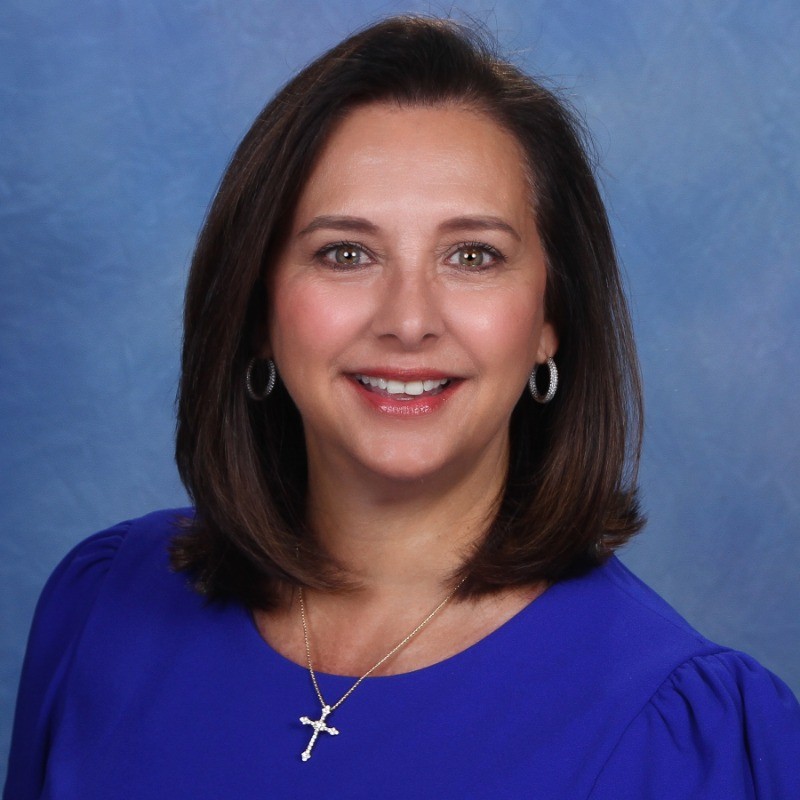
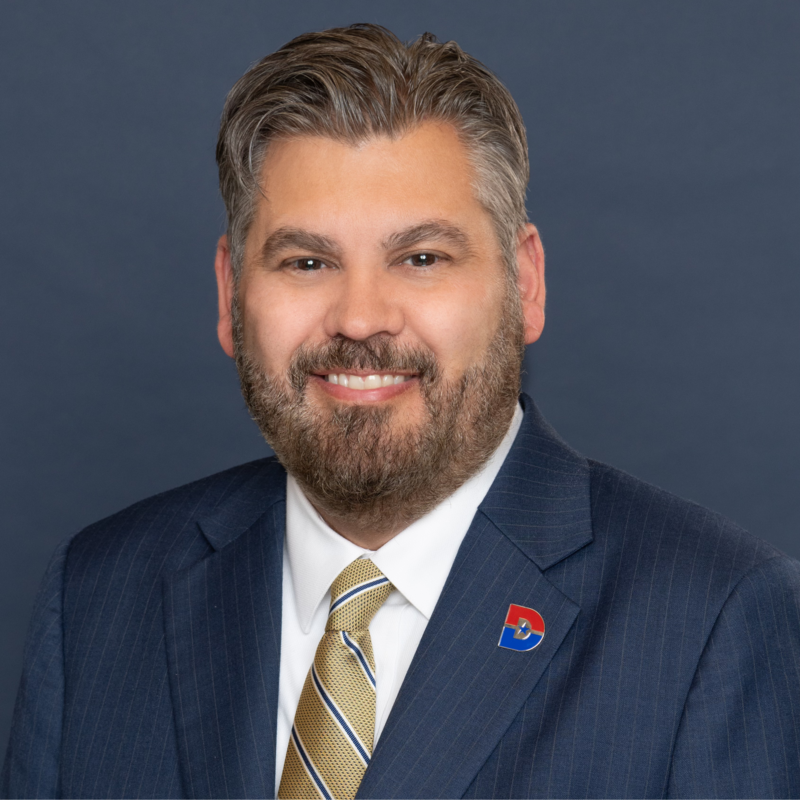
Dr. Anne M. Kress is President of Northern Virginia Community College (NOVA), the largest public institution of higher education in Virginia and one of the largest community colleges in the nation, serving more than 70,000 students across six campuses. She took office in January 2020 as the college's sixth permanent president. Before NOVA she spent a decade as president of Monroe Community College in Rochester, New York, and before that built a 20-year career at Santa Fe College in Gainesville, Florida, rising to provost. Across more than three decades in community college leadership, her work has centered on NOVA's promise that every student succeeds, every program achieves and every community prospers.
Dr. Kress is active in national and regional policy. She has testified before Congress on issues affecting community colleges, taken part in federal rulemaking on higher education, and serves on the boards of the American Council on Education, the Capital Area Food Bank, the Northern Virginia Chamber of Commerce, the Northern Virginia Technology Council and Leadership Greater Washington. Her honors include the 2024 Association of Community College Trustees Outstanding CEO Award for the Southern Region, and she has been named to the Virginia Business 500 and the Washington Business Journal Power 100. She holds bachelor's degrees in finance and English, a master's in English and a Ph.D. in higher education administration, all from the University of Florida.

Anne Kress has spent more than 30 years in community colleges and has led Northern Virginia Community College since January 2020. NOVA serves 76,000 students a year across six campuses with about 3,400 employees. Close to 20,000 of those students are still in high school, and 72% are part-time, balancing college with work and family. Recorded on the Annandale campus, she lays out what a blue sky student journey could look like: personalized coaching, credit for prior learning, holistic supports and milestones worth celebrating, delivered at a scale no hiring plan could ever fund.
She walks through the transfer-planning agent a NOVA vice president built over a weekend, the transcript evaluation tool that produced no gains until the end users redesigned the workflow and then processed hundreds of transcripts an hour, and the student panel that told system leaders what they really want is an AI agent. We also get into "human in the lead," reversing the NOVA-whelm with fewer and clearer messages, what the anticipation around Grand Theft Auto VI can teach higher ed, the ADVANCE partnership with George Mason she wants to replicate for every student, the 7,500 stop-outs NOVA went after, the staffer named Kathy who saved her doctorate, and the one thing that will not change in the next ten years.